

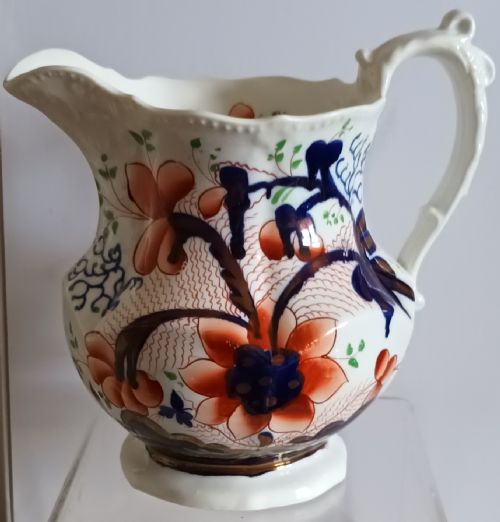


Antique Lustreware Jug
An antique lustreware jug brings the shimmer of metallic oxides and hand-coloured prints straight to the table, catching the light with every movement.
Antique Lustreware Jug
An antique lustreware jug is a ceramic vessel finished with a metallic glaze that creates a reflective, metallic surface. When searching for an antique lustreware jug, collectors typically encounter pieces ranging from the Georgian period through the Victorian era.
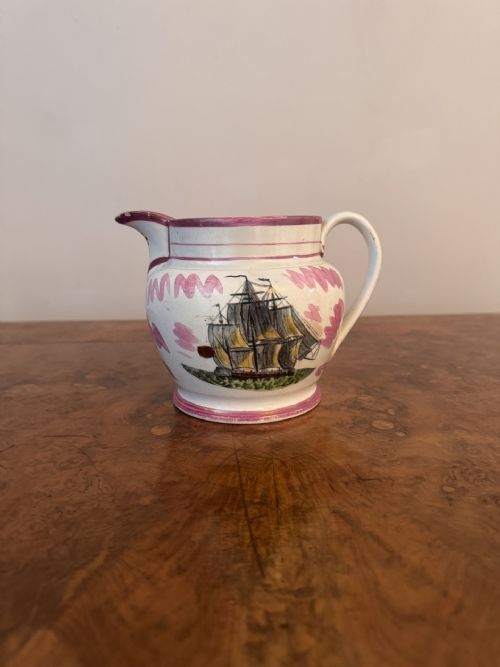
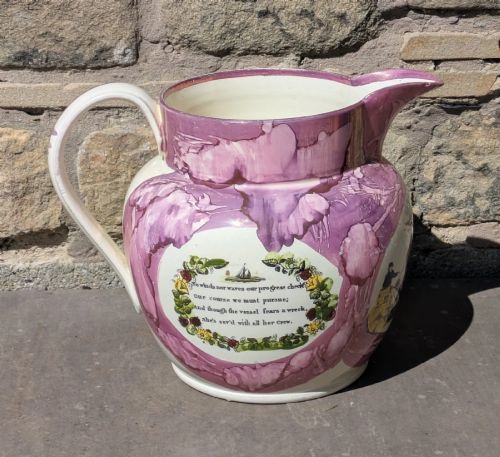
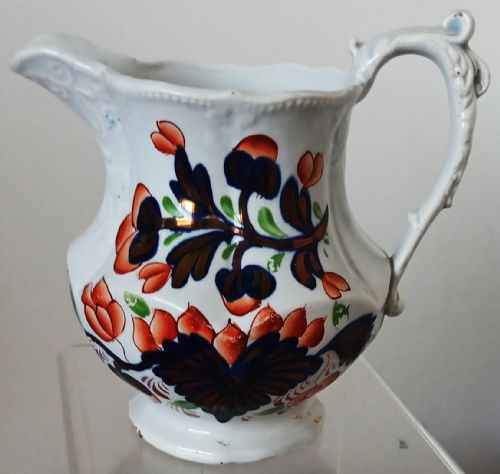
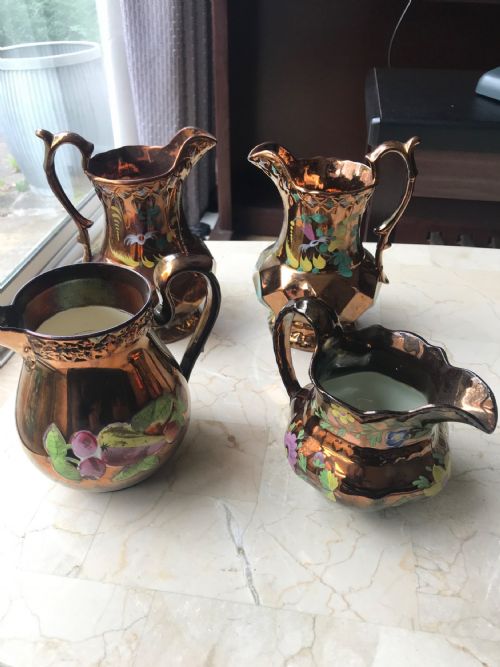
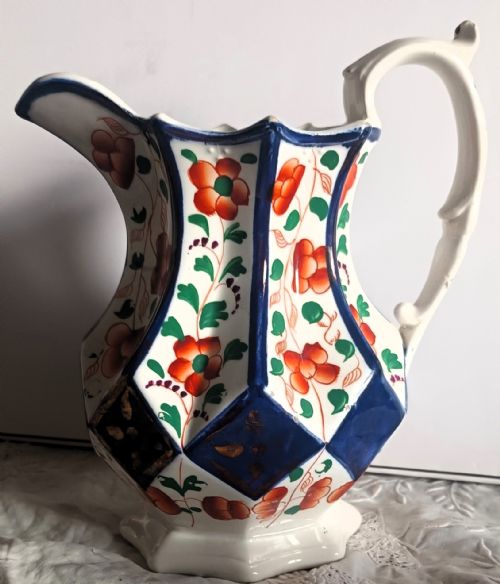
The selections span various forms including cream jugs, milk jugs, and large commemorative pitchers. Common regional types include Sunderland lustre pieces with pink splash effects or transfer prints, alongside Staffordshire copper lustre and Gaudy Welsh patterns.
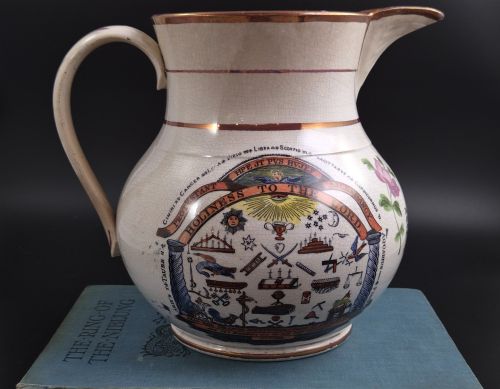
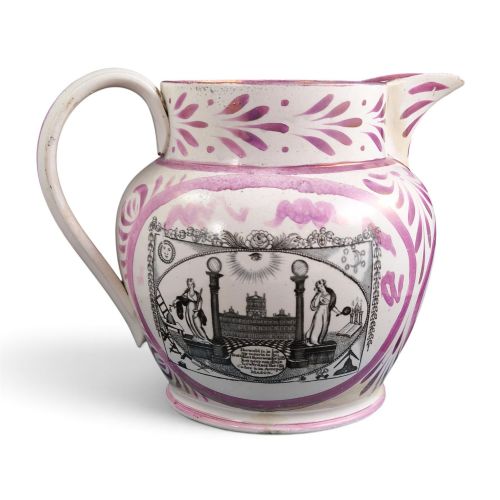
Makers and potteries such as Livesley Powell and Co and Wedgwood appear among the earthenware and creamware bodies. These vessels served practical domestic functions or commemorated events with maritime themes, poetic panels, and fraternal emblems.
Materials and construction
Potters shaped these vessels from earthenware, creamware, pearlware, ironstone, and ceramic bodies. The characteristic metallic sheen comes from metallic oxide and lustre glazes applied across the surface.
Decoration often involved enamel painting and purple or polychrome transfer printing. Artisans applied copper, pink, or purple lustre glazes to create splash effects or solid bands before final firing.
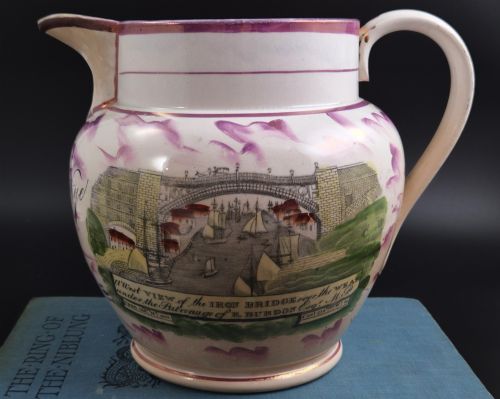
Some nineteenth-century potters commemorated local engineering feats by printing the iron bridge over the wear directly onto pink lustre jugs.
Assessing quality and craftsmanship
Quality rests upon the crispness of the transfer printing and the depth of the metallic lustre glaze. Well-executed pieces show precise hand-decoration and vibrant enamel colours across the ceramic body.
Larger jugs featuring detailed maritime scenes, poetic panels, or named historical subjects command greater attention than plain vessels. The clarity of the transfer print and the smoothness of the metallic finish distinguish finer examples.
Livesley Powell and Co·Wedgwood
The Antique Lustreware Jug Glossary
- Lustre glaze
- A metallic glaze containing gold, silver, copper, or platinum oxides that produces a reflective, iridescent surface finish. This technique gives the pottery its distinct metallic sheen.
- Transfer printing
- A method of applying pre-printed designs onto ceramic surfaces from an engraved copper plate using tissue paper. It allowed complex pictorial scenes and texts to be reproduced reliably.
- Pearlware
- A refined earthenware developed in the late eighteenth century with a bluish-white glaze that pooled in recesses. It served as a common body for early lustre vessels.
- Creamware
- A fine light-coloured earthenware perfected by Josiah Wedgwood with a warm yellowish lead glaze. It provided a smooth canvas for early nineteenth-century lustre decoration.
- Splash lustre
- A technique where droplets of metallic colour were flicked or splashed onto the background glaze to create a mottled, marbled effect. It appears frequently on Sunderland pieces.
Antique Lustreware Jug: Frequently Asked Questions
What is an antique lustreware jug?
An antique lustreware jug is a ceramic or earthenware pitcher finished with a metallic glaze that produces a reflective copper, pink, or purple sheen.
These vessels were produced primarily during the Georgian and Victorian periods, often featuring transfer-printed maritime scenes, portraits, or hand-painted botanical motifs.
How do I date an antique lustreware jug?
Dating relies on identifying the ceramic body, glaze characteristics, and decorative style recorded in the piece. Creamware and pearlware bodies typically point to early nineteenth-century Georgian manufacture, while robust ironstone and certain Victorian transfer prints indicate later decades.
Makers' marks, when present, provide a direct link to specific potteries operating during the 19th Century.
What is Sunderland pink lustre?
Sunderland pink lustre is a distinct type of earthenware pottery associated with the North East of England, featuring a mottled pink or purple metallic glaze effect.
Many of these pieces incorporate detailed transfer prints of the Iron Bridge over the Wear, tall ships, masonic symbols, or moral verses.
How were copper lustre jugs decorated?
Copper lustre jugs were decorated using metallic oxide glazes that created a shiny, copper-like exterior, frequently paired with hand-painted enamel bands of fruit or flowers.
Potters applied the metallic glaze over an earthenware or ceramic body before firing the piece to achieve the reflective finish.
How should I display my lustre jug?
Lustre jugs benefit from placement in well-lit display cabinets where natural light can catch the reflective metallic glaze and highlight the transfer-printed panels.
Keeping them away from direct sunlight protects any hand-applied enamel colours from fading over time.