




Antique London Landscape Painting
An antique london landscape painting captures the changing face of the capital through centuries of artistic vision on canvas and paper.
Antique London Landscape Painting
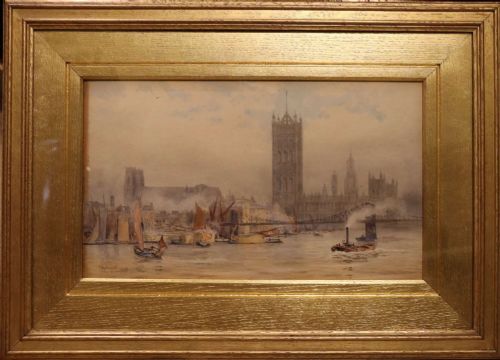
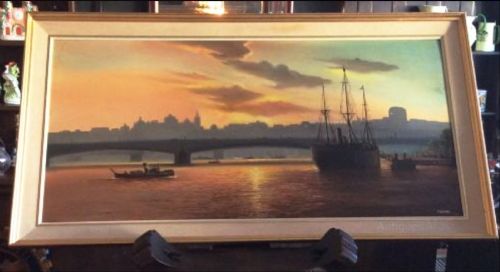
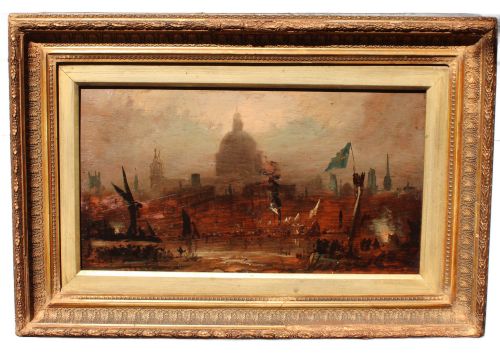
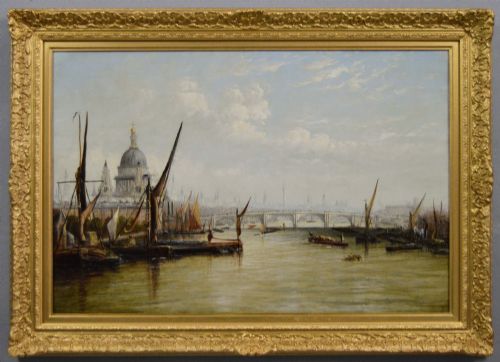
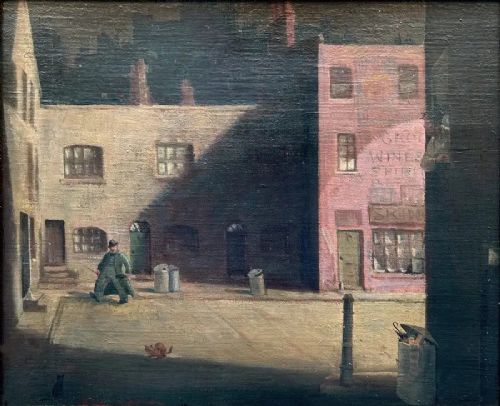
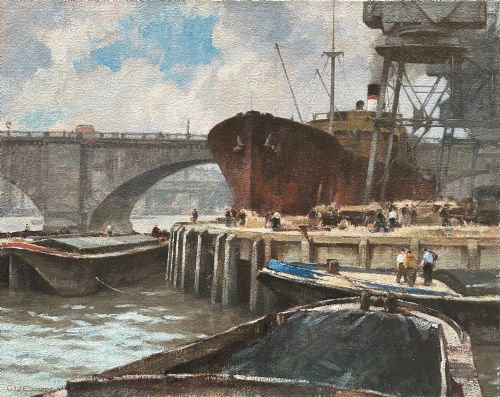
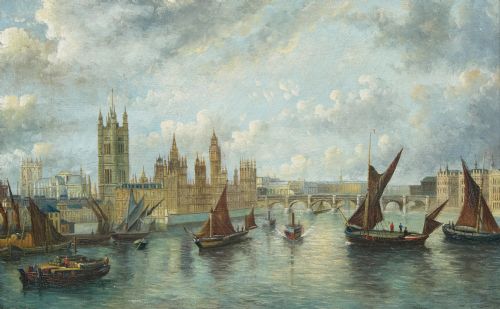
An antique london landscape painting records recognizable capital landmarks, bustling river scenes on the Thames, and quiet parks from perspectives spanning the nineteenth and twentieth centuries.
The works take the form of detailed watercolours on paper and substantial oil paintings on canvas, capturing specific locations from Westminster to the Pool of London.
Buyers will most frequently encounter atmospheric watercolours and oil paintings created during the Victorian and Edwardian periods, alongside early twentieth-century townscapes.
How they were made
Artists laid oil paint onto stretched canvas or wood panels, building rich textures and deep tones to portray foggy river views and architectural grandeur.
Watercolour paint was applied to paper in transparent washes, frequently heightened with bodycolour to capture the shifting light of London skies and parks.
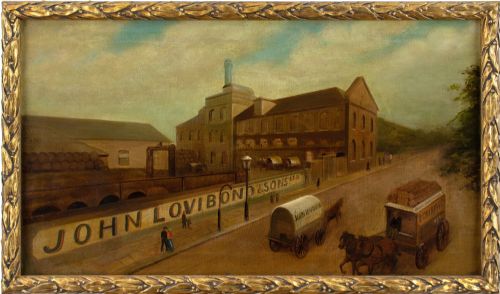
Finished works were typically set within wooden frames, often incorporating gold leaf mouldings and glass protection for paper pieces.
Several watercolours capture Londoners pausing from their daily commutes simply to feed the birds in the city's parks.
What varies in quality
The standard of execution depends on the artist's command of perspective, tonal balance, and the ability to render the dense atmosphere and distinct architecture of the capital.
Earlier studies and finished exhibition pieces display differing degrees of spontaneous brushwork and compositional precision, reflecting the artist's primary intent.
H. Medlycott·Francis Moltino·Charles William Wyllie·Charles James Lauder·Rowland Henry Hill·Samuel Henry Alken·David Small·Walter Duncan·Frank W. Scarborough·Edward Fletcher·Beatrice Parsons·Frances E Nesbitt·William A. Macdonald·Herbert John Finn
The Antique London Landscape Painting Glossary
- Watercolour
- A paint consisting of water-soluble pigments that produces translucent washes on paper. Artists utilised this medium extensively for portable outdoor sketching.
- Oil on Canvas
- Pigments bound in a drying oil medium applied to a woven fabric surface. This combination allows for deep colour saturation and heavy impasto textures.
- Topographical
- Representing specific physical locations with accuracy and detail. Such works serve as historical records of London streets and waterways.
- Maritime Art
- Depictions of ships, harbours, and coastal or river scenes. These paintings record the heavy commercial traffic on the Thames.
- Romanticism
- An artistic movement focusing on emotion, nature, and atmospheric effects. Works in this style often emphasise dramatic lighting and moody weather.
Antique London Landscape Painting: Frequently Asked Questions
How do I identify the London location?
Most works include prominent landmarks such as St Paul's Cathedral, Westminster Bridge, or the Houses of Parliament within the composition. Inscriptions on the reverse or lower margins frequently name the specific street, bridge, or reach of the Thames.
Artists often recorded the exact viewpoint, allowing modern viewers to trace the exact spot where the easel stood over a century ago.
Were these painted outdoors or in studios?
Many works began as rapid pencil or watercolour studies captured on location beside the Thames or in city parks. Finished oil paintings were typically developed in the studio using these direct field observations.
Watercolours were often executed entirely on the spot to seize transient atmospheric effects like fog and sunset.
How should I frame and display them?
Watercolours require conservation mounting under glass to protect the paper and pigments from ultraviolet light and humidity. Oil paintings on canvas benefit from stable indoor environments away from direct heat sources.
Traditional wood and gold leaf frames complement the historical character of these nineteenth and early twentieth-century views.
What distinguishes Victorian views from later works?
Victorian London scenes often record dense industrial shipping on the Thames and classic horse-drawn transport across the bridges. Edwardian and later twentieth-century paintings begin to show changing streetscapes, early motor vehicles, and cleaner atmospheric interpretations.
Stylistic shifts move from tight academic topography toward looser British Impressionist brushwork by the early nineteen hundreds.