



Antique Lithograph Caricatures
These antique lithograph caricatures capture Victorian and Edwardian public figures through witty satirical prints.
Antique Lithograph Caricatures
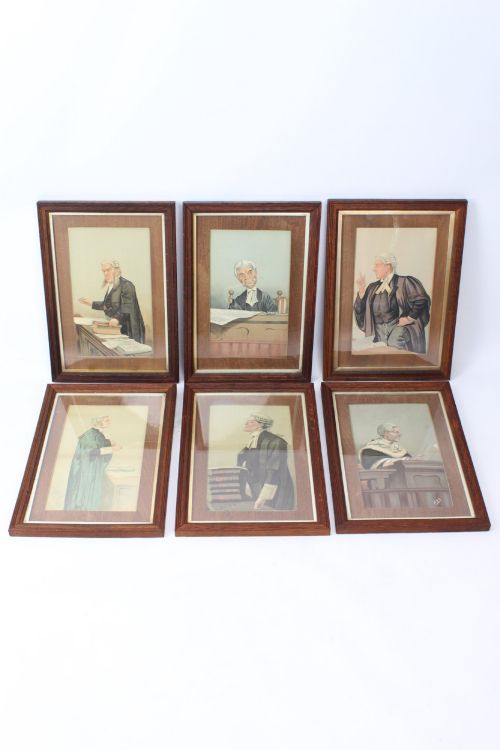
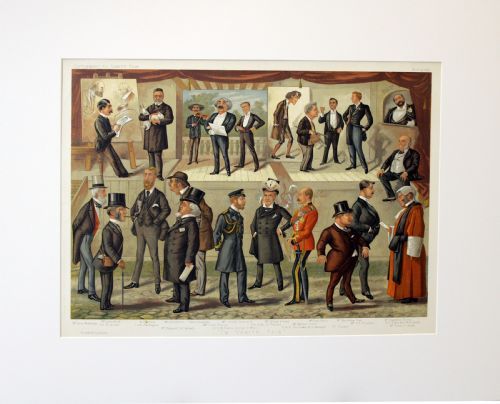
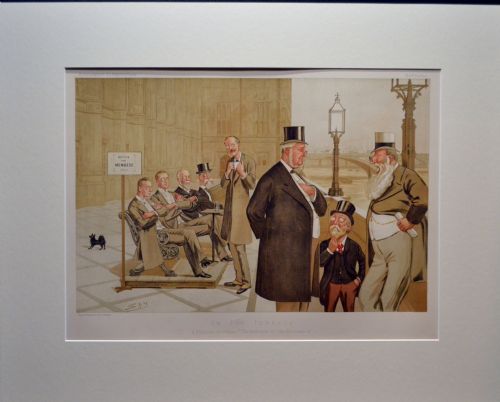
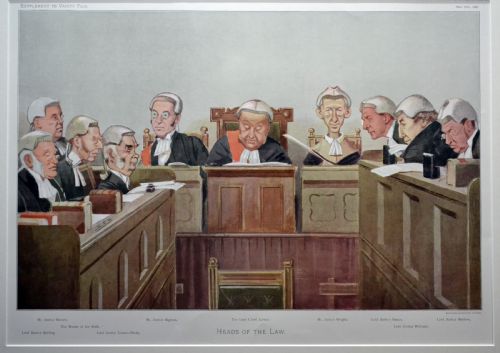
These antique lithograph caricatures comprise framed prints and wall art originating primarily from the Victorian and Edwardian periods, alongside nineteenth century examples. Buyers encounter individual sheets as well as sets depicting subjects ranging from politics and the law to royalty, society, military, hunting, racing, and the theatre.
Materials and production methods
Makers utilised paper and card sheets as the primary support for these ink and chromolithographic impressions. Colour work often involved multiple stones or plates to build up the rich hues seen in period publications.
Finished plates frequently underwent framing using wood and metal mouldings, protected behind glass and supported by mount board backing.
Actors, judges, and jockeys share the same wall space, caught with slightly oversized heads and impeccably tailored trousers.
Distinctions in quality
The distinction between ordinary prints and superior examples rests in the vibrancy of the ink and the preservation of the paper sheet. Double page formats and complete sets maintain greater visual impact than trimmed single sheets.
Original framing materials and clean margins contribute significantly to the overall presence of a piece on the wall.
The Antique Lithograph Caricatures Glossary
- Chromolithograph
- A colour lithographic print produced through the application of multiple distinct lithographic stones, one for each colour used. This technique yields deep, saturated tones characteristic of nineteenth century illustration.
- Double page
- A publication format featuring an extra wide sheet that folds out across the spine of a periodical. These wider sheets provide expanded composition space for larger group portraits and panoramic scenes.
- Mount board
- Heavy paperboard used to frame and support works on paper while keeping the actual image surface separated from the glass. Quality mounts protect the edges of antique sheets from direct contact.
- Spy
- The pseudonym used by the caricaturist Leslie Ward for his notable portrait work in Vanity Fair. His depictions of prominent figures define much of the output from this genre.
Antique Lithograph Caricatures: Frequently Asked Questions
What subjects do these caricatures show?
The subjects span politicians, royalty, legal figures, military officers, actors, and sportsmen from the Victorian and Edwardian eras. Many capture well-known personalities of the day in characteristic poses.
Groups often focus on specific themes such as empire politics, racing, hunting, or the London parks.
How were these prints originally published?
Many originated as weekly satirical supplements or centrepiece plates within period periodicals like Vanity Fair. Publishers issued them both as single sheets and larger double page spreads.
Subscribers often collected and subsequently had these plates individually framed for domestic display.
How do I care for framed paper prints?
Keep framed paper works away from direct sunlight to prevent the ink colours from fading over time. Stable room temperatures protect the paper and card components from moisture damage.
Dust the wooden or metal frames gently with a dry cloth without spraying cleaners directly onto the glass.
Can I date a print by its style?
Clothing styles, hairstyles, and facial hair provide clear indicators for distinguishing Victorian pieces from Edwardian ones. The visual aesthetic shifts from stiff formal attire towards slightly more relaxed early twentieth century fashions.
Printed captions, dates, and subject identities on the sheet further help establish the exact period of production.