


Antique Liqueur Set
An antique liqueur set brings small glasses, decanters and fitted trays together for after-dinner service.
Antique Liqueur Set
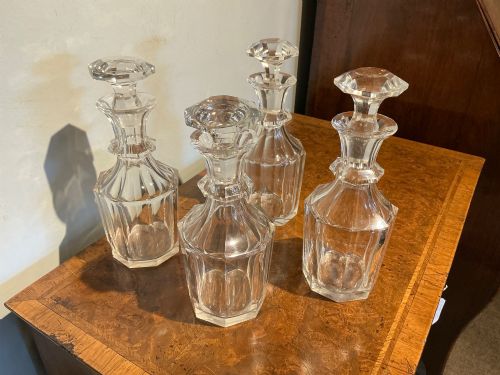
An antique liqueur set comprises matching glassware and vessels designed to hold spirits, frequently housed in portable fitted boxes or arranged upon serving trays. The selections span from nineteenth-century Victorian stands and French caves à liqueur to geometric Art Deco glassware from the nineteen-thirties.
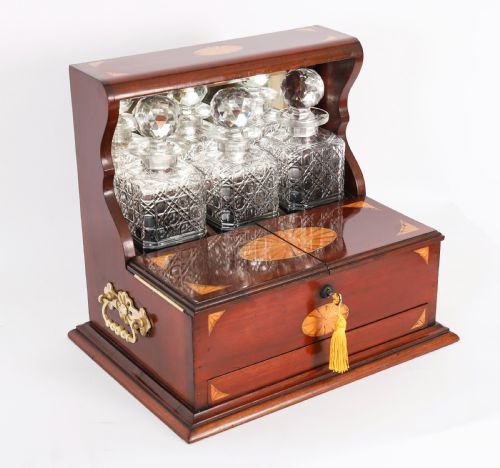
Buyers encounter tantaluses featuring secure locking mechanisms alongside open stands, boxed cordial services, and sets complete with matching shot glasses or tots. Forms range from heavy lead crystal decanters to delicate enamelled services produced across Europe.
Materials and construction
Maker workshops utilised cut glass, lead crystal, and coloured glass, often combining transparent vessels with hand-enamelled decoration or overlaid hues like cranberry. Metalwork components incorporated brass, ormolu, silver plate, solid silver, and silvered pewter to construct mounts, trays, and frames.
Wooden enclosures frequently employed satin wood or patinated bronze for housing the glass bottles securely. Individual pieces combined blown and moulded glass techniques with precision metal casting and joinery.
Listings feature periods spanning from the nineteenth century through the nineteen-thirties, incorporating Victorian, Art Nouveau, and Art Deco design styles.
Quality differences
The standard of an antique liqueur set rests upon the clarity and weight of the glass, alongside the precision of the hand-cut facets or enamel work. Finer examples display complete matching sets of glasses paired with original decanters that retain their matching stoppers.
Enclosures demonstrate variation through the complexity of their internal framing, the quality of the locking mechanisms on tantaluses, and the durability of the silver plating or ormolu mounts. Makers using high-grade crystal and precious metal accents achieved greater longevity and refinement.
Baccarat·Elkington·Karl Palda·Moser·Salviati·Sydney and Co·Val Saint Lambert·W.M.F.
The Antique Liqueur Set Glossary
- Cave a liqueur
- A fitted box or cabinet containing decanters and liqueur glasses, frequently featuring lock and key mechanisms. These portable containers were designed for display and secure storage in nineteenth-century drawing rooms.
- Tantalus
- A locking drink container that holds decanters securely within a wooden or metal frame while permitting view of the contents. The mechanism prevents uninvited access to the spirits inside.
- Ormolu
- Gilt bronze ornamentation applied to furniture, boxes, and glassware stands during the nineteenth century. The technique imparts a rich golden finish to cast metal mounts.
- Cordial glass
- A small stemmed drinking vessel specifically proportioned for consuming sweet after-dinner liqueurs. These glasses appear frequently in matched sets accompanying central decanters.
- Silver plate
- A base metal substrate coated with a thin layer of silver to produce a lustrous finish. This technique offered the visual appeal of solid silver at a lower production cost.
Antique Liqueur Set: Frequently Asked Questions
What is a cave a liqueur?
A cave a liqueur is a portable fitted box or cabinet designed to house decanters and small glasses securely. These containers originated in France and protect delicate glassware while remaining decorative on a table.
Interior wooden framing holds each bottle and glass firmly in place during transport. Many examples feature locking lids to safeguard the contents.
How do I use an antique liqueur set?
These sets serve small portions of spirits or cordials after a meal, using the accompanying glasses or tots. Pour the beverage from the matching decanter into the small glasses provided in the stand.
When not in use, display the set upon a sideboard or inside a cabinet. Take care when washing vintage crystal by hand rather than using a machine.
What is the difference between a tantalus and a liqueur stand?
A tantalus includes a locking mechanism that secures the decanter stoppers in place so the bottles cannot be removed without a key. This kept expensive spirits safe from domestic staff.
A standard liqueur stand or tray holds the decanters and glasses openly without locks. Both styles functioned as decorative accessories for entertaining guests.
How can I date my liqueur set?
Dating relies upon identifying the stylistic period, such as nineteenth-century Victorian ornamentation, Art Nouveau curves, or nineteen-thirties Art Deco geometric forms. Examining hallmarks on silver components provides precise years and assay office locations.
Glass cutting techniques, colours, and maker signatures also indicate the decade of production. Comparing the set to documented factory designs confirms the era.