





Antique Linen Needlework
Antique linen needlework carries the measured patience of past centuries, capturing domestic skill in silk thread on fine woven grounds.
Antique Linen Needlework
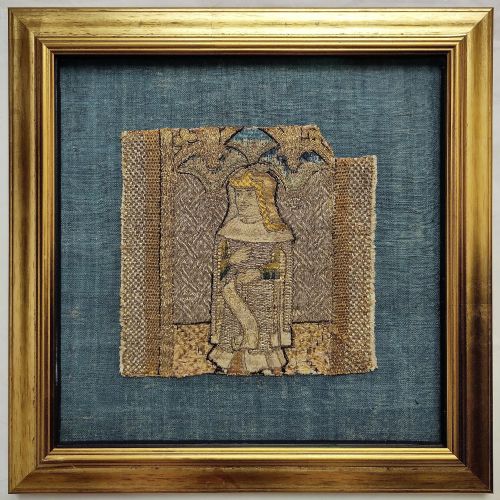
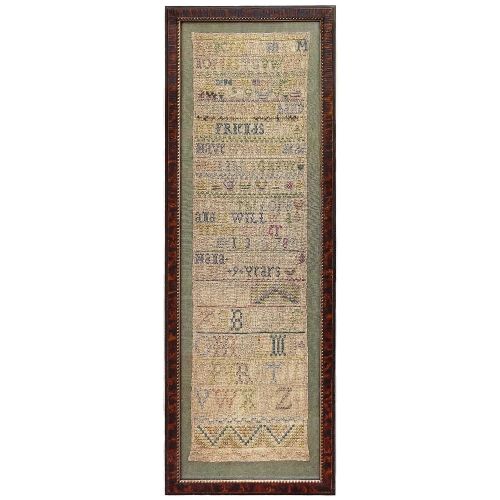
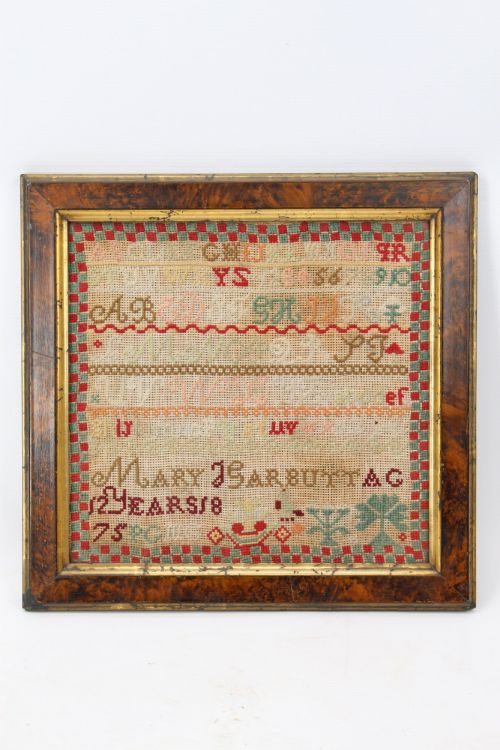
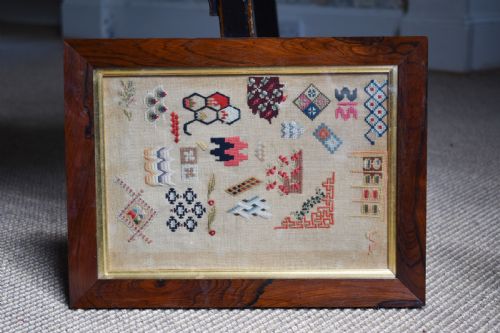
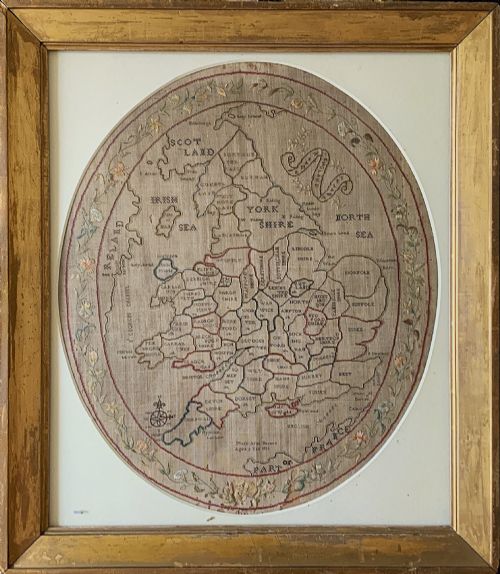
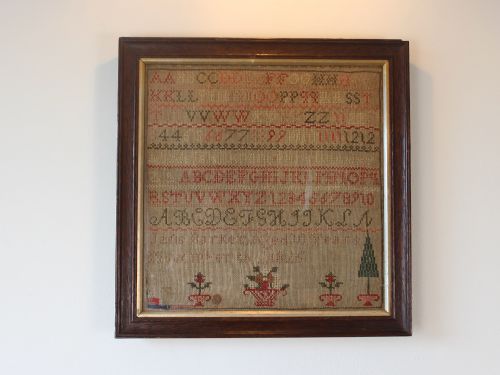
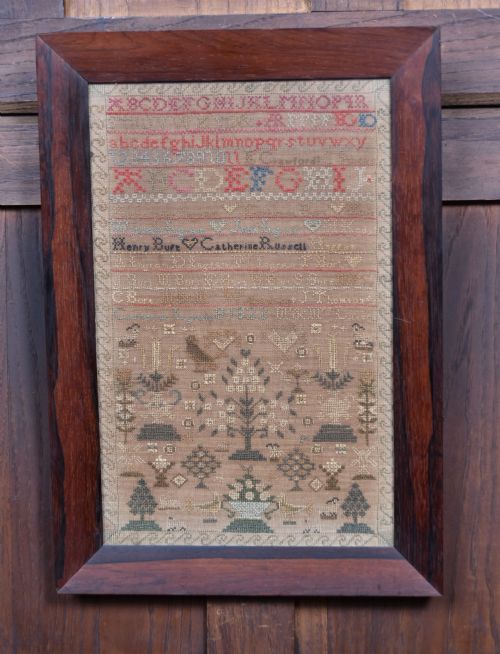
Antique linen needlework principally comprises framed samplers, embroidered panels, maps, and regional borders worked by hand across several centuries. These items trace domestic education and needle proficiency through alphabets, verses, and pictorial motifs stitched by young makers and skilled artisans alike.
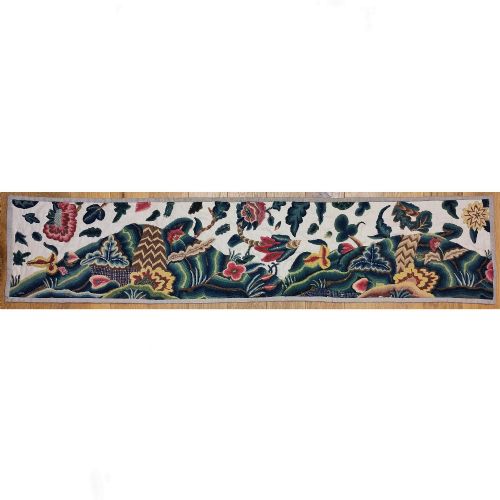
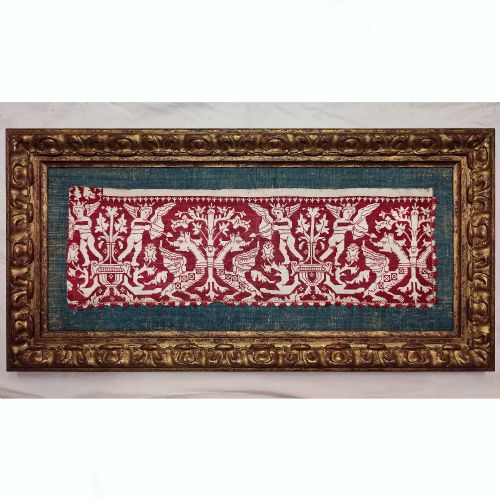
The most common examples encountered on this page date from the Victorian and Georgian periods, often recording the maker's name, age, and date of completion. Alongside British schoolroom pieces, the selection extends to Greek Island embroideries, Italian borders, and crewelwork panels.
Forms range from miniature samplers and band samplers to large wall hangings, bedsheet borders, and coverlets. Each format utilises linen as the primary foundation for stitches executed in silk, wool, and thread.
Materials and Technique
Makers worked primarily on linen grounds, utilising plain weaves that provided a stable grid for counting threads and executing precise stitches. This foundation cloth received ornamentation through varied threads including silk floss, wool, and linen thread.
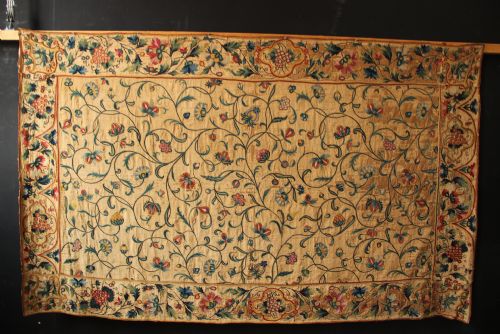
Stitching techniques encompass traditional crewelwork, counted thread embroidery, and detailed needlepoint across diverse geographical traditions from English schoolrooms to Skyros and Uzbekistan. Surface embroidery and band samplers demonstrate the dexterity required to master multiple stitch types on a single textile panel.
Antique Linen Needlework Retail Price Guide 2026
Typical asking prices for linen needlework among the pieces listed under this phrase on Sellingantiques today, from the lower quarter to the upper quarter. They describe what is for sale here now, not the wider market.
Listings span from the seventeenth century through to the twentieth century, combining British schoolroom samplers with Greek island embroideries and Central Asian textiles.
Distinctions in Quality
Quality rests upon the regularity of the stitching, the complexity of the design, and the survival of the original linen ground and thread colours. Fine execution shows disciplined tension and precise geometric or pictorial layout.
Historical documentation adds weight, particularly when a sampler preserves the maker's name, age, and specific location or school. Early examples from the seventeenth and eighteenth centuries derive distinction from their age and the scarcity of surviving domestic textiles from those periods.
The Antique Linen Needlework Glossary
- Sampler
- A piece of needlework produced as a demonstration or test of skill, often featuring alphabets, numerals, and motifs. These historical exercises record the progress and proficiency of young makers.
- Band sampler
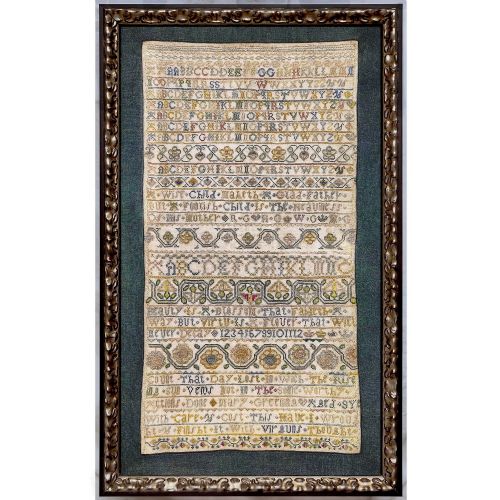
- An early horizontal format displaying discrete rows of different embroidery patterns and stitches. Such pieces allowed makers to reference various techniques on a single strip of linen.
- Crewelwork
- Embroidery executed with wool yarn on a heavy linen or twill ground. This technique creates textured, robust surface designs often seen in large wall hangings.
- Coif
- A close-fitting cap worn in the sixteenth and seventeenth centuries, frequently decorated with intricate whitework or coloured embroidery. Surviving examples demonstrate fine domestic needlecraft from the early modern period.
- Needlepoint
- Embroidery stitched through an open-weave canvas or linen ground to cover the foundation entirely. This dense technique produces rigid panels suited for decorative display.
Antique Linen Needlework: Frequently Asked Questions
How do I care for antique needlework?
Keep pieces away from direct sunlight to prevent the fading of silk and wool threads against the linen ground. Frame them with conservation-grade materials that prevent direct contact between the glass and the textile.
Avoid hanging textiles in areas prone to dampness or fluctuating humidity. Gentle surface dust removal with a soft brush helps maintain the fabric without disturbing fragile fibres.
What is a band sampler?
A band sampler is an early format where various embroidery patterns are worked in horizontal strips across a long piece of linen. Makers used these panels to record stitch types and decorative motifs for future reference.
This style predates the pictorial and map samplers common in the Georgian and Victorian eras. Surviving examples offer insight into seventeenth-century textile education.
How can I tell the age of a sampler?
Age is indicated by the style of lettering, the types of motifs used, and the weave of the linen foundation. Dates and makers' names embroidered directly into the composition provide the most direct evidence of origin.
Comparative study of schoolroom conventions and regional embroidery traditions helps place undated pieces within the seventeenth, eighteenth, or nineteenth century.
Where were these pieces made?
Many schoolroom samplers originated in England and Scotland, produced by young girls as part of their domestic education. Other examples come from Welsh institutions and regional centres of learning.
Beyond Britain, the selection includes Greek Island embroideries from Skyros, Italian borders, and Central Asian Suzanis. Each region utilised distinct motifs and materials on linen or cotton grounds.