
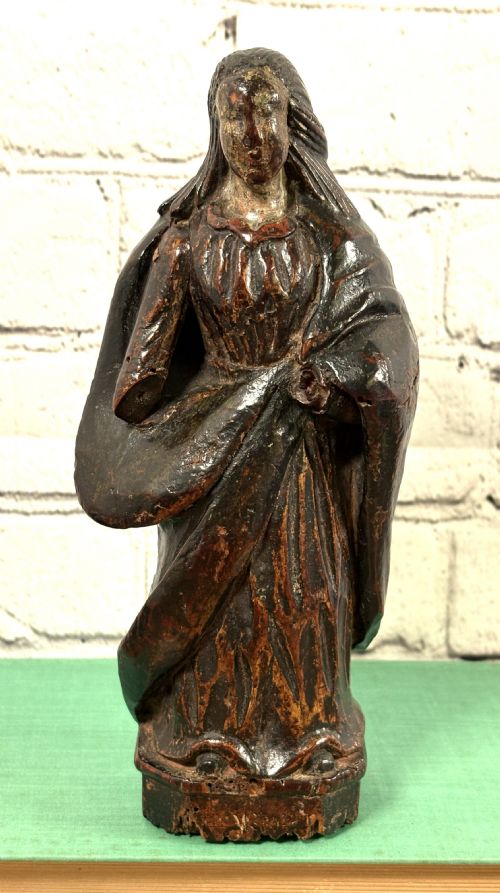


Antique Limewood Carving
These pieces of antique limewood carving bring rich detail and texture into a room, offering sculptural depth that few other woods can match.
Antique Limewood Carving
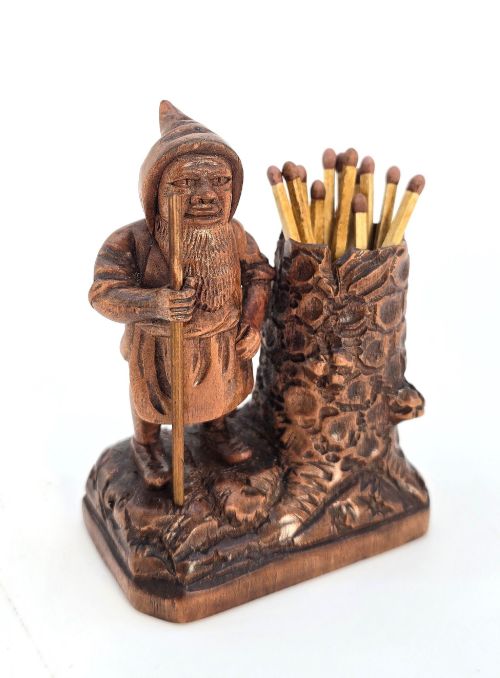
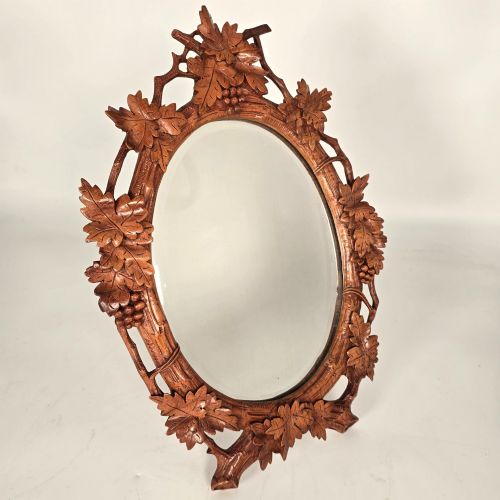
An antique limewood carving represents a tradition of fine craftsmanship spanning several centuries, capturing intricate details in a pale, tight-grained timber. These objects range from religious figures and wall brackets to domestic items like match holders and table mirrors.
The selection here encompasses various European traditions, with Swiss Black Forest pieces, German Baroque figures, and Italian Renaissance works appearing frequently. Buyers often encounter animal sculptures, human figures, and architectural elements created across the sixteenth, seventeenth, eighteenth, and nineteenth centuries.
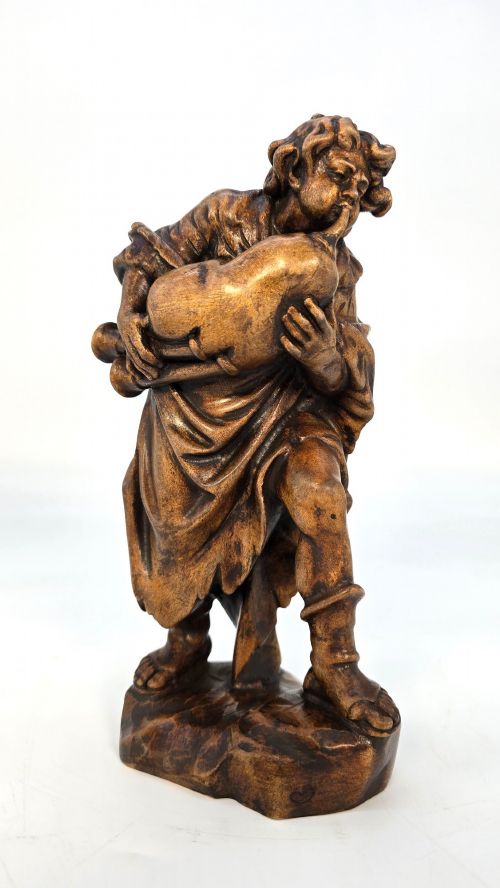
Makers utilised the predictable grain of lime and linden wood to produce deep undercutting and realistic textures, whether depicting medieval musicians, saints, or flora. Each piece carries the distinct regional style of its maker, from the rustic charm of folk art to the polished elegance of Chippendale designs.
Assessing quality and execution
The distinction between standard and exceptional works lies in the depth of the carving and the precision of the undercutting. Master carvers achieved remarkable lifelike qualities in figures and foliage, showing fine control over expression and texture.
Proportion and anatomical accuracy separate finer sculptural pieces from simpler regional outputs. The crispness of retained detail, particularly in areas subject to wear or cleaning, marks the skill of the original hand.
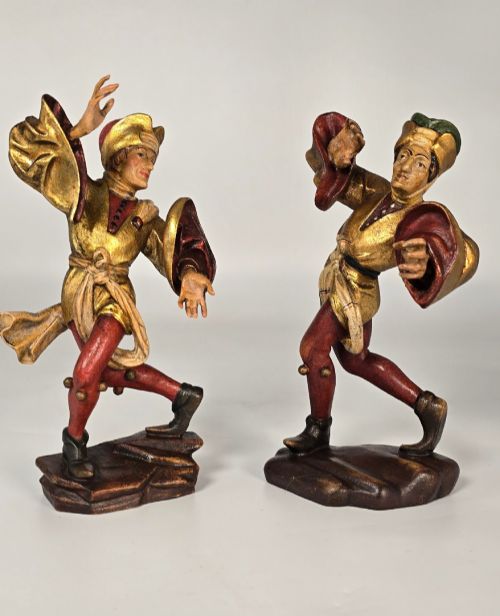
Materials appearing alongside limewood include gold leaf, paint, glass, and marble on select items.
Bergen & Co·Hans Müller
The Antique Limewood Carving Glossary
- Limewood
- A pale, close-grained hardwood favoured by European carvers for its cooperative nature under chisel. It accepts microscopic detail without splintering.
- Black Forest
- A style of nineteenth-century Swiss carving known for naturalistic depictions of animals and rustic forest motifs. These works often feature bears, fawns, and alpine foliage.
- Parcel Gilt
- A decorative treatment where only specific portions of a wooden carving receive a covering of gold leaf. This technique highlights particular details against the natural wood.
- Polychromed
- Painted in several colours, a common finish on early religious figures and altarpieces. Pigments were typically applied over a chalk ground.
- Undercutting
- A carving technique where material is removed beneath a subject to create a three-dimensional, detached effect. It demonstrates high technical skill.
Antique Limewood Carving: Frequently Asked Questions
What is limewood?
Limewood is a domestic European timber, frequently called linden wood, known for its soft, even grain. It was the preferred medium for intricate sculptural work.
Because the wood lacks prominent grain patterns, carvers could work in any direction. This property enabled the creation of deep, complex relief carvings.
How do I date an antique carving?
Dating relies on stylistic clues, regional characteristics, and tool marks left on the reverse or unpolished areas. Comparing the costume, subject matter, and mounting techniques helps place a piece in its correct century.
Earlier works from the sixteenth and seventeenth centuries often depict religious subjects with distinct stylistic rigidity. Later nineteenth-century pieces tend toward naturalism, particularly within the Black Forest tradition.
Where were these carvings made?
These decorative objects originate from workshops across Europe, with strong representation from Switzerland, Germany, and Italy. Each region developed distinct aesthetic preferences and subject matter.
Swiss workshops specialised in alpine animals and figures, while German and Italian carvers often produced baroque figures, architectural elements, and furniture components.
How should I care for limewood?
Limewood carvings require stable environmental conditions away from direct sunlight and sudden temperature shifts. Excessive heat can cause the timber to dry out and split.
Dusting should be done gently with a soft, dry brush to protect delicate undercutting. Avoid applying modern polishes or oils to the historic wood surface.