


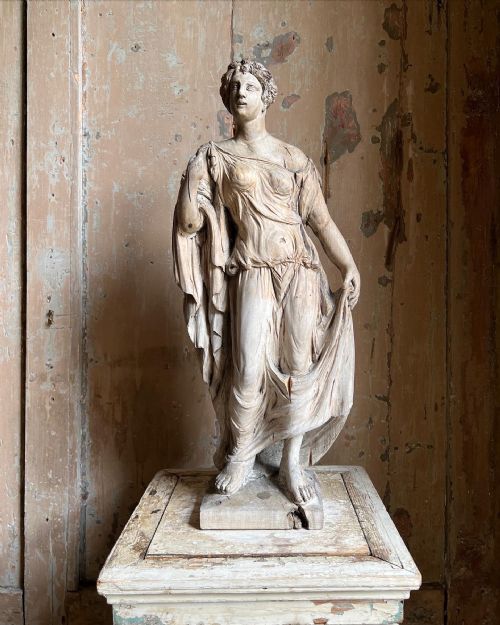
Carved Limewood Statue
These carved limewood statue pieces bring tactile warmth and rich historical character to a room through their detailed timber forms.
Carved Limewood Statue
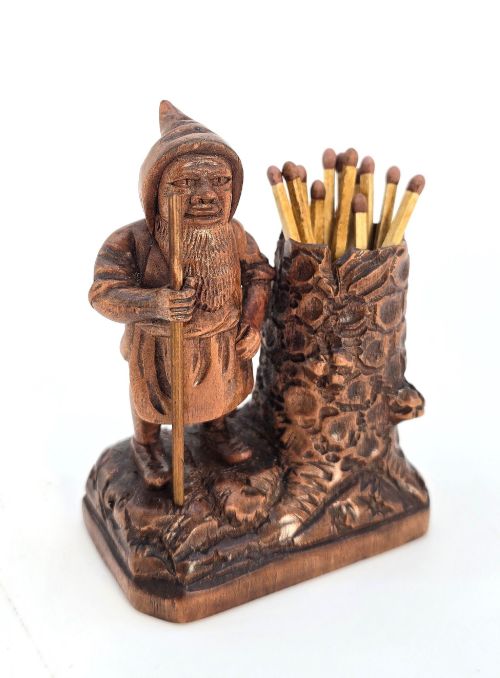
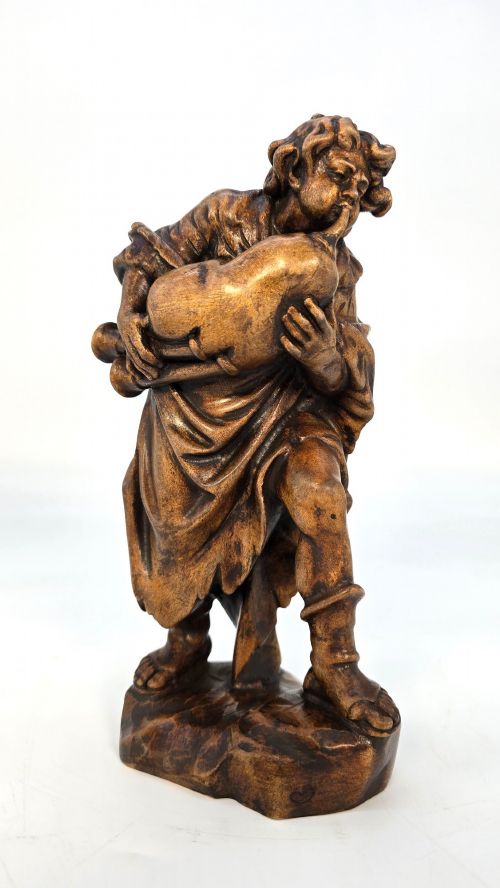
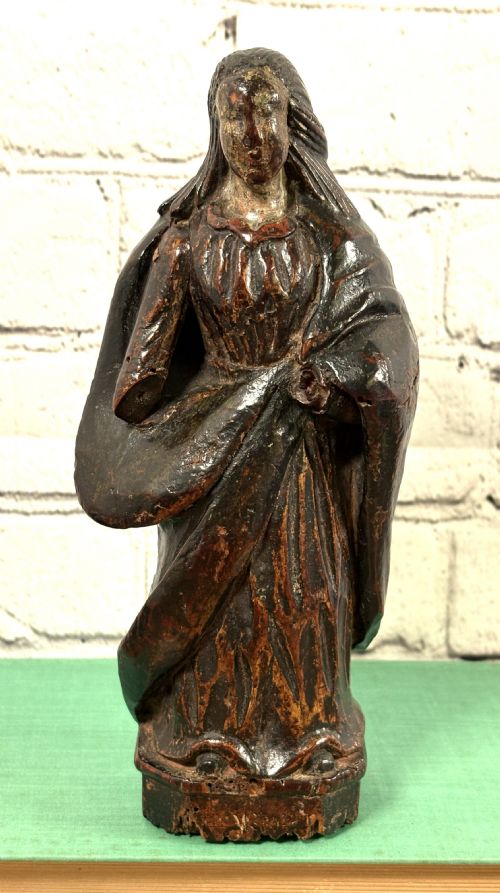
A carved limewood statue represents a tradition of figurative sculpture spanning from the sixteenth century through to the early twentieth century. You will encounter subjects ranging from religious saints and Baroque figures to Black Forest fawns, ibexes, and whimsical gnomes. The material itself offers a pale, fine-grained surface that holds intricate detail exceptionally well.
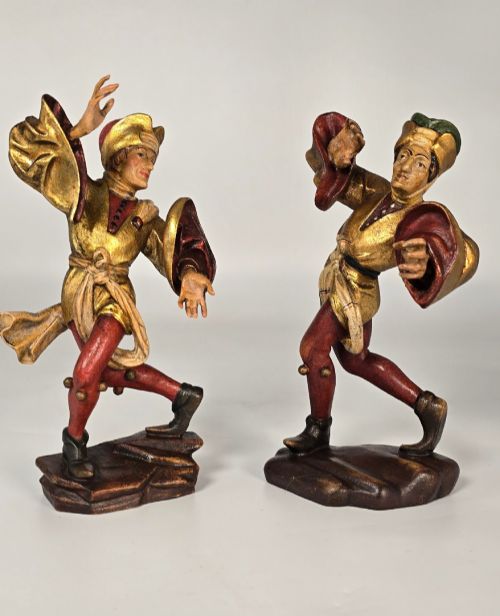
Many of the examples on this page originate from Swiss, German, and broader Continental workshops. Forms include freestanding figures, medieval dancing couples, and practical items like match holders. The regional styles shift from the ornate folds of Baroque drapery to the naturalism of folk art and the flowing lines of Art Nouveau.
Dating these works requires looking closely at the tool marks, surface treatments, and subject matter characteristic of their specific eras. Seventeenth and eighteenth-century pieces often focus on devotional subjects with deep, dramatic drapery. Later nineteenth and twentieth-century pieces tend toward animal studies, folklore, and genre scenes.
Materials and carving techniques
Makers select limewood, also known as lindenwood, for its uniform density and lack of prominent grain. This timber allows carvers to work across the grain with fine chisels and gouges without fear of sudden splitting. The soft nature of the wood makes deep undercut details and delicate facial expressions achievable.
Surface finishes vary from the natural pale tone of the bare wood to applications of gold leaf, paint, and velvet mounts. Some pieces rely entirely on the subtle interplay of light and shadow across the carved surface. Others integrate polychrome pigments or gilded highlights to emphasise specific garments or architectural elements.
Listings span from the 16th century through to 1930, uniting religious devotional figures with playful Swiss animal studies.
What separates the finest examples
Preservation of the original surface also dictates the standing of a piece. Carvings that retain their crisp edges, untouched patination, and original gilding or polychrome hold greater integrity. Excessive cleaning or later sanding tends to soften the vital sharpness of the original cuts.
Hans Müller
The Carved Limewood Statue Glossary
- Limewood
- A close-grained timber harvested from lime or linden trees. It provides the ideal medium for intricate figurative carving due to its stability and lack of splintering.
- Black Forest
- A regional style of nineteenth-century woodcarving originating from the wooded mountains of Germany and Switzerland. These works typically depict realistic animals and rustic folklore figures.
- Baroque
- An artistic style prevalent during the seventeenth and eighteenth centuries characterised by dramatic movement, tension, and exuberant detail. In sculpture, this manifests in swirling garments and intense emotional expressions.
- Polychrome
- The practice of decorating sculptural surfaces in multiple colours. Artisans applied paints to wood to enhance realism and denote the textures of garments and skin.
- Undercutting
- A carving technique where the sculptor cuts beneath a projected element to create deep shadows and three-dimensional separation from the background block.
Carved Limewood Statue: Frequently Asked Questions
How do I clean a carved limewood statue?
Dust your carving gently with a soft, dry brush to prevent dirt from settling into the fine recesses of the grain. Avoid using water, liquid cleaners, or household polishes, as moisture can raise the wood fibres and damage historical surfaces.
Keep the piece away from direct sunlight and strong heat sources to prevent the timber from drying out and cracking. Natural beeswax can be applied very sparingly by experienced hands if the wood appears dry, but untreated historic surfaces are often best left untouched.
What is the difference between limewood and lindenwood?
Limewood and lindenwood are simply different regional names for the exact same timber species from the Tilia tree. British sources typically refer to the wood as lime, while German and American traditions use linden.
Both terms describe the same pale, lightweight, and fine-grained material prized by European sculptors for centuries. You can expect identical working properties and appearance regardless of which term a listing employs.
How can I tell a 17th century carving from a 19th century one?
Examine the subject matter and stylistic conventions of the piece for clues to its era. Seventeenth-century figures frequently depict saints or religious allegories with deep, heavy drapery folds rooted in Baroque traditions. Nineteenth-century works often lean toward naturalistic animal studies, folklore, or Swiss regional subjects with softer, more sentimental expressions.
Tool marks also tell a story, as earlier pieces display the irregular indentations of hand-forged gouges. Later works may show the more uniform precision of modern steel tools alongside mechanical aids, though traditional hand carving remained common well into the twentieth century.
Where were these wooden figures originally displayed?
Religious figures from the sixteenth and seventeenth centuries typically stood within domestic chapels, churches, or wealthy merchant homes as devotional objects. Secular figures and animal carvings from the nineteenth century decorated the mantelpieces, libraries, and studies of European homes.
Smaller items like match holders served practical daily functions while adding a touch of rustic charm to nineteenth-century smoking rooms. Today, these pieces transition easily onto bookshelves, cabinets, and desks as standalone sculptural accents.