


Antique Library Step Chair
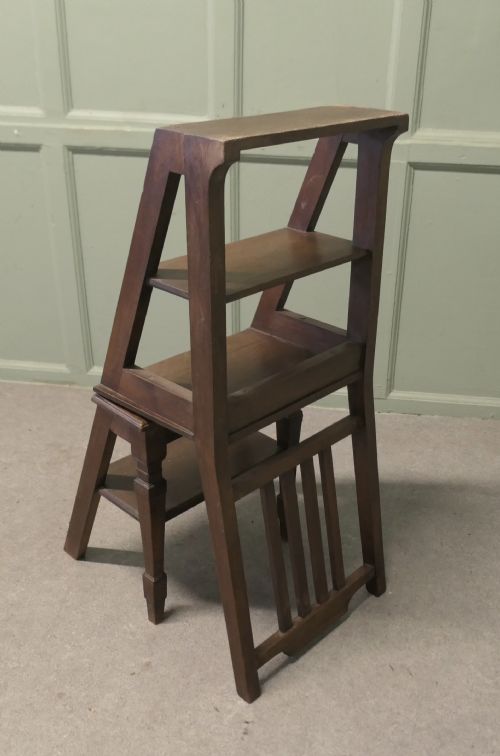
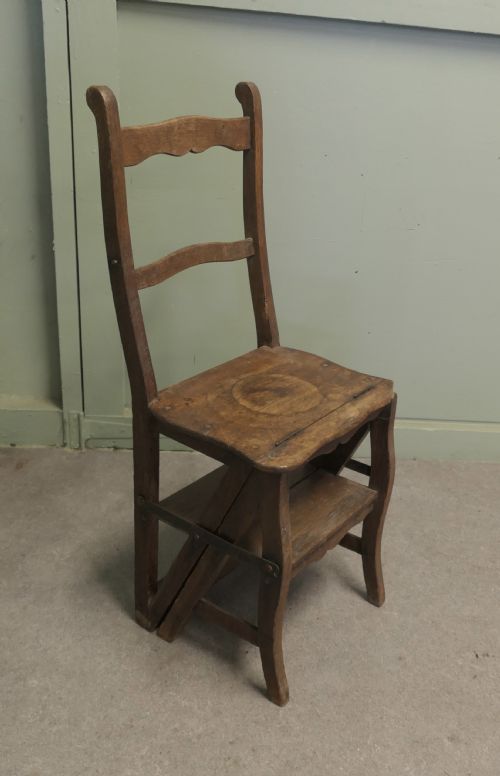
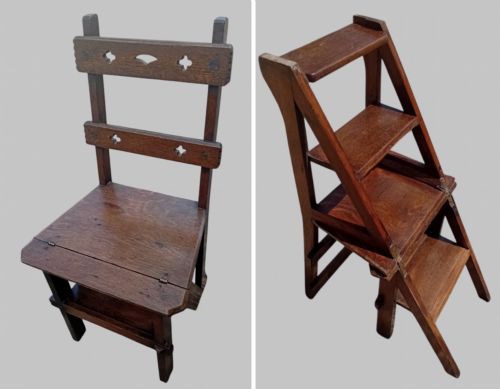
These clever antique library step chairs transform from a comfortable seat into a sturdy set of ladder steps for high bookshelves.
Antique Library Step Chair
An antique library step chair is a dual-purpose piece designed for country houses and town libraries to reach high shelves. Most examples found here date from the Georgian, Regency, and Victorian periods, alongside later Edwardian interpretations.
The primary forms combine either a library armchair or a porter's chair with a folding ladder mechanism. When closed, the piece functions as standard seating; when unfolded, the back or seat pivots to reveal sturdy treads.
Materials and construction methods
Cabinet makers utilised dense hardwoods including mahogany and oak to support the weight of a person climbing. These timbers provide the structural integrity required for the complex pivoting joints and folding frames.
Functional hardware plays a central role, with brass hinges, pivots, and iron brackets enabling the smooth transformation. Selected models incorporate leather upholstery on the seat or steps, alongside cane panels or hardwood treads.
Listings span the Georgian, Regency, and Victorian eras, with oak and mahogany being the predominant woods.
Assessing craftsmanship and design
Superior pieces conceal their mechanical purpose entirely when closed, appearing as a conventional armchair or stool. The precision of the joinery determines how smoothly the mechanism operates without sticking or straining the timber.
Finer examples display sophisticated cabinet making in the manner of known Regency makers, featuring well-figured mahogany or carved Gothic details. Lesser quality versions show heavier, more utilitarian construction with simpler oak framing.
Morgan and Sanders·Richard Hicks Bridgens
The Antique Library Step Chair Glossary
- Metamorphic
- Furniture designed to transform from one distinct function into another, such as a chair becoming a set of steps.
- Gothic Revival
- A design style drawing inspiration from medieval architecture, often featuring pointed arches, tracery, and heavy oak timbers.
- Arts and Crafts
- A movement prioritising traditional handcraftsmanship, honest construction, and simple forms over mass-produced ornamentation.
- Porters Chair
- An enclosed hooded seat originally designed to keep drafts away from the person sitting near a grand entrance hall.
Antique Library Step Chair: Frequently Asked Questions
How do metamorphic library step chairs work?
The chair back or seat sections pivot on hidden brass hinges and folding iron brackets. By lifting and rotating the upper framework, the components lock securely into a tiered ladder formation.
Once the climbing task is finished, the steps fold backward into the seat frame to restore the appearance of a standard armchair.
Are these chairs comfortable for daily sitting?
Most pieces were built primarily as functional library furniture rather than deep lounging chairs. The upright backs and wooden or leather seats serve well for reading at a desk or table.
Models styled as armchairs or porter chairs offer a more supportive sit while retaining the internal mechanism for high shelving access.
What woods were used for these chairs?
Mahogany and oak dominate the surviving examples from the Georgian and Victorian eras. Mahogany allowed for sharper cabinet details in Regency designs, while oak suited heavier Gothic Revival and Arts and Crafts pieces.
Secondary materials include brass for the operating pivots, iron for structural reinforcement, and occasional cane panels.
How do I date a library step chair?
Stylistic clues point to the period of origin, ranging from elegant Regency mahogany to sturdy Victorian Gothic oak. Finer reeded legs and classical proportions suggest the early nineteenth century.
Later Edwardian versions often display simpler Arts and Crafts influences or lighter hardwood construction.