
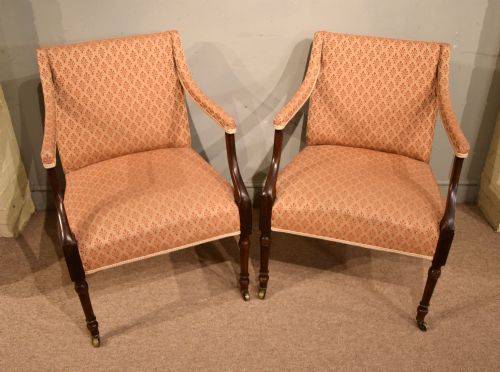
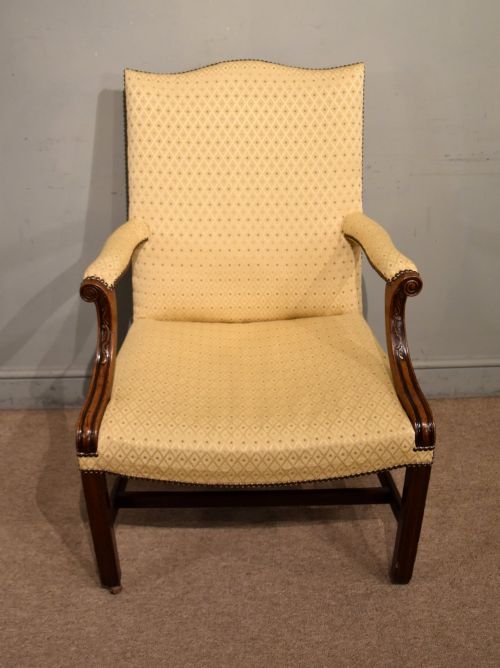
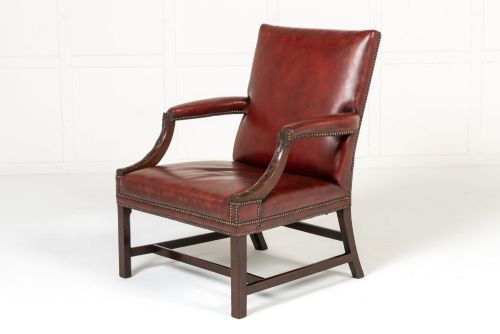
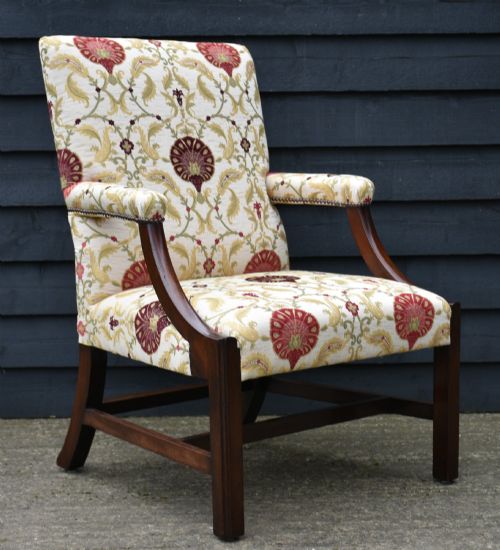
Antique Library Open Armchairs
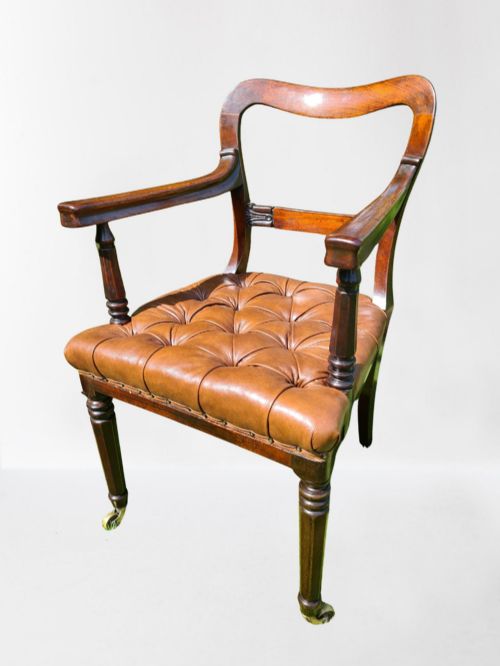
These antique library open armchairs bring solid mahogany frames, leather upholstery and Georgian or Regency proportions into domestic studies.
Antique Library Open Armchairs
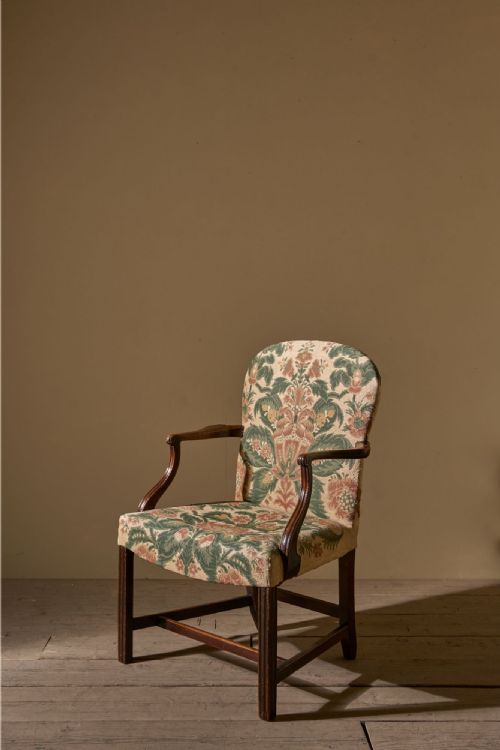
When you search for antique library open armchairs, you encounter sturdy seating designed for reading rooms, studies and country house libraries across several centuries. The pieces on this page span the Georgian, Regency and Victorian eras, alongside later revival pieces.
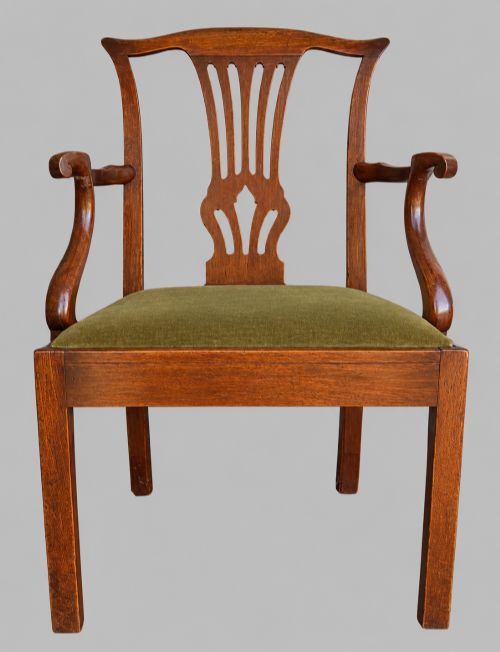
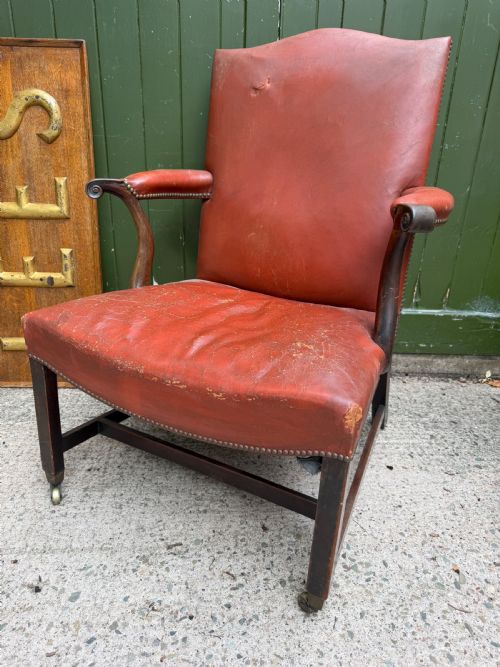
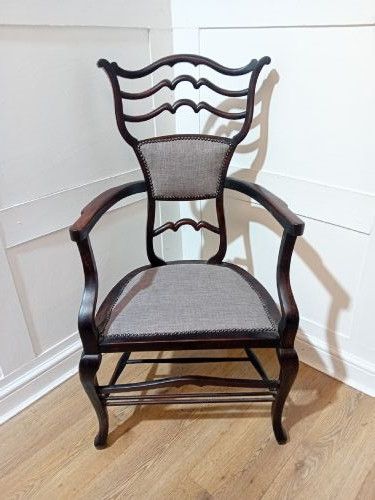
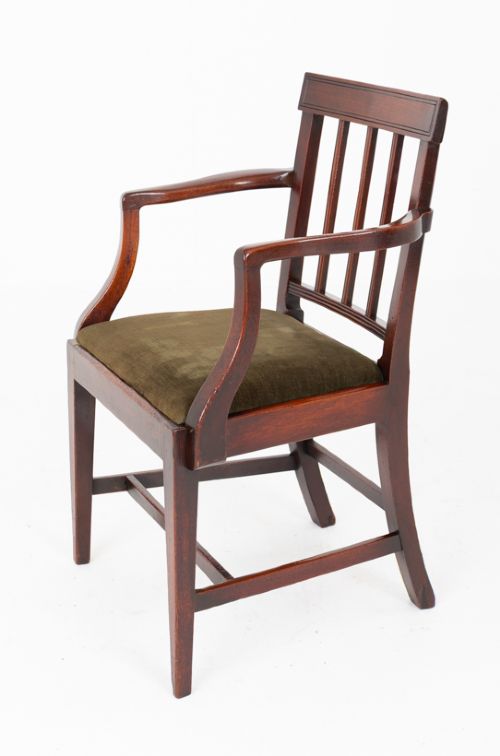
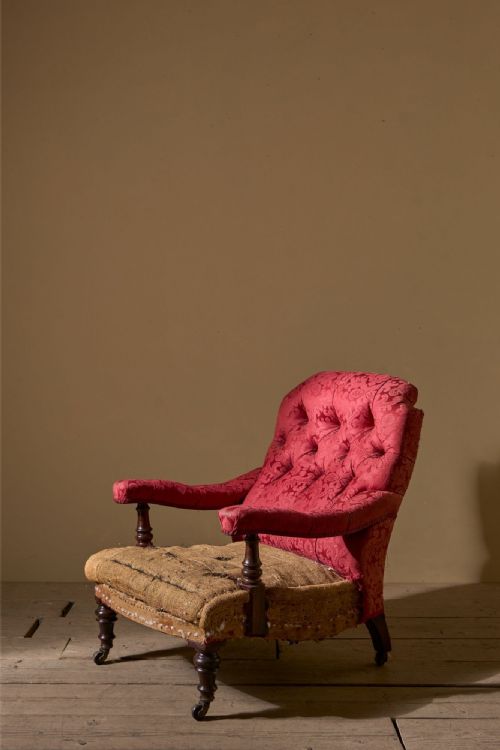
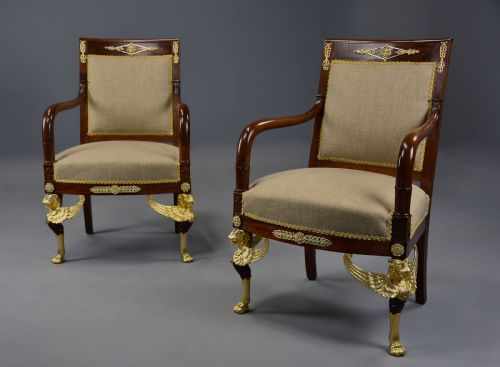
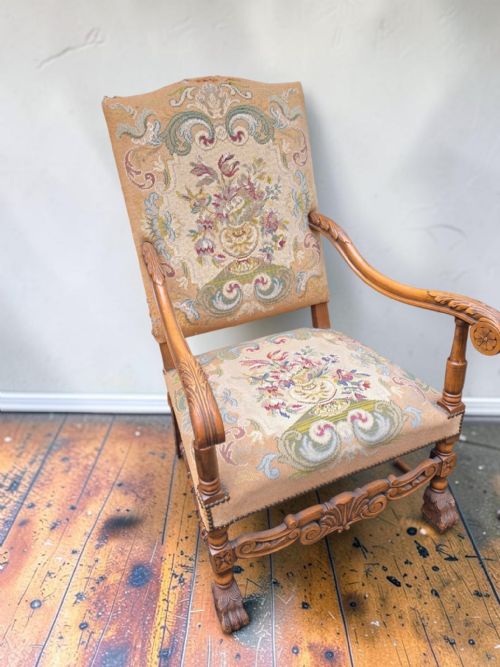
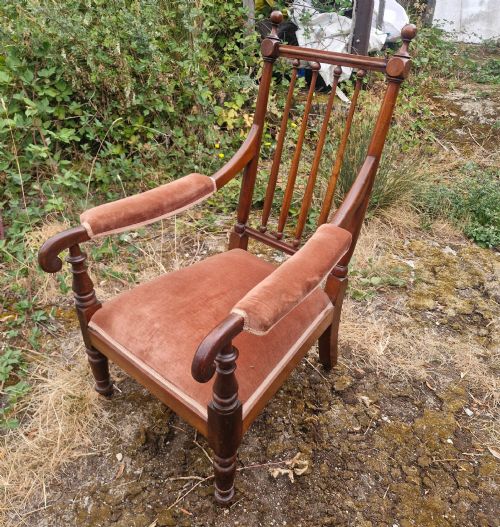
You meet heavy mahogany frames most often, frequently housing upholstered seats and padded armrests covered in leather, fabric, velvet or tapestry. Forms range from compact desk chairs to over-scaled Gainsborough armchairs and low-slung seating.
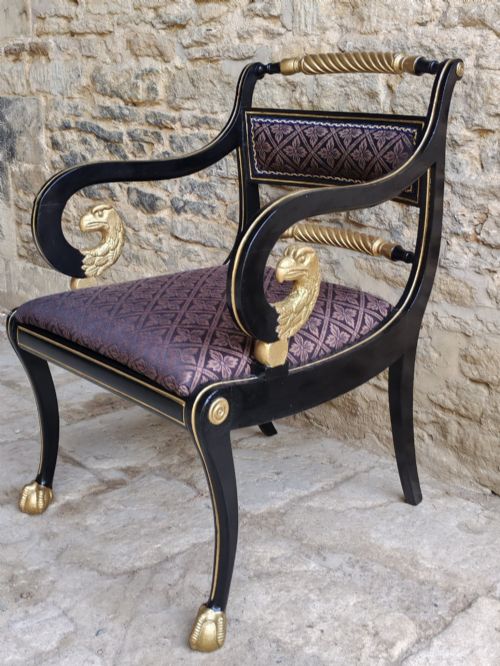
Many examples originate from English workshops, while others reflect French Empire and Directoire styles or Anglo-Indian craftsmanship in rosewood. These chairs combine formal architectural lines with practical comfort suited to long hours at a desk or reading table.
How they were made
Cabinetmakers constructed these frames primarily in solid mahogany, walnut and oak, utilising traditional joinery such as mortise and tenon to bear weight across the open arms and legs. Selected pieces incorporate carved details like blind fretwork, reeded members or parcel gilding.
Upholstery involved stuffing horsehair or natural fibres over webbing and springs within a secondary frame, then securing the outer covering using brass tacks or piping. Leather surfaces received hand-dyed finishes, while fabric and tapestry options were nailed directly to the wooden rails.
Listings feature mahogany, oak, walnut, and rosewood frames paired with leather, velvet, tapestry, and fabric upholstery across multiple centuries.
What varies in quality
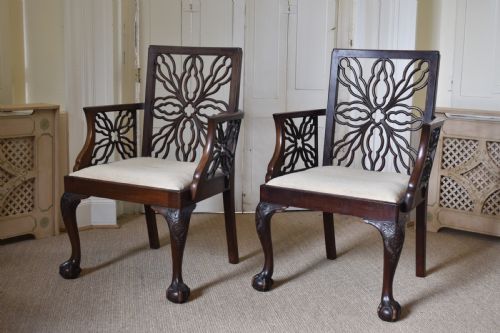
The standard of carving on the show wood distinguishes everyday seating from superior salon and library pieces. Crisp, deep hand-carved details on cabriole legs, arm terminals and crest rails indicate skilled craftsmanship.
Proportion and scale also separate standard items from exceptional ones. Well-balanced frames with correct seat heights and harmonious arm curves provide superior visual presence compared to stiffly executed or clumsily proportioned reproductions.
Gillows·Morison and Co·Holland and Sons·Hindley and Sons·Bruce James Talbert
The Antique Library Open Armchairs Glossary
- Gainsborough armchair
- A wide, upholstered seat with open padded arms, short legs and a high back, produced during the eighteenth century for writing desks and libraries.
- Gothic Revival
- A nineteenth-century style drawing on medieval architectural motifs, often seen in oak frames with pointed arch panels and tracery.
- Cabriole leg
- A furniture leg that curves out at the knee and tapers inward to an ankle, frequently terminating in a pad or claw foot on Georgian chairs.
- Blind carving
- Low-relief ornamentation carved directly onto a flat wooden surface, common on mid-eighteenth-century mahogany library chair rails.
- Fauteuil
- An open-framed armchair with upholstered armrests, originating in France and typically constructed from walnut or mahogany.
Antique Library Open Armchairs: Frequently Asked Questions
What is a Gainsborough chair?
A Gainsborough chair is a wide, upholstered armchair featuring open wooden arms designed during the eighteenth century for reading and desk work.
These pieces typically feature mahogany frames, short cabriole or square legs, and leather or fabric upholstery suited to a study environment.
How do I date an open armchair?
Dating relies on examining the timber species, leg profiles, joinery methods, and upholstery styles recorded across different eras like the Georgian and Victorian periods.
Earlier pieces often use solid mahogany with hand-carved details, while later nineteenth-century versions frequently incorporate oak, walnut, or revival motifs.
Where were these chairs used?
These armchairs served primarily in country house libraries, private studies, and formal offices for reading and writing tasks.
Their sturdy open-arm construction allowed generous seating space while keeping the occupant upright and supported at a desk.
Are these chairs comfortable for daily use?
Most library armchairs were built with supportive padded seats, armrests, and upright backs designed for prolonged sitting.
Historic padding materials like horsehair provide a firmer sit than modern foam, though many retain supportive frames suitable for regular use.