



Antique Leather Office Seating
Antique leather office seating brings together sturdy timber frames and worn hides, offering reliable comfort for daily work.
Antique Leather Office Seating
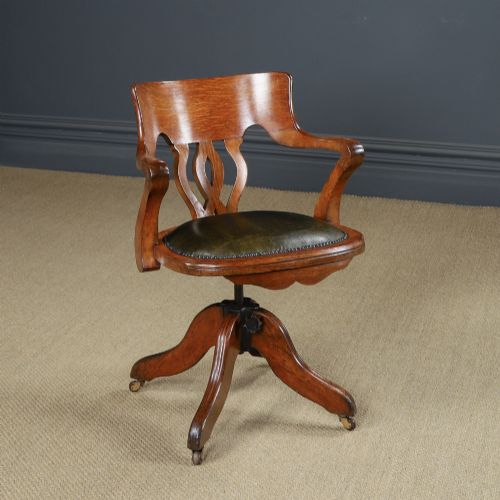
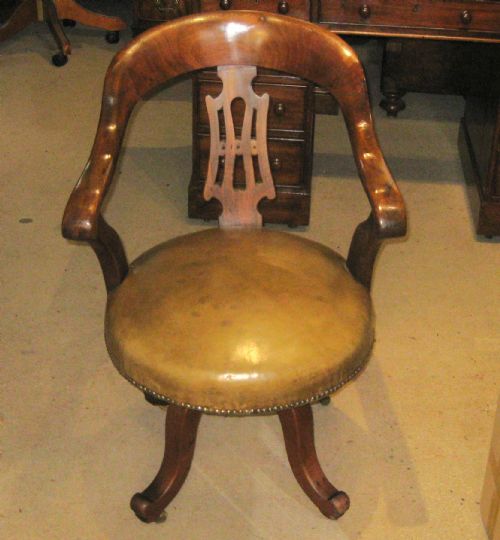
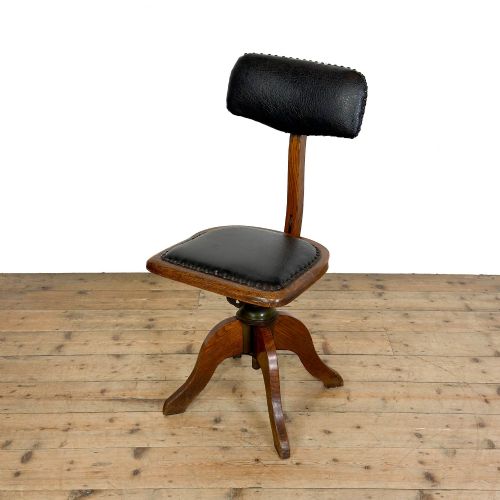
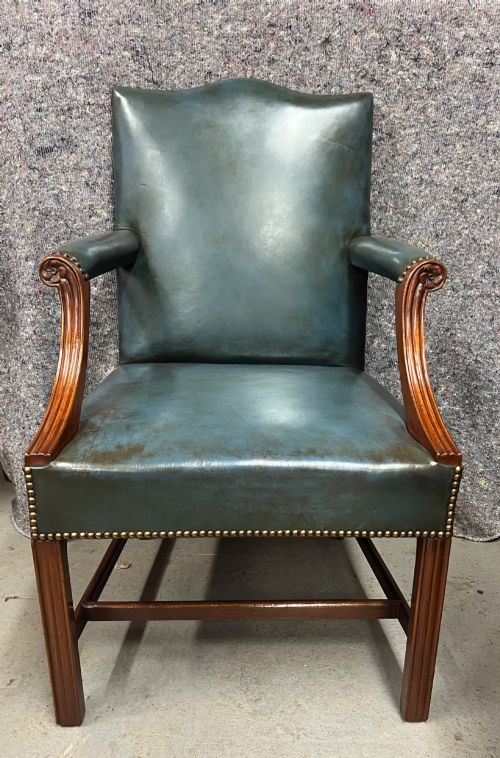
When you search for antique leather office seating, you find functional work chairs designed for desks, libraries, and studies across past centuries. These pieces combine supportive wooden structures with practical upholstered seats and armrests made for long hours at a table.
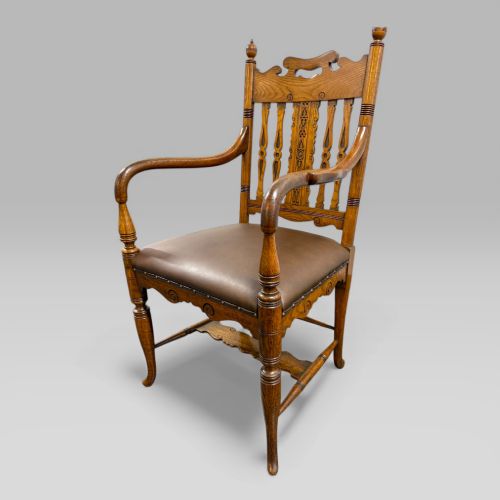
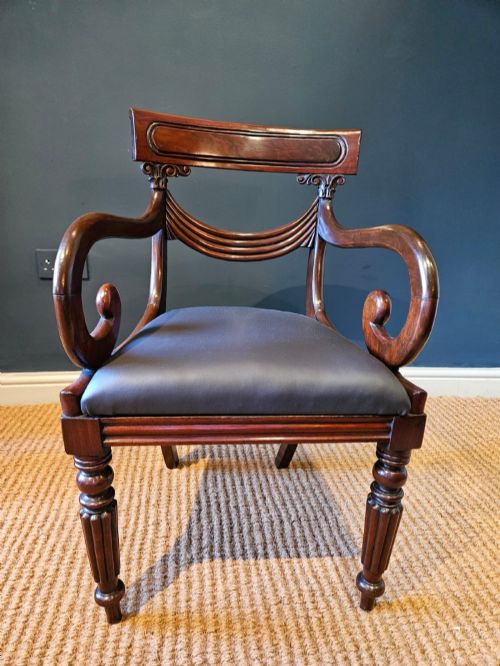
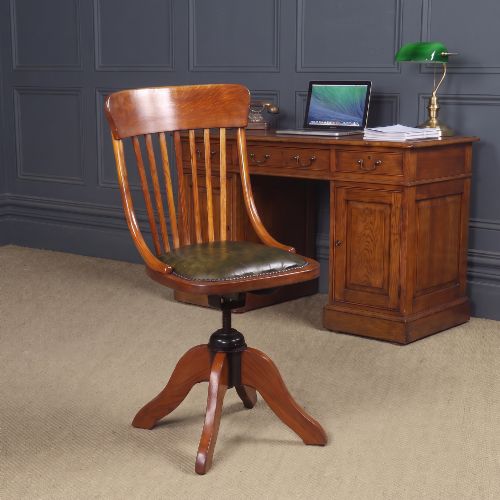
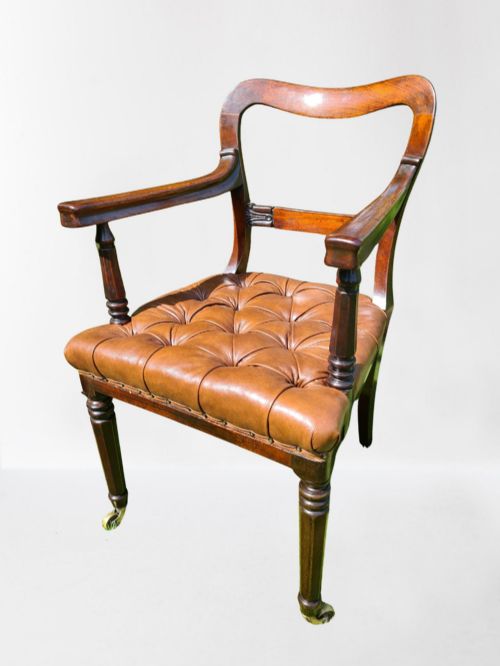
The versions you meet most often on this page span the Victorian and Edwardian eras, alongside pieces from the George V period and the nineteenth century. Common forms include revolving desk chairs, library armchairs, and swivel armless seats.
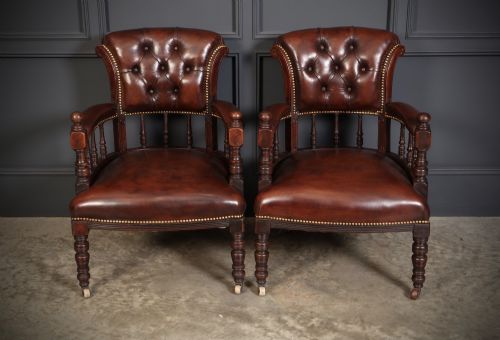
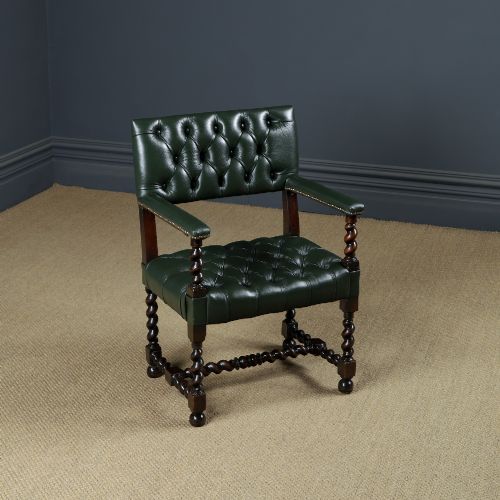
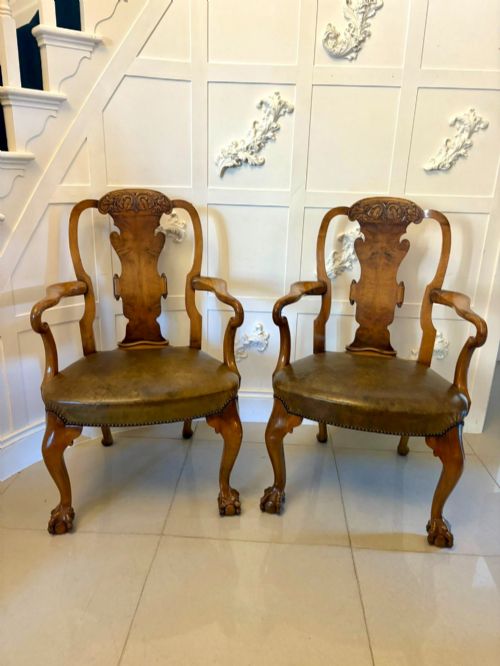
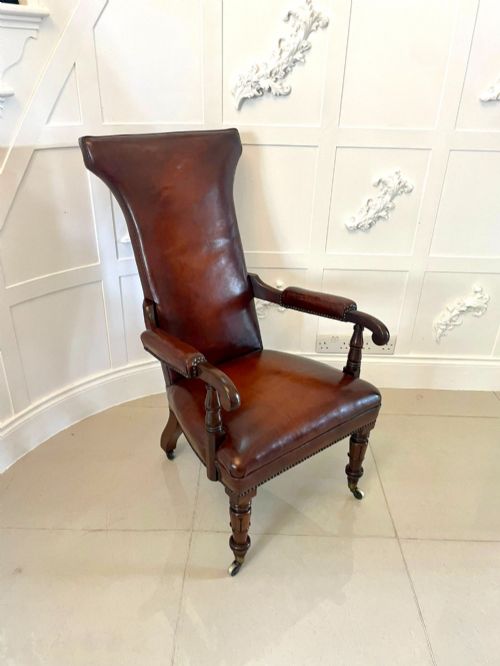
Makers utilised robust timbers like mahogany, oak, and walnut to build frames that survive decades of daily use. Leather upholstery, frequently secured with brass studs, completes the classic configuration designed for utility and presence in a study.
How they were made
Cabinetmakers constructed the frames using dense hardwoods such as mahogany, oak, and walnut, often shaping them with carved details or turned supports. Joinery techniques relied on mortise and tenon joints to withstand the twisting strain of swivel and tilt mechanisms.
Upholsterers stretched leather over stuffed seats and backs, fastening the edges with brass nails or studs. Iron and brass components formed the swivelling mechanisms and adjustable height screws found on later revolving desk chairs.
Antique Leather Office Seating Retail Price Guide 2026
Typical asking prices for leather office seating among the pieces listed under this phrase on Sellingantiques today, from the lower quarter to the upper quarter. They describe what is for sale here now, not the wider market.
The inventory includes specialised seating forms ranging from standard desk chairs to heavy ships chairs and revolving library armchairs.
What varies in quality
The refinement of the timber carving and the selection of the wood set finer examples apart from standard workshop output. Carved walnut and figured mahogany frames demonstrate greater artisan skill than plain beech or basic oak constructions.
The integration of the revolving mechanism and the thickness of the leather hide determine the tactile success of the chair. Superior pieces retain original swivel actions and substantial hides that age with a rich patina.
Gillows·Bruce James Talbert
The Antique Leather Office Seating Glossary
- Revolving desk chair
- A work seat fitted with an undercarriage that allows the top to turn through a full circle. These often include mechanical height adjustment.
- Library armchair
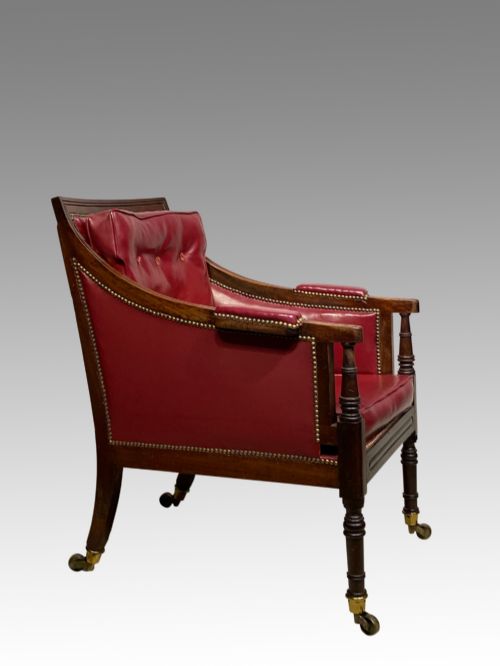
- A wide, upholstered seat designed for comfort in a reading room or study. They frequently feature padded arms and supportive high backs.
- Gainsborough style
- A type of open-arm chair with a wide seat, popular in the eighteenth century and reproduced in later eras. They commonly pair mahogany frames with leather upholstery.
- Captain's chair
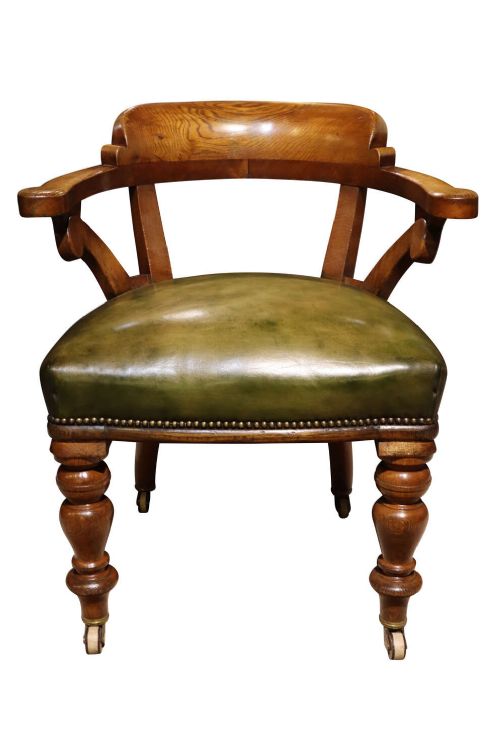
- A sturdy timber chair with a curved wooden backrest wrapping around the upper frame above spindle supports. They often incorporate a leather seat pad.
- Ormolu
- Gilded bronze mounts applied to furniture for decorative effect. This technique appears on revival pieces from the nineteenth century.
Antique Leather Office Seating: Frequently Asked Questions
How do I adjust a swivel desk chair?
Many Edwardian and Victorian revolving chairs use a central threaded iron spindle beneath the seat. Turning the seat itself raises or lowers the height.
Older mechanisms can stiffen over time, so apply a small amount of oil to the screw thread to ease movement without damaging the surrounding wood.
Can I use these chairs at a modern desk?
Most antique office seats fit standard desk heights, though older models generally sit lower than modern counterparts. Check the seat clearance before placing one at a contemporary workstation.
Consider adding a thin, period-appropriate leather pad if you need extra height without altering the original frame.
How do I care for antique leather?
Clean the leather surface gently with a dry or slightly damp cloth to remove dust. Avoid harsh chemical cleaners that strip natural oils from the hide.
Apply a specialist leather conditioner periodically to keep the material supple and prevent cracking across the creases.