

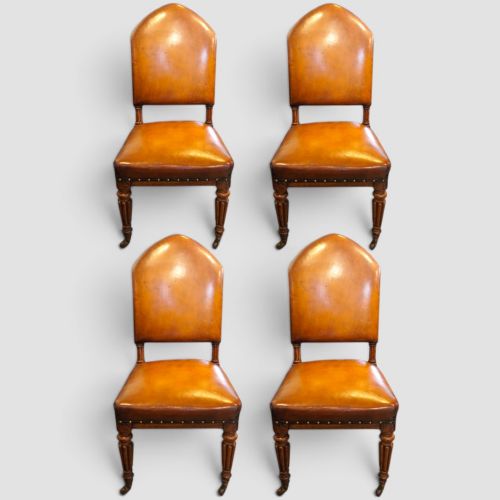
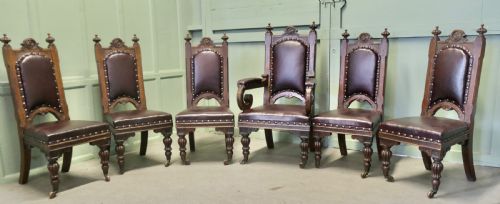
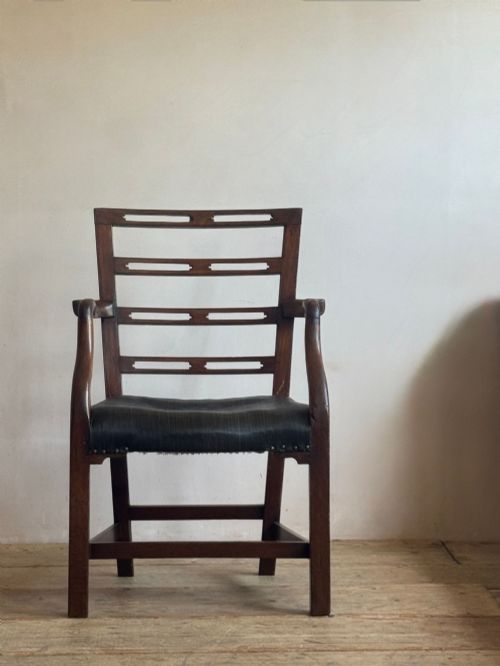
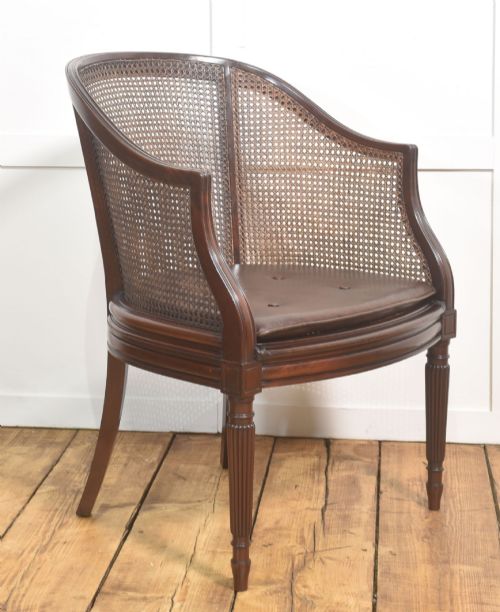
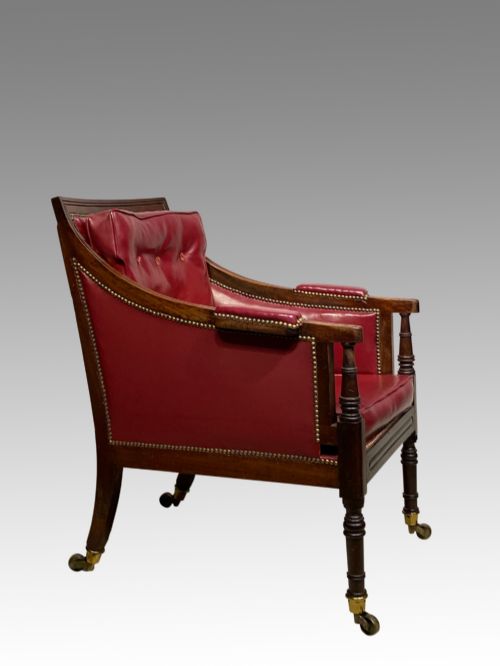
Antique Leather Desk Seats
These antique leather desk seats offer proper support for daily writing, combining sturdy timber frames with hard-wearing hides that age gracefully.
Antique Leather Desk Seats
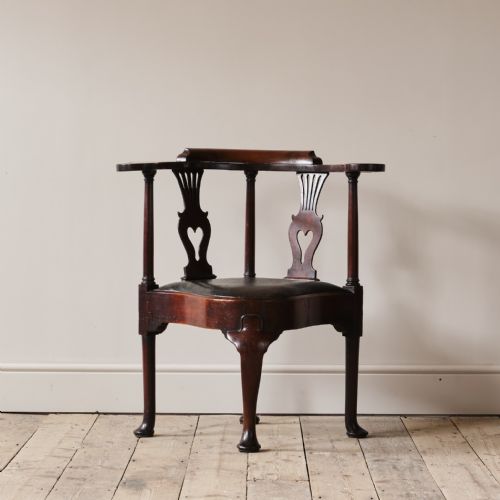
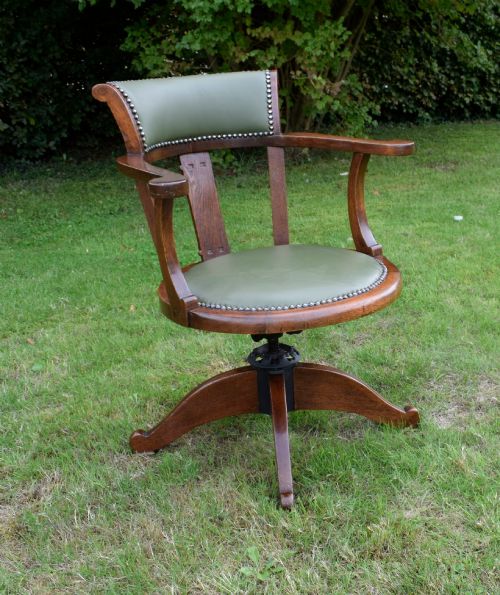
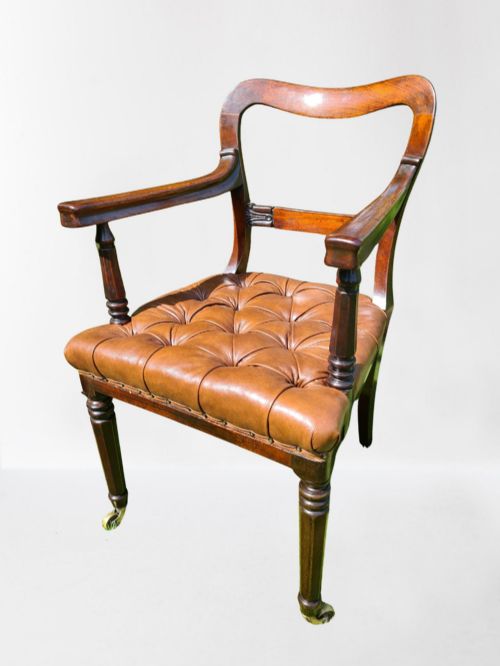
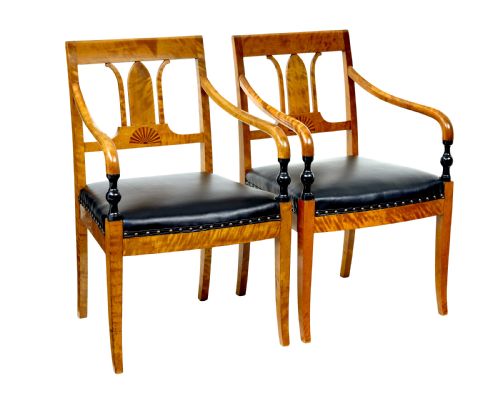
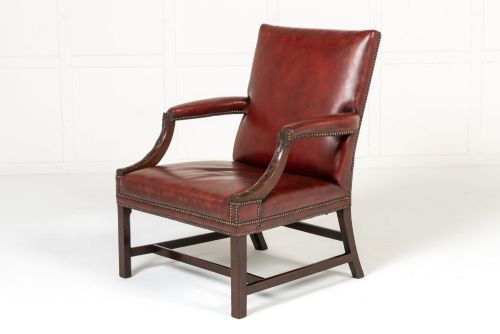
When you search for antique leather desk seats, you are looking at practical seating designed for studies, libraries, and offices across the eighteenth, nineteenth, and early twentieth centuries. The pieces on this page span Georgian, Victorian, Edwardian, and Art Deco eras, taking the form of revolving swivel chairs, deep Gainsborough armchairs, and upright reading or office chairs.
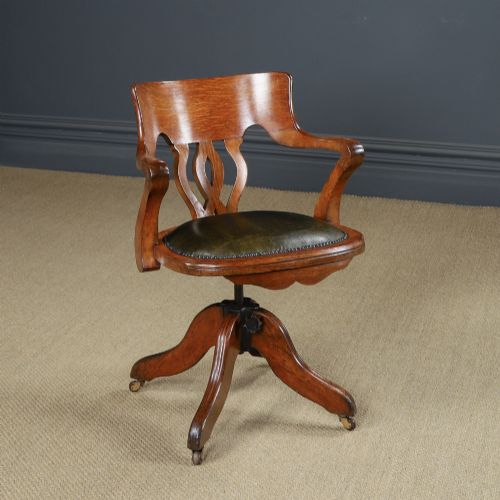
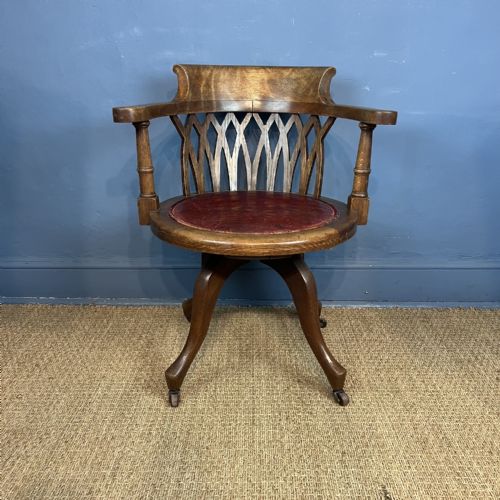
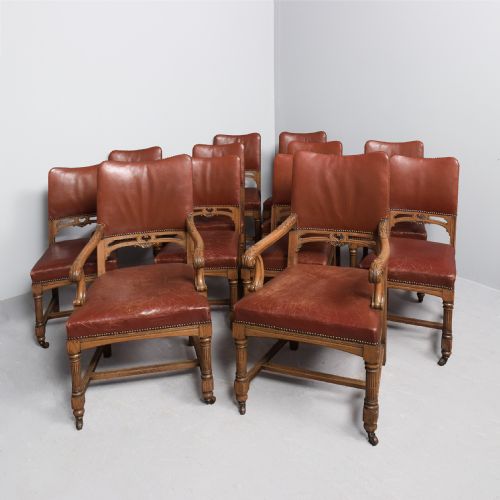
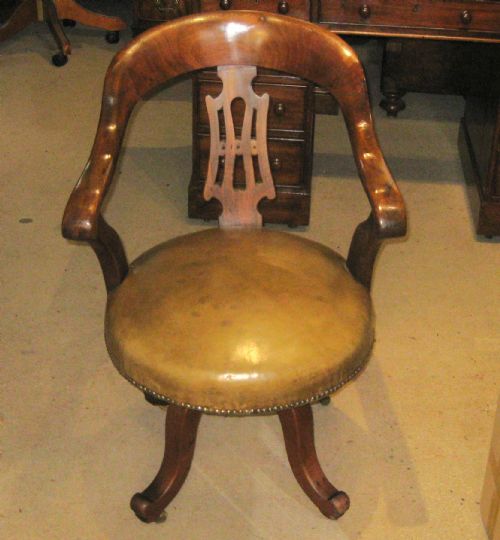
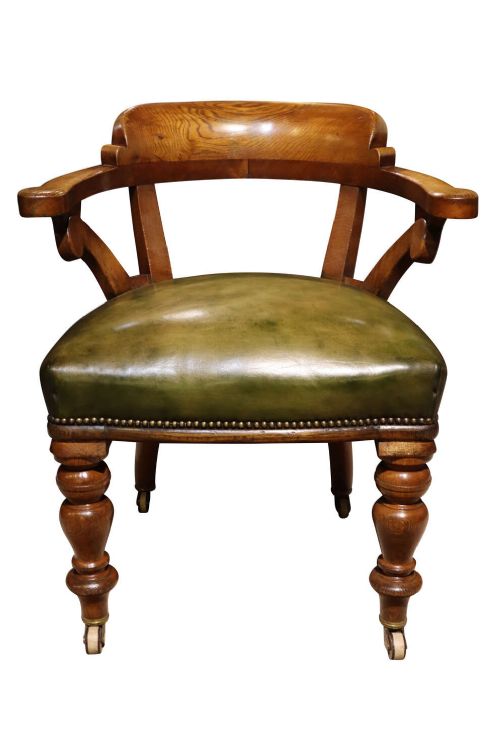
You are most likely to meet Victorian and Edwardian examples in mahogany or oak, often featuring revolving mechanisms or fixed frames upholstered in green or red leather. These range from heavy library armchairs to compact swivel office chairs with brass details.
Materials and construction
Cabinetmakers built these frames primarily in mahogany, oak, and walnut, selecting dense timbers capable of enduring constant movement and weight. Joinery relied on mortise and tenon joints to keep frames rigid, particularly on swivel models subjected to twisting forces.
Upholsters worked with genuine leather, securing the hide to the wooden frames with brass studs or decorative nailing. Many revolving models incorporated metal spindles and brass hardware to allow tilting and turning functions.
Listings feature woods spanning mahogany, oak, walnut, rosewood, and birch across Georgian, Victorian, Edwardian, and Art Deco periods.
Craft and proportion
The distinction between standard office seating and superior library pieces lies in the depth of the timber carving and the calibre of the turning mechanisms. Finer examples display hand-carved details like blind fretwork on the legs and heavy-gauge brass castors.
Proportion and wood selection also dictate standard; highly figured mahogany, golden oak, or burr elm elevate a piece far above utilitarian workshop seating. The integration of the swivel action without excessive wobble marks the work of better makers.
Gillows·Bruce James Talbert
The Antique Leather Desk Seats Glossary
- Gainsborough chair
- A wide, low-seated armchair with upholstered back and armrests, designed in the eighteenth century for reading and writing desks.
- Swivel desk chair
- A revolving seat mounted on a central pillar, frequently featuring tilt mechanisms and brass castor feet for office mobility.
- Bergère
- An enclosed armchair with wooden framing and cane or upholstered sides, often paired with loose leather seat cushions.
- Blind carving
- Low-relief ornamentation carved directly into the solid wood surface without piercing through the timber.
- Tub armchair
- A comfortable seat with a curved, continuous back and armrest rail enclosing the sitter.
Antique Leather Desk Seats: Frequently Asked Questions
How do I identify a revolving desk chair?
These chairs feature a central wooden or metal spindle beneath the seat, allowing the top to turn independently of the base. Many include mechanical tilt controls operated by under-seat tension screws.
Earlier nineteenth-century versions use concealed wooden screw threads, while later Edwardian models rely on cast iron and brass hubs.
Are all these chairs suitable for daily computer work?
Most antique desk seats function well at modern desk heights, provided the seat height matches your workspace ergonomics. Swivel and tilt mechanisms on Victorian and Edwardian examples offer adequate movement for daily tasks.
Keep in mind that older seat pans tend to be firmer than modern foam cushions, relying on traditional webbed and sprung foundations.
What is the difference between a Gainsborough and a library chair?
A Gainsborough chair specifically denotes an open-armed eighteenth-century seat with upholstered back and sides, built for writing tables. Library chairs often encompass heavier, fully upholstered club styles designed for reading comfort.
Both utilise durable leather hides to withstand heavy use in domestic studies.
How can I tell the period of an oak desk chair?
Look to the framing styles and timber grain to determine the era, noting that Georgian pieces display simpler, elegant proportions while Victorian versions often feature heavier mouldings. Edwardian and later twentieth-century models frequently incorporate stamped metal swivel hardware.
Fastening methods, such as hand-forged screws versus slotted machine screws, also help date the construction.