
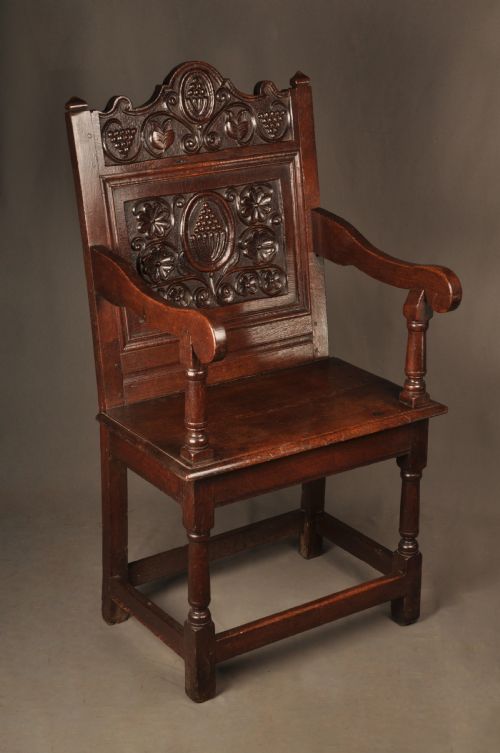


Antique Lancashire Chairs
These antique lancashire chairs embody the robust vernacular carpentry of northern English country houses, offering sturdy rush seats and turned wooden frames that suit rustic interiors.
Antique Lancashire Chairs
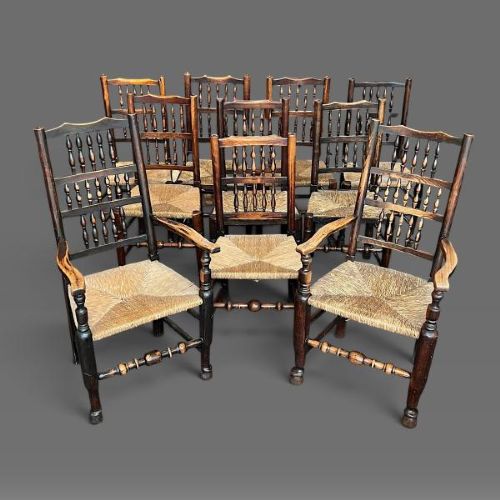
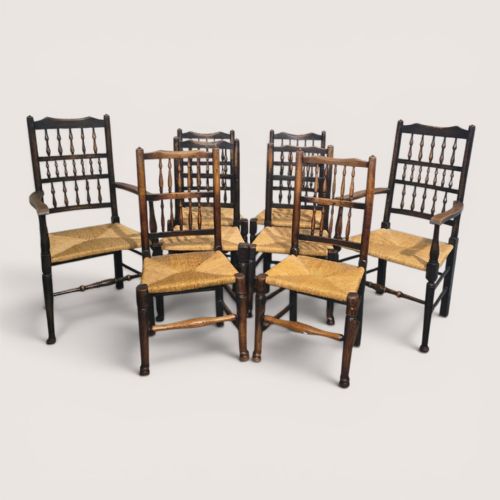
When a buyer searches for antique lancashire chairs, they are looking at heavy regional seating originating primarily from northwest England. The pieces vary widely in form, spanning rigid wainscot constructions, low-back designs, and tall ladder-back or spindle-back formats.
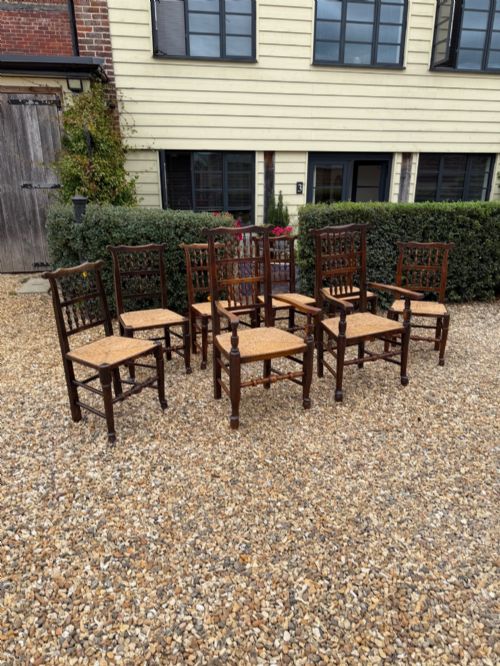
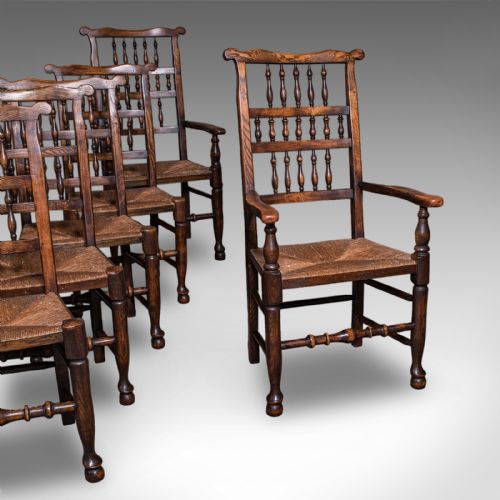
The version most commonly met on this page is the spindle-back or ladder-back country dining chair made from regional hardwoods like ash and elm. These rush-seated examples reflect generations of domestic use in farmhouse kitchens and vernacular interiors.
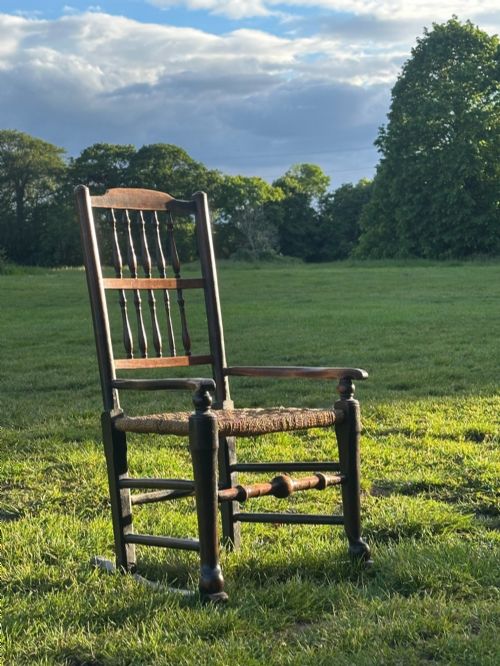
Beyond standard dining forms, the selection encompasses carver armchairs, rocking chairs, and occasional pairs designed for domestic comfort. Alongside chairs, occasional bedside commode tables appear from the Regency period, carrying the same regional provenance.
How they were made
Makers utilised native timber found close to hand, turning to oak for seventeenth-century wainscot frames and shifting toward a combination of ash and elm for later spindle-backs. Beech and alder also appear in regional framing, providing the necessary resilience for everyday farmhouse seating.
Frames relied heavily on traditional joinery and turned components, with spindles and stretchers shaped on bodgers' pole lathes. Seats were woven tightly from natural rush, creating a yielding surface that supported occupants before the widespread adoption of upholstered stuffing.
The material record shows a clear shift from seventeenth-century oak wainscot frames to eighteenth and nineteenth-century ash and elm spindle-backs.
What varies in quality
The standard of a piece rests on the integrity of its turned components and the balance of its proportions. Heavier framing timbers and tighter spindle turnings indicate a more deliberate execution by regional makers rather than hasty utilitarian production.
Consistency across a set determines the standing of matched groups, particularly when dealing with harlequin sets assembled from related regional workshops. The preservation of original rush seating and untouched timber surfaces maintains the integrity of the piece.
The Antique Lancashire Chairs Glossary
- Wainscot chair
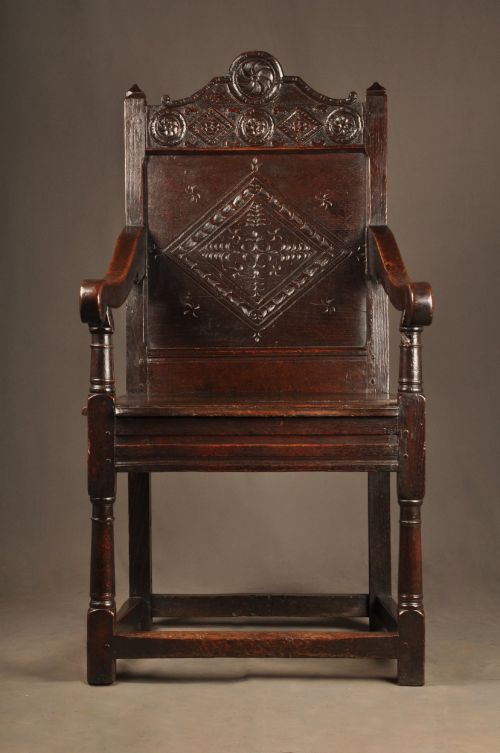
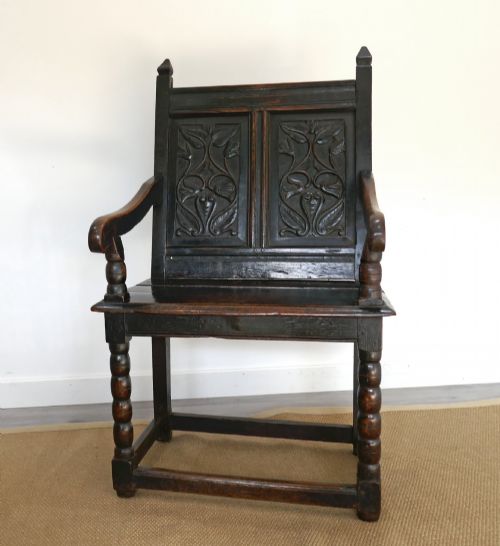
- A heavy wooden armchair of seventeenth-century origin featuring panelled backs and solid wooden seats. These early forms represent the most formal end of regional vernacular seating.
- Spindleback
- A chair back constructed with numerous thin, turned vertical wooden spindles. This design provides lightweight strength and flexibility to country dining chairs.
- Ladderback
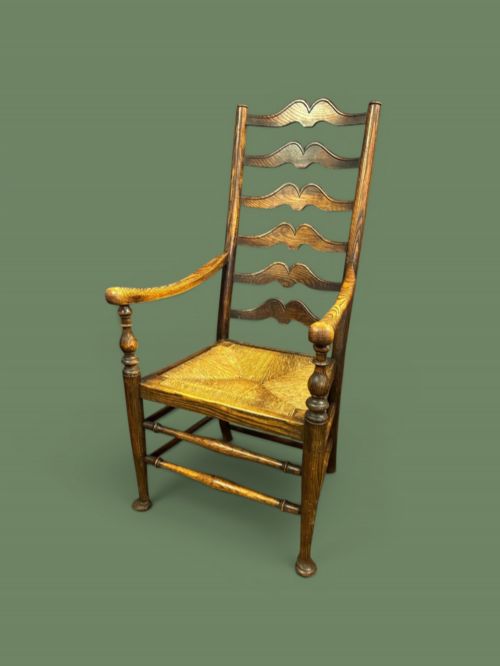
- A chair featuring horizontal arched slats between the rear upright posts. The style allows for comfortable back support in domestic farmhouse settings.
- Rush seat
- A seating surface woven from dried marsh rushes wound around a wooden frame. This traditional method creates a durable, slightly springy platform for daily use.
- Harlequin set
- A collection of chairs sharing similar styles, periods, and materials but gathered from different sources. Such sets were commonly assembled to provide enough seating around large country tables.
- Carver
- An armchair designed with arms, often placed at the heads of dining tables. These pieces mirror the simpler side chairs in their turned spindle or ladder-back construction.
Antique Lancashire Chairs: Frequently Asked Questions
How do I date an antique lancashire chair?
Dating relies on observing changes in timber choice, turning styles, and structural assembly. Seventeenth-century examples feature solid panelled oak, whereas eighteenth and nineteenth-century versions typically employ ash and elm frames with turned spindles.
Construction marks, such as hand-cut pegs and lathe tool ridges, help narrow the period of manufacture. Regional variations also shift from heavy wainscot forms to lighter ladder-backs as vernacular furniture evolved.
Are rush seats durable for daily use?
Rush seating is surprisingly resilient when kept in dry indoor environments and used with reasonable care. The natural fibres flex under weight and return to their shape without snapping.
Protecting the woven strands from excessive moisture and sharp objects ensures the seat lasts for decades. When wear eventually occurs, traditional rush seating can be re-woven by skilled craftspeople.
What is the difference between a wainscot and a spindleback?
A wainscot chair is an early, solid-wood armchair featuring carved panels and a wooden seat. These heavy pieces date primarily to the seventeenth century and reflect high-status vernacular joinery.
In contrast, spindle-backs utilise light turned uprights and woven rush seats for a more flexible, utilitarian design. They appeared in large numbers during the eighteenth and nineteenth centuries for kitchen and dining use.
How should I care for antique country timber?
Maintaining country wood involves keeping pieces away from direct heat sources and dramatic humidity fluctuations. Sudden environmental shifts cause timber to dry out, warp, or split over time.
Applying a light coat of traditional beeswax periodically nourishes the dry grain and preserves the surface sheen. Avoid modern silicone polishes, which build up and dull the historic finish of the wood.