



Antique Lacquered Chair
An antique lacquered chair brings a rich, glossy surface and centuries of cross-cultural design into a room.
Antique Lacquered Chair
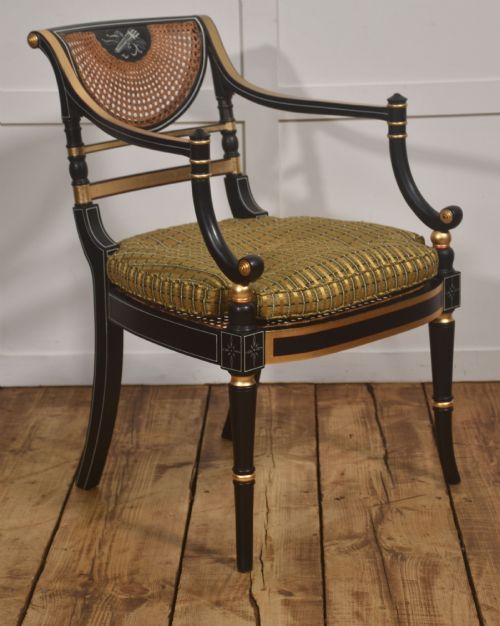
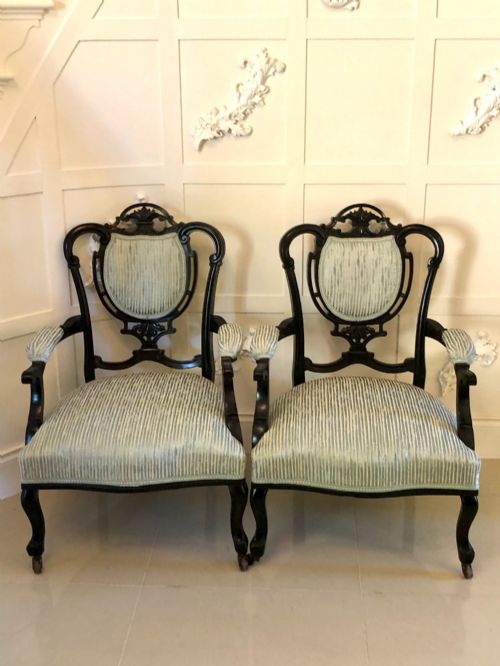
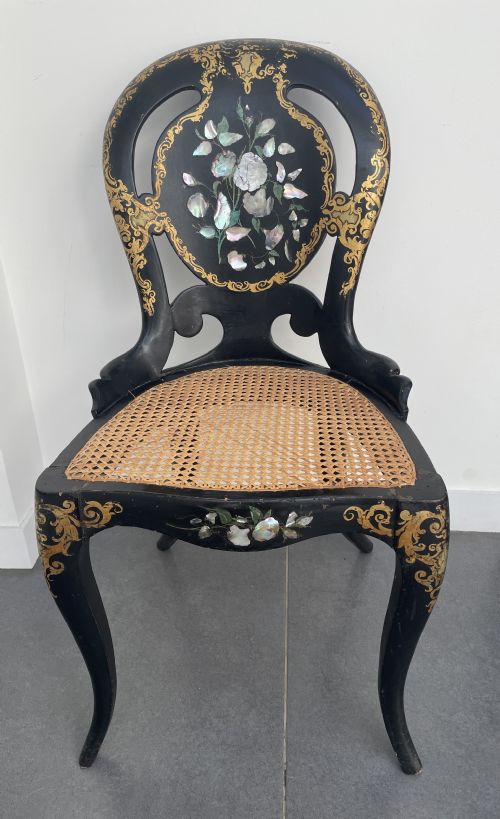
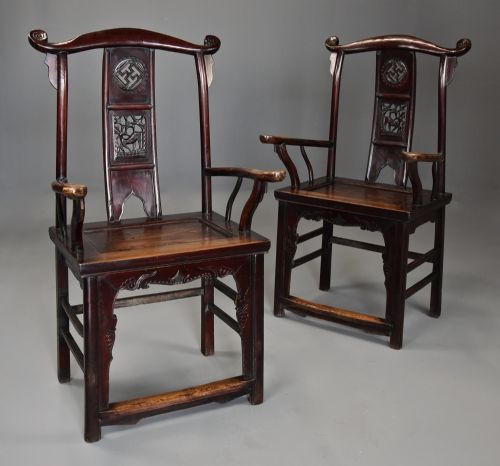
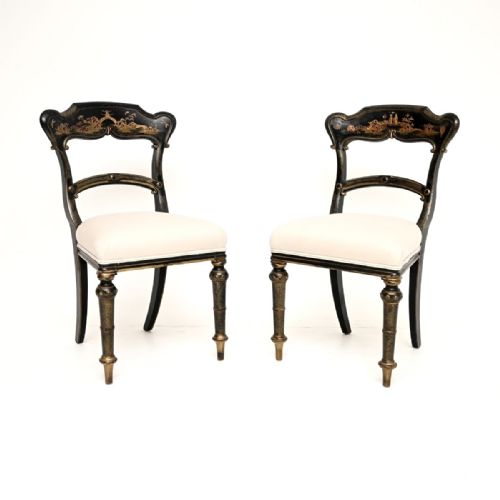
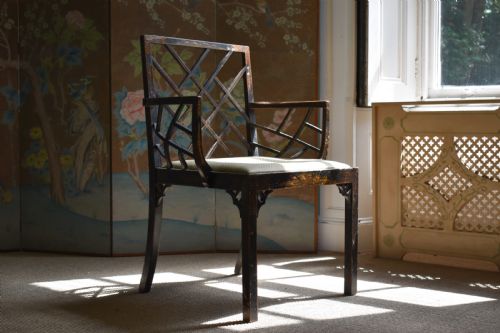
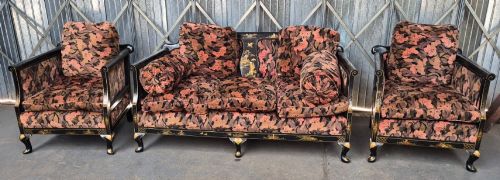
An antique lacquered chair encompasses seating finished with traditional resin, varnish or japanning, spanning origins from English workshops to Chinese dynasties. The pieces met most often on this page include Victorian papier-mâché bedroom chairs, Edwardian chinoiserie armchairs, and nineteenth-century Chinese elm seating.
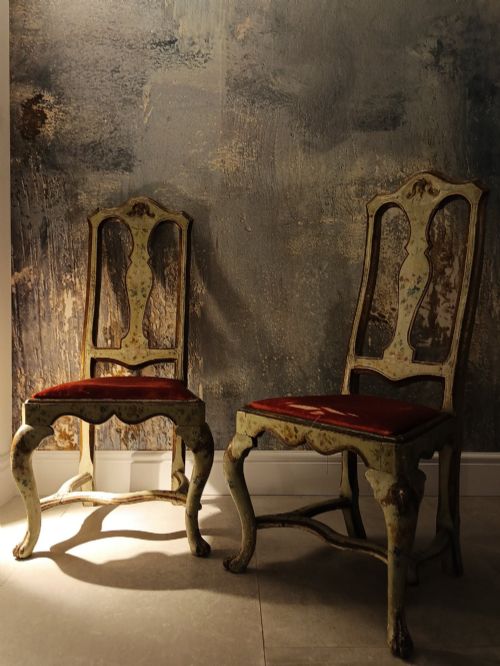
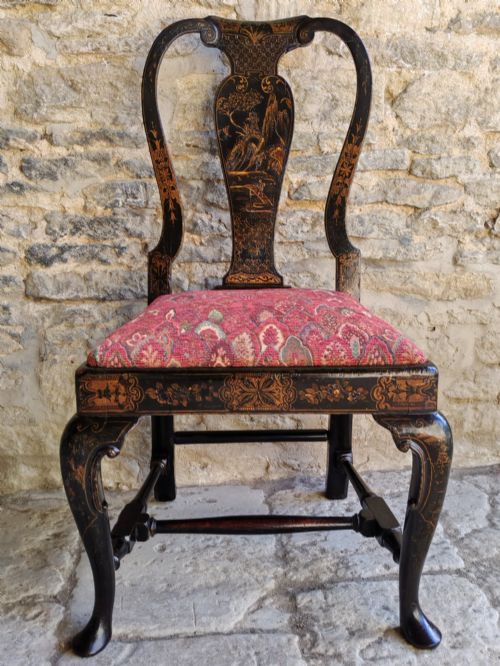
Makers produced these works in varied forms, from formal side chairs and dining sets to low concubine chairs, yokeback armchairs, and deep library seats. European iterations frequently lean towards Queen Anne or Regency influences, whilst Asian examples showcase carved red lacquer and regional hardwoods.
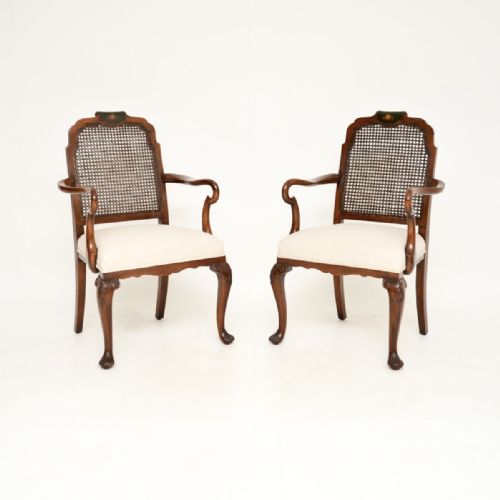
Surviving items often retain original gilt decoration, mother of pearl inlay, or woven cane seats. Buyers select them for their distinct visual weight and the depth that layered surface finishes acquire over generations of use.
How they were made
Craftsmen built these frames using regional timbers such as European walnut, satinwood, elm, teak, and occasionally papier-mâché for lighter Victorian frames. Joinery depended on traditional methods suited to the wood type, allowing complex curves in Chinese yokeback arms and delicate lines in English satinwood.
The defining finish involved repeated applications of lacquer, sap, or japanned varnish, sometimes built up in layers and cured before receiving painted or gilt detailing. Artisans integrated woven cane panels, textile squab cushions, and carved cinnabar lacquer inserts directly into the structural design.
Antique Lacquered Chair Retail Price Guide 2026
Typical asking prices for lacquered chair among the pieces listed under this phrase on Sellingantiques today, from the lower quarter to the upper quarter. They describe what is for sale here now, not the wider market.
Materials recorded across the selection include gilt, cane, fabric, elm, walnut, teak, and papier-mâché.
What varies in quality
Quality rests in the integrity of the underlying timber frame and the survival of the original surface finish. Pieces that retain their early gilding, hand-painted chinoiserie motifs, or untouched red lacquer hold significantly more character than later re-painted examples.
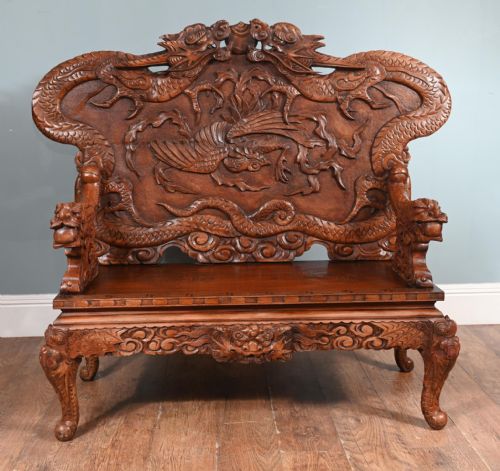
Refinement shows in the crispness of carved details, such as dragon benches or floral motifs on elm and walnut, alongside the tightness of cane work and structural joints. The depth achieved in the lacquer layers dictates the optical richness of the piece.
The Antique Lacquered Chair Glossary
- Japanning
- European imitation of East Asian lacquerwork developed during the seventeenth century. Craftsmen applied successive coats of varnish and heated them to achieve a hard, glossy dark finish.
- Yokeback
- Traditional Chinese chair design featuring a curved top rail resembling a yoke. This form provides ergonomic support and appears frequently on elm armchairs.
- Cinnabar
- Vermilion-coloured mineral pigment used in Chinese lacquerwork. Artisans carved deep relief designs into thick layers of this red material.
- Bergere
- Upholstered French armchair style featuring enclosed cane panels on the back and sides. Edwardian makers adapted this form with lacquered frames.
- Papier-mâché
- Composite material made from paper pulp mixed with glue and resin, pressed into moulds. Victorian manufacturers used this for lightweight, highly decorated chair frames.
Antique Lacquered Chair: Frequently Asked Questions
How do I clean an antique lacquered chair?
Dust gently with a dry, soft microfibre cloth to prevent scratching the delicate glossy surface. Avoid all modern chemical polishes, water, and alcohol, which can soften or dissolve historic lacquer and varnish.
Consult a professional conservator if the finish shows flaking or active deterioration. Preserving the original patina requires minimal intervention and stable indoor humidity.
Are these chairs suitable for daily seating?
Many sturdy examples, particularly nineteenth-century Chinese elm and Edwardian hardwood pieces, function well for regular use. Lighter items like Victorian papier-mâché or delicate eighteenth-century side chairs suit gentle use or display.
Check the stability of the joints and the condition of cane or fabric before regular placement. Heavier frames handle everyday demands better than fragile decorative variants.
What is the difference between japanning and true lacquer?
True Asian lacquer utilises processed tree sap native to East Asia, building deep, durable layers over months. Japanning is a European technique using shellac, varnishes, and heat-curing to replicate that glossy finish.
Both finishes create rich, dark surfaces, but European japanned pieces often exhibit more visible crazing over time. Understanding the technique helps identify the geographic origin of the workshop.
How can I date an antique lacquered chair?
Dating relies on combining the stylistic period, such as Queen Anne, Regency, or Edwardian, with material analysis. Tool marks on the underside of the wood and the composition of the lacquer layers offer further clues.
Compare the construction methods and decorative motifs against documented examples from the same region. Subtle shifts in chair geometry often distinguish eighteenth-century forms from later revivals.