




Antique Lacquer Urn
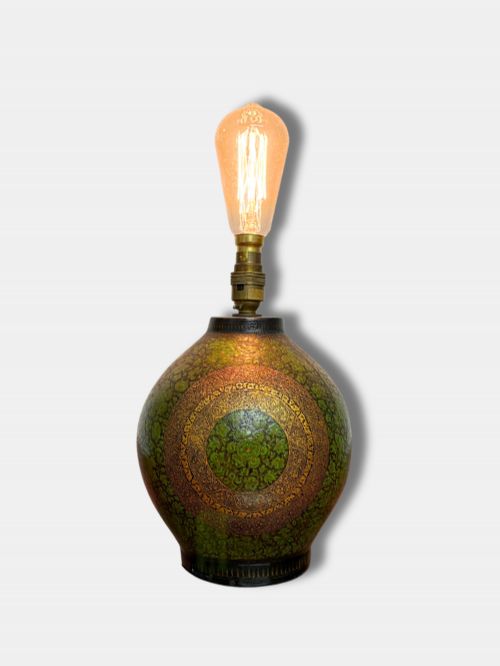
These antique lacquer urn pieces bring rich global trade history and deep decorative texture into a room, offering striking form and period surface finish.
Antique Lacquer Urn
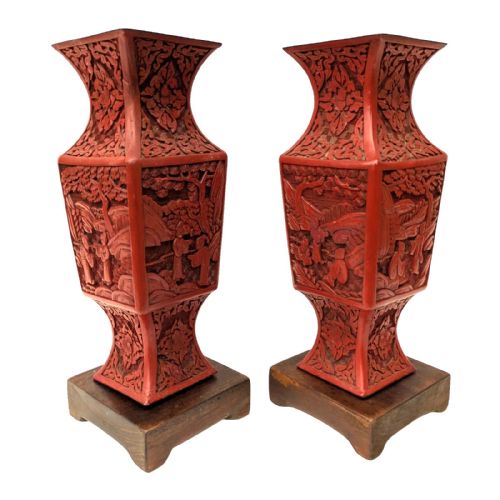
When you search for an antique lacquer urn, you find a diverse group of decorative vessels spanning several continents and centuries. The selection ranges from carved red cinnabar pieces to delicate Kashmiri hand-painted examples.
Most pieces on this page originate from Asian traditions, including Chinese export works and Japanese Meiji period creations, alongside European interpretations like Edwardian chinoiserie and toleware.
Forms vary significantly, encompassing massive temple vases, table lamps, plant stands, and chestnut urns rather than strict classical funerary urns.
Materials and construction methods
Artisans built these objects using wood, papier-mache, porcelain, and metal toleware as bases for the complex surface treatments. Lacquer layers, sometimes combined with gold leaf, paint, and brass mounts, created resilient and glossy finishes.
Carved cinnabar pieces required building up thick coats of red lacquer before carving intricate relief patterns into the surface. Japanese and European makers utilised black paint, japanning, and lacca povera techniques to mimic or adapt oriental styles.
Listings feature items from the 19th Century, Victorian, Edwardian, and 1930s periods, incorporating materials such as lacquer, papier-mache, and toleware.
Judging the quality of lacquer vessels
Quality rests primarily in the depth and execution of the surface finish, from the precision of carved red cinnabar relief to the stability of the underlying wood or papier-mache core. Superior examples show meticulous detail in gold leaf application and hand-painted motifs.
The integrity of the lacquer layer itself dictates the distinction between ordinary and exceptional items. Pieces retaining smooth, stable finishes without excessive craquelure or structural lifting represent higher craftsmanship.
Jennens & Bettridge
The Antique Lacquer Urn Glossary
- Cinnabar
- A bright scarlet mineral form of mercurial sulphide used to create red lacquer in Chinese decorative arts. Artisans layered this substance thickly on wood bases before carving detailed scenes.
- Chinoiserie
- European decorative style reflecting Chinese artistic influences, popular during the eighteenth and early twentieth centuries. This aesthetic appears frequently on English and continental lamps and toleware.
- Toleware
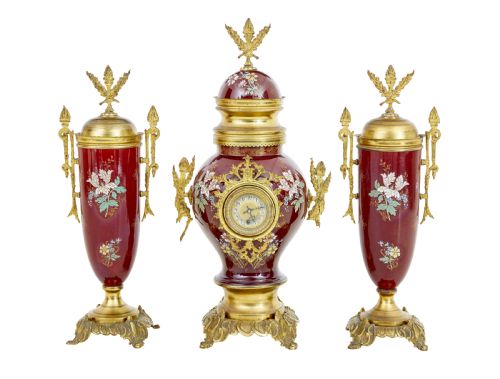
- Enamelled or lacquered metalware, often painted in black and gold, produced extensively in Britain and France during the Georgian and Victorian eras. These items frequently took the form of chestnut urns and garniture sets.
- Japanning
- A European imitation of Japanese and Chinese lacquerwork developed during the seventeenth century. Craftsmen applied heat-treated varnishes to furniture and metal objects to achieve a glossy black or coloured finish.
- Lacca Povera
- An eighteenth-century Italian technique of decorating furniture and objects with cut-out paper prints pasted onto a surface and varnished over. This method offered a cheaper alternative to genuine oriental lacquer.
Antique Lacquer Urn: Frequently Asked Questions
What is an antique lacquer urn used for?
These vessels served primarily as decorative display items, mantel ornaments, or large focal points within grand interiors. Many examples from the nineteenth century onward were later adapted as table lamps or paired with plant stands.
Their substantial presence made them suitable for framing doorways, gracing large sideboards, or anchoring symmetrical arrangements in period reception rooms.
How do I care for lacquer finishes?
Maintain lacquer surfaces by keeping them away from direct sunlight, extreme temperature fluctuations, and excessive moisture. Dust gently with a soft, dry cloth without applying modern chemical polishes.
Because traditional lacquer and painted surfaces remain sensitive to humidity and abrasion, careful placement in a stable environment preserves the finish.
How do I distinguish Chinese from Japanese lacquer?
Chinese pieces often feature deep carved red cinnabar work or complex export designs with heavy relief carving. Japanese examples frequently incorporate detailed gold paint, porcelain bodies, or naturalistic motifs like koi fish.
Examining the underlying material and the specific method of surface application helps clarify the regional origin of each vessel.
What does japanned mean on a listing?
Japanning refers to a European varnishing technique designed to replicate traditional Asian lacquerware. Makers applied multiple layers of varnish, often heat-cured, to metal or wood before adding hand-painted gilt decoration.
This method allowed Western workshops to produce urns and garniture sets with an exotic oriental aesthetic using local materials.