



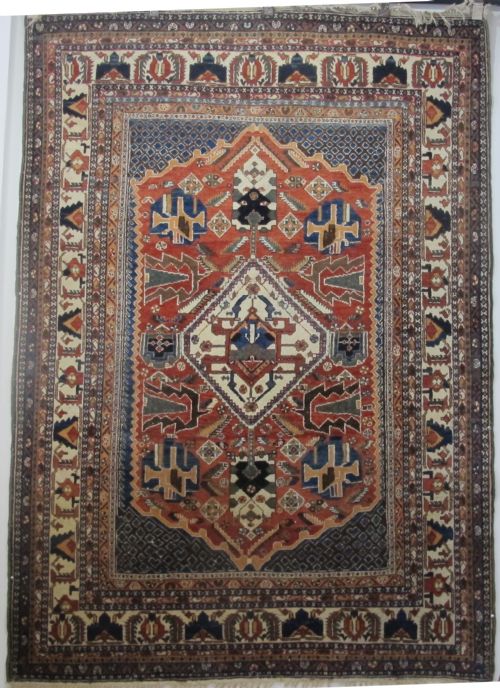


Antique Khamseh Runner
An antique khamseh runner delivers the bold geometries and rich natural dyes of South Persian nomadic weaving directly to your floor.
Antique Khamseh Runner
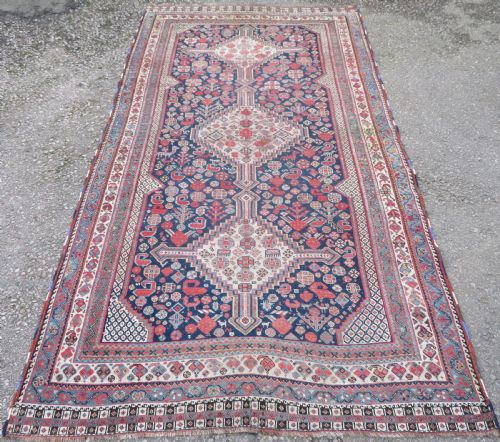
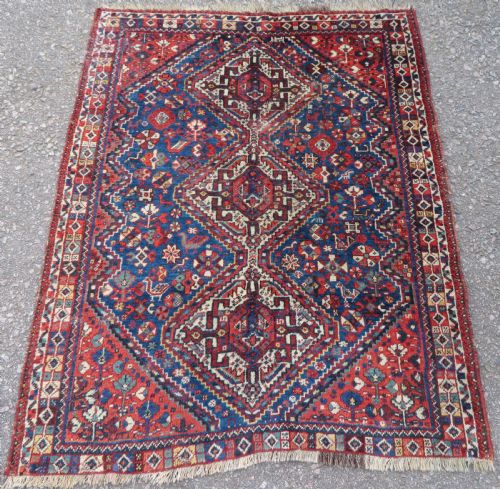
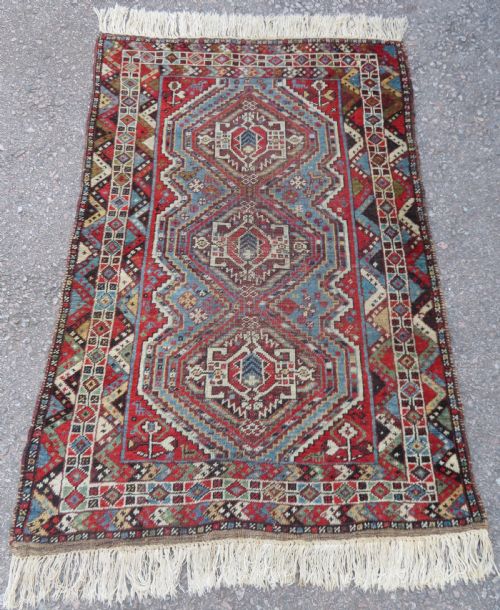
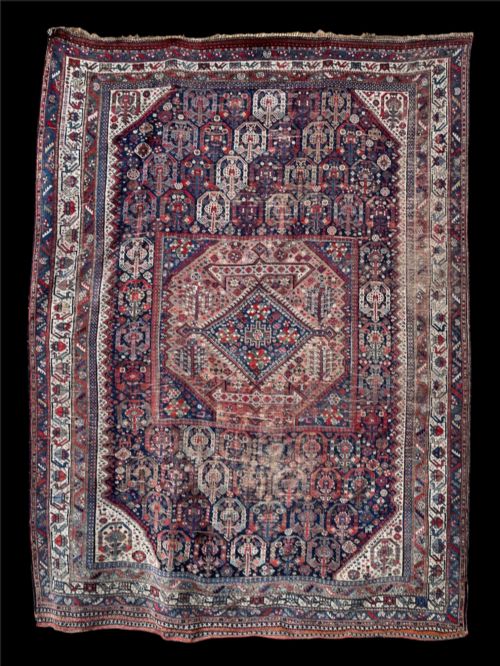
When you search for an antique khamseh runner, you examine tribal carpets woven by the confederacy of tribes in South West Persia. The pieces on this page span from the nineteenth century into the early twentieth century, including formats described as rugs, carpets, kelleh formats, and main carpets. You will encounter nomadic designs that reflect the heritage of groups such as the Baharlu and Basseri tribes.
The aesthetic bridges Persian tribal traditions with Luri and Qashqai influences, visible in formats ranging from compact scatter sizes to large audience carpets. These textiles function as durable floor coverings born from nomadic life, carrying motifs that developed across generations in South Persia.
Materials and construction methods
Weavers utilised wool, cotton, and hand-spun wool for the foundation and pile of these carpets, ensuring structural resilience. The employment of natural dyes imparts depth and variation to the palette across each piece.
The construction relies on traditional tribal hand-knotting techniques practiced by nomads in South West Persia, producing dense and durable surfaces designed for daily use.
Antique Khamseh Runner Retail Price Guide 2026
Typical asking prices for khamseh runner among the pieces listed under this phrase on Sellingantiques today, from the lower quarter to the upper quarter. They describe what is for sale here now, not the wider market.
Camels and goats donated their surplus locks to the cause, ensuring every runner could handle desert winds and nomadic migration.
Factors influencing quality
Quality rests in the handling of natural dyes and the crispness of the tribal motifs. Superior examples maintain balance in their proportions and integrity in the hand-spun wool pile.
The finesse of the knotting and the complexity of the design, such as tree of life patterns or khan audience compositions, distinguish finer carpets from simpler nomadic rugs.
The Antique Khamseh Runner Glossary
- Khamseh confederacy
- A coalition of five nomadic tribes in South West Persia whose weavers produced distinctive geometric and pictorial carpets. Their work often shares visual traits with neighbouring Qashqai and Luri textiles.
- Kelleh
- A long, rectangular format of carpet traditionally suited for specific reception spaces in Persian interiors. This format offers an elongated proportion distinct from standard square or runner layouts.
- Natural dyes
- Colourants derived from plants, insects, and minerals rather than synthetic compounds. They age with a characteristic patina and tonal variation across the wool pile.
- Main carpet
- A large-scale floor covering created for primary residential use within nomadic or village settings. These pieces demand significant labour and superior wool quality.
Antique Khamseh Runner: Frequently Asked Questions
What is an antique khamseh runner?
An antique khamseh runner is a hand-knotted carpet produced by the nomadic confederacy of tribes in South West Persia during the nineteenth and early twentieth centuries.
These textiles are characterised by geometric motifs, tribal symbolism, and the use of hand-spun wool and natural dyes.
How do I care for my rug?
Protect your carpet by placing it in areas with moderate foot traffic and using a breathable underlay to prevent slipping.
Vacuum gently without using a rotating brush roll and consult a specialist in antique textiles for professional cleaning.
How can I tell the age of a carpet?
Age is assessed through materials such as hand-spun wool, the composition of natural dyes, and structural wear patterns characteristic of nineteenth and early twentieth century production.
Stylistic markers and specific tribal attributions also assist in placing a piece within the 1870 to 1920 timeframe.