

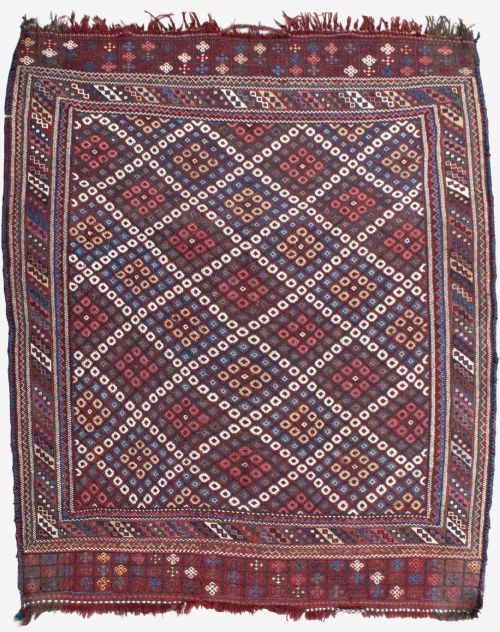


Antique Kelim Rug
An antique kelim rug brings flat-woven nomadic geometry and rich regional history straight onto your floor.
Antique Kelim Rug
When you search for an antique kelim rug, you encounter flat-woven floor coverings and textiles originating from tribal and nomadic weaving traditions across Persia, Anatolia, Central Asia, and Eastern Europe. These pieces lack a traditional pile, relying instead on interlocking or slit-tapestry weave techniques that produce geometric motifs and crisp colour transitions.
The selections available range from long runner formats to large carpets and square formats. You will most frequently meet pieces attributed to Persian tribal groups, Turkish weaving centres, Afghan workshops, and Bessarabian regions.
Originating from periods spanning the late nineteenth century through to the early decades of the twentieth century, these textiles carry the distinct visual vocabulary of their makers. They function as floor rugs, wall hangings, and functional tribal spreads.
How they were made
The primary materials recorded in these textiles are wool and cotton, utilised both for the structural foundation warps and the dyed weft yarns that create the surface pattern. Weavers manipulated these natural fibres by hand on vertical or horizontal looms.
Construction techniques include slit-weave tapestry methods, where wefts turn back at the boundary of a colour block to create small vertical slits, as well as specialised structures like the finger kelim technique seen in Turkish Afyon pieces or two-part joined formats from Afghan Firozkohi makers.
Antique Kelim Rug Retail Price Guide 2026
Typical asking prices for kelim rug among the pieces listed under this phrase on Sellingantiques today, from the lower quarter to the upper quarter. They describe what is for sale here now, not the wider market.
Some weavers solved loom width limits simply by weaving rugs in two separate long panels and stitching them together down the middle.
What varies in quality
Quality in these flat-weaves rests on the tightness of the weave, the crispness of the graphic design, and the integrity of the natural material structure. Finer tension in the beating of the weft produces a denser, more durable textile.
The visual strength of the design work, from bold Central Asian Gajeri motifs to idiosyncratic Kurdish Senneh patterns, dictates the artistic standing of the piece. Preservation of the original edges and structural balance also distinguishes superior examples.
The Antique Kelim Rug Glossary
- Kelim
- A flat-woven carpet or rug produced without a pile across various tribal and nomadic regions. The absence of pile creates a lightweight textile with identical patterns visible on both sides.
- Sofreh
- A woven spread or dining cloth traditionally used for domestic and ceremonial purposes by nomadic groups. These textiles often feature distinctive central fields and border arrangements.
- Soumak
- A flat-weave technique utilising wrapping threads over the warp to create a textured, durable surface. It differs from standard tapestry kelim weaves by leaving floating threads on the reverse.
- Warp
- The stationary vertical threads stretched onto a loom before weaving begins. In these rugs, wool and cotton form this foundational grid.
- Weft
- The horizontal threads passed through the warp to build the design and colour blocks. These are beaten down tightly to conceal the warp.
Antique Kelim Rug: Frequently Asked Questions
How do I care for an antique kelim rug?
Vacuum gently without a rotating brush roll to remove grit from the flat weave. Professional cleaning suited for vintage textiles preserves the wool fibres.
Keep the rug out of direct sunlight to prevent fading. A quality rug underlay prevents slipping and reduces friction against hard flooring.
Where were these flat weaves produced?
Production spans Anatolian, Persian, Afghan, and Central Asian regions, along with European examples from Bessarabia. Each area developed distinct geometric palettes and weaving structures.
Nomadic tribes and village workshops adapted local motifs to suit their specific looms and wool supplies.
Are these rugs reversible?
Most traditional kelims are structurally reversible because the tapestry weave shows the pattern clearly on both sides. However, weavers often designated one face as the primary display side.
Using a rug underlay on both faces is not recommended, so select one side to face upward for daily wear.
How do I date an antique kelim?
Dating relies on material analysis, dye characteristics, and stylistic comparisons with documented pieces from specific nomadic groups. Late nineteenth and early twentieth-century examples display specific regional wool preparations.
Structural details, such as hand-spun yarns and natural dye variations, help distinguish older eras from later production.