

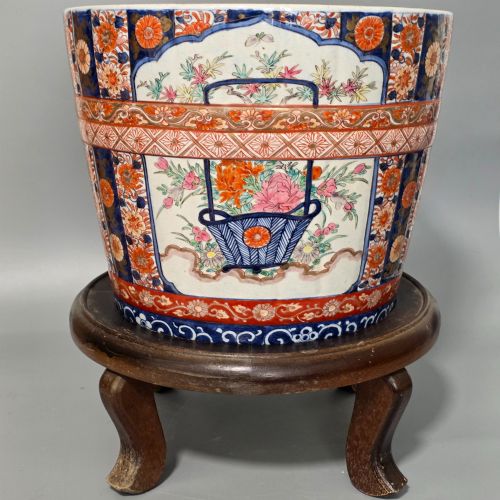


Antique Japanese Jardiniere
An antique japanese jardiniere brings sculptural presence indoors, holding large house plants or standing alone as a decorative centrepiece.
Antique Japanese Jardiniere
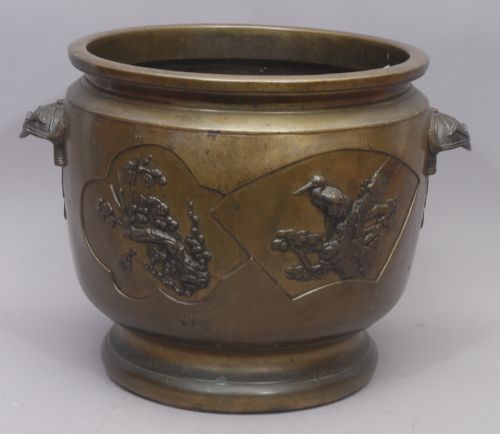
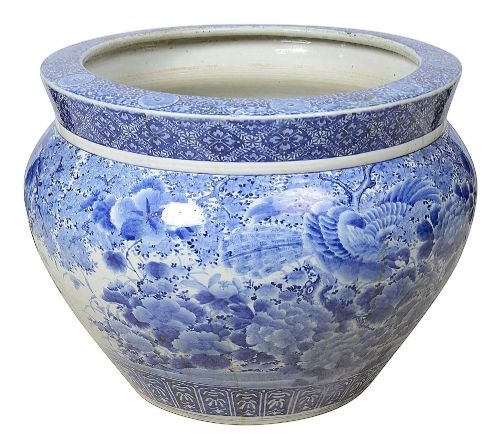
An antique japanese jardiniere functions primarily as a decorative planter pot, often accompanied by matching or associated plant stands and pedestals. These vessels range from heavy bronze bowls used for traditional arrangements to large porcelain basins designed for interior floral displays.
Most examples seen here emerge from the Meiji period and the nineteenth century, alongside earlier Edo period pieces and later works up to the 1930s. Buyers frequently encounter bronze vessels featuring mixed metal details alongside blue and white porcelain and Imari patterns.
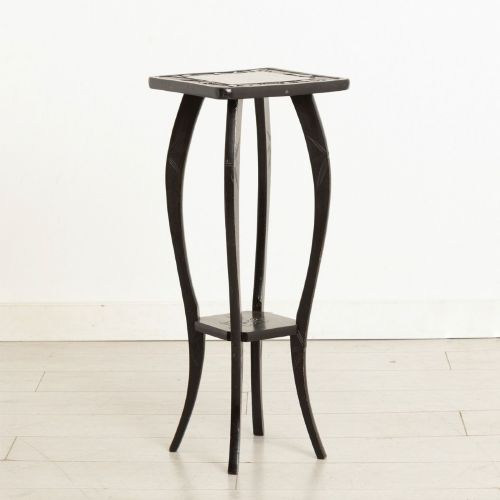
Forms extend beyond standard bowls to include specialised vessels like suiban for bonsai, tearai, and incense censers repurposed for plants. Associated hardwood or ebonised wood stands frequently elevate these planters off the floor.
Materials and construction methods
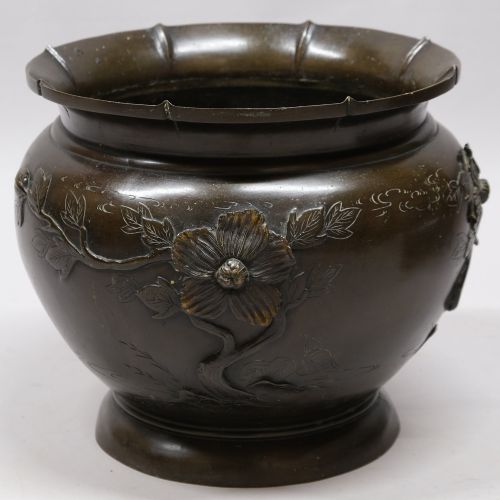
Bronze forms the backbone of these pieces, often patinated or worked with champlevé enamel and mixed metal elements to create surface relief. Founders shaped these heavy metal bowls through careful casting techniques that allowed for intricate birds, foliage, and geometric borders.
Porcelain and stoneware pieces rely on high-temperature firing, yielding durable bodies finished with glazes or hand-painted blue and white designs. Imari items combine cobalt blue underglazes with iron red and gilt highlights over the white ceramic body.
Wood stands utilise hand-carved hardwoods, ebonised finishes, and occasional marble tops to support the heavy ceramic and bronze bowls. Joinery reflects traditional craftsmanship suited to bearing substantial weight.
Materials range from heavy patinated bronze and champlevé enamel to hand-carved hardwood stands and Imari porcelain.
What distinguishes finer examples
Quality rests in the crispness of the casting and the depth of the metal patination on bronze pieces. Superior examples show careful attention to detail in mixed metal inlays and surface decoration rather than flat, machine-like uniformity.
Ceramic quality shows in the precision of the hand-painted blue and white brushwork or the richness of the Imari palette. Heavier, sturdier walls and balanced proportions separate the finer decorative vessels from standard utility items.
Liberty of London·Makuzu Kozan II
The Antique Japanese Jardiniere Glossary
- Meiji
- A period in Japanese history spanning from 1868 to 1912, known for opening trade and producing highly detailed metalwork and ceramics. Pieces from this era often display exceptional technical skill in bronze and enamel.
- Imari
- A style of Japanese porcelain featuring a distinctive palette of underglaze blue, iron red, and gold. These colourful wares were widely exported and prized for domestic display.
- Suiban
- A shallow Japanese basin traditionally used for viewing stones or bonsai arrangements. They frequently double as low jardinières for interior planting.
- Champlevé
- An enamelling technique where troughs are carved into a bronze surface and filled with vitreous enamel paste before firing. This creates vibrant, coloured patterns flush with the metal.
- Edo
- The period in Japanese history lasting from 1603 to 1868, preceding the Meiji era. Items from this time display traditional craftsmanship predating Western export influences.
Antique Japanese Jardiniere: Frequently Asked Questions
How do I use an antique japanese jardiniere indoors?
Place a plastic liner inside the bronze or ceramic bowl to protect the historic interior from moisture and soil. This allows you to house potted plants directly within the decorative vessel safely.
Pair the jardiniere with a low wooden stand or pedestal to elevate the display in a corner or by a window. Heavy bronze bowls also stand effectively on the floor without additional support.
What is the difference between an Imari and a blue and white jardiniere?
Blue and white pieces rely strictly on cobalt oxide underglaze applied to the white ceramic body before firing. This creates a monochromatic design of botanical or scenic motifs.
Imari pieces incorporate additional iron red pigments and gold gilding over the glaze alongside the blue underglaze. This results in a much more colourful and ornate decorative finish.
How can I tell a Meiji period bronze from an Edo period one?
Meiji period bronzes often reflect the opening of trade, featuring highly elaborate mixed metal decorations and dynamic surface reliefs. They frequently incorporate whimsical bird or floral motifs. Nihon bronze vessels from the earlier Edo period tend toward more restrained forms and simpler patination, reflecting traditional domestic or ritual uses before mass export began.