


Antique Japanese Decor Vase
These antique japanese decor vase pieces offer ceramic and bronze craft, bringing Meiji era and Imari forms directly into your rooms.
Antique Japanese Decor Vase
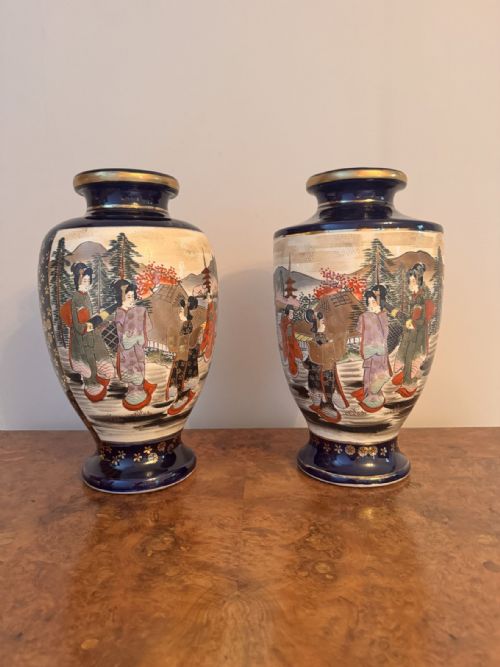
An antique japanese decor vase encompasses ceramic and porcelain vessels alongside bronze and mixed metal urns originating from Japan during the nineteenth century and the Edwardian era. You will frequently meet Japanese Imari and Satsuma ware shapes on this page, reflecting periods such as the Meiji and Edo transitions.
The selections range from small shaped Imari vases and slender neck vessels to large flare neck Kutani pieces and lidded trios. Makers and workshops produced these decorative ceramics and vases in pairs, collections, or single display forms utilising traditional glazing and painting methods.
How they were made
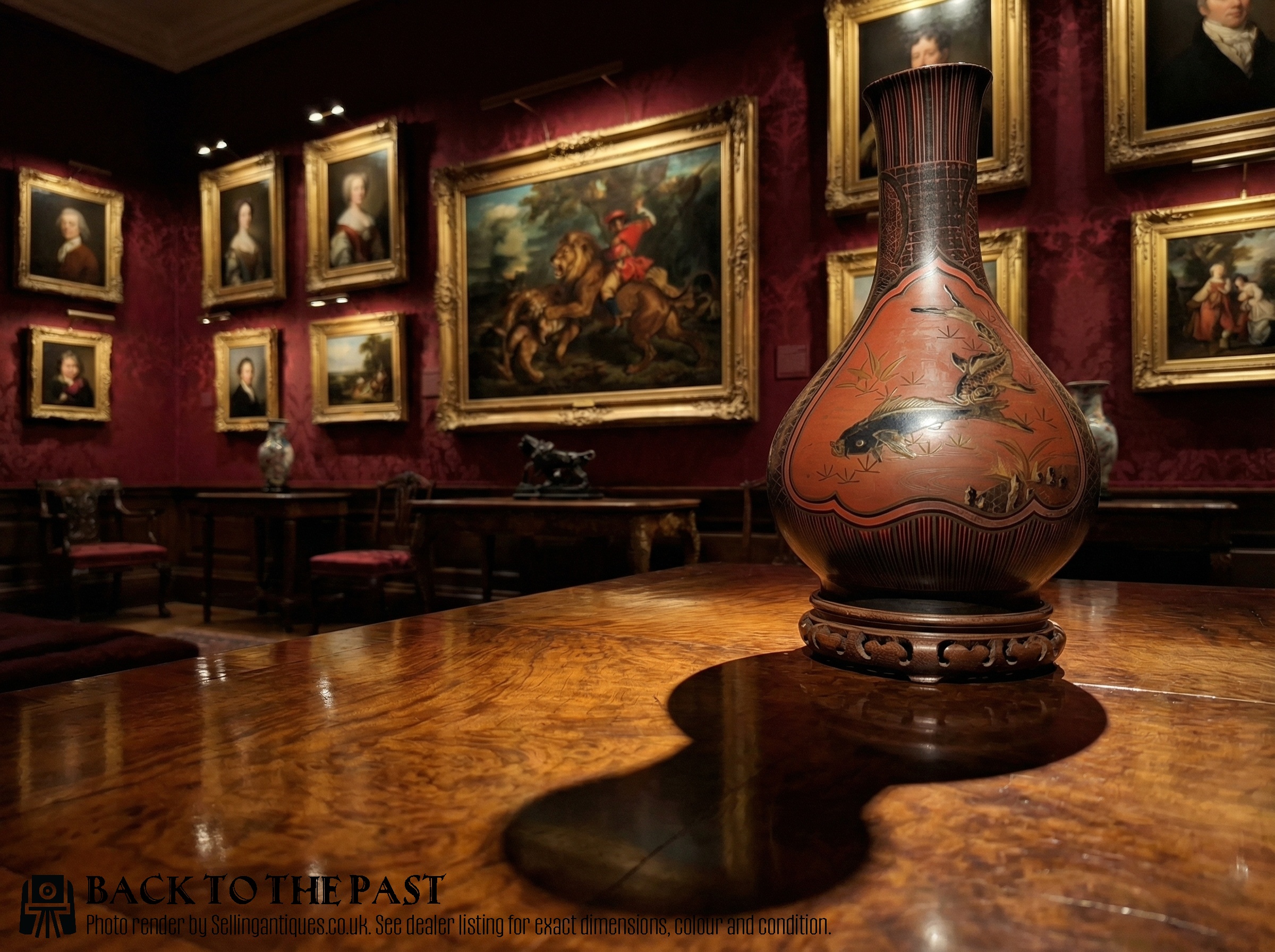
Potters and artisans formed these vessels from porcelain, earthenware, and ceramic glaze, applying enamel and gold leaf for surface decoration. Bronze and mixed metal techniques also appear alongside wood and lacquer over black paint.
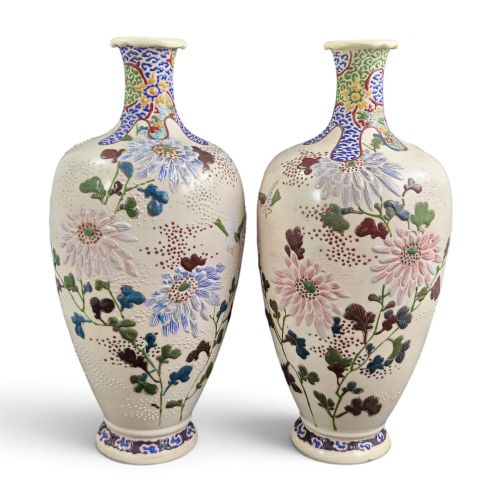
Moriage relief work builds tactile surfaces upon Satsuma and ceramic bodies, while hand-painted details define Kutani and Imari patterns. Workshops applied multi-layered glazes and metallic finishes to achieve contrasting textures across bottle and stem shapes.
The listings here feature porcelain, earthenware, and bronze across nineteenth-century and Edwardian periods.
What varies in quality
The crispness of hand-painted motifs and the complexity of enamel and gold leaf application distinguish finer examples from simpler production pieces. Precise brushwork on delicate porcelain and well-defined moriage relief separate standard decorative items from superior works.
Material choice and structural integrity create clear distinctions across the range, from cast bronze vessels to delicate earthenware bodies. The consistency of the ceramic glaze and the preservation of lacquer or metal finishes govern the overall standard of each piece.
Chikusai·Hododa·Hakusan
The Antique Japanese Decor Vase Glossary
- Imari
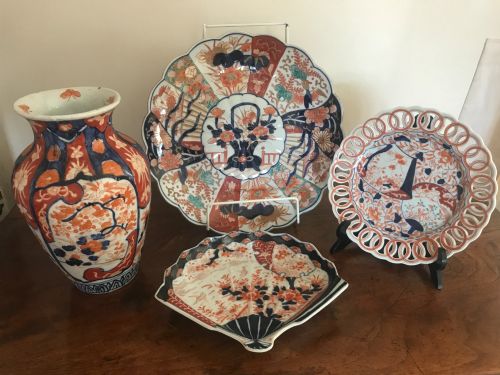
- A style of Japanese porcelain featuring distinctive cobalt blue, iron red, and gilt decoration. These pieces were widely exported and prized for their bold palette.
- Satsuma
- A type of earthenware pottery with a crackle-glaze finish, typically decorated with polychrome enamels and raised gold. Many Satsuma items depict figurative scenes.
- Moriage
- A decorative technique using slip-trailing to create raised dots and relief patterns on ceramics. It adds a tactile, three-dimensional texture to the surface.
- Kutani
- A style of Japanese porcelain and pottery known for vibrant coloured glazes and intricate pictorial designs. Kutani pieces often incorporate bold greens, blues, and reds.
- Meiji Period
- The era of Japanese history lasting from 1868 to 1912, marked by the opening of trade with the West. Much of the decorative export art seen today dates from this time.
Antique Japanese Decor Vase: Frequently Asked Questions
How do I identify Imari vases?
Imari pieces are recognised by their characteristic palette of cobalt blue and iron red, frequently highlighted with gold leaf on a porcelain body.
They often feature repeating panel designs and floral motifs typical of export wares from the period.
What is Satsuma ware?
Satsuma ware consists of earthenware pottery distinguished by a fine, ivory-coloured crackle glaze.
Artisans painted these vessels with detailed figurative scenes and enriched them with raised moriage decoration.
Where were these vases made?
These decorative vessels originated in Japan during the late nineteenth and early twentieth centuries.
They were produced in various kiln regions and pottery centres specifically for both domestic use and the international export market.
How should I display them?
Vessels such as bottle vases and lidded trios suit placement on stable shelves, sideboards, or dedicated display stands.
Their varied heights and mixed metal or ceramic finishes allow them to stand alone or pair with complementary forms.