
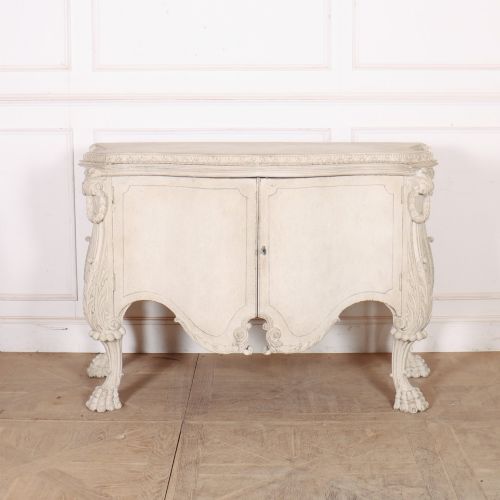
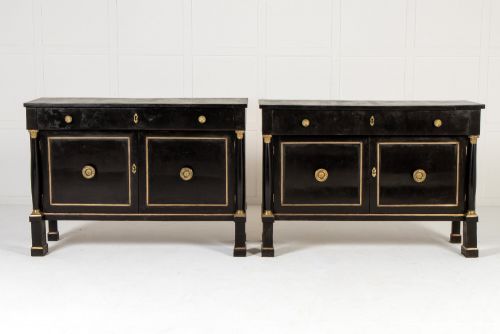
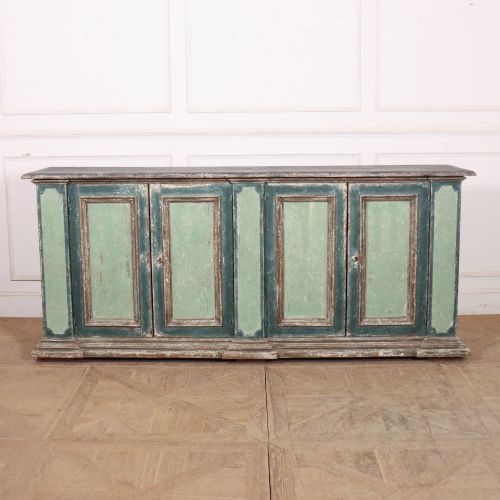


Antique Italian Side Cabinet
These antique italian side cabinet examples range from robust walnut commodes to painted Venetian pieces, offering functional storage with distinct regional character.
Antique Italian Side Cabinet
An antique italian side cabinet encompasses a diverse group of functional furniture pieces, ranging from compact bedside nightstands to substantial commodes and linen cupboards. Buyers searching this phrase encounter forms that serve storage needs while displaying specific historical design traditions from various Italian regions.
The selections span from eighteenth-century walnut pedestal cupboards and commodes to later nineteenth-century marble-topped nightstands and twentieth-century Art Deco walnut cabinets. Pieces frequently appear in matched pairs, particularly among bedside tables and smaller nightstands.
Stylistic influences vary significantly across the inventory, touching upon Italian Rococo, Neoclassical, Baroque, and provincial designs. Makers utilised forms such as serpentine shapes, demi-lune silhouettes, and drum structures to suit different interior spaces.
Assessing Craftsmanship and Distinction
The distinction between standard utility furniture and top-tier examples rests in the complexity of the cabinetwork and the choice of materials. Master craftsmen employed figured veneers, detailed marquetry, and precise carving that elevate basic storage into decorative focal points.
Surface finishing plays a major role in establishing the character of each piece, whether through layered hand-painting, rich walnut polishing, or crisp parcel gilding. The integration of specialised decorative elements, such as pietra dura panels or shaped marble tops, separates standard provincial pieces from exhibition-grade works.
Some nineteenth-century bedside nightstands are described as lime-washed, offering a lighter touch to traditional heavy timber.
Pietro Ferrario·Pauly et Cie
The Antique Italian Side Cabinet Glossary
- Commode
- A low chest of drawers or cabinet designed with decorative status. These items frequently feature shaped fronts and marble tops.
- Marquetry
- The art of applying decorative veneer pieces to a structure to form intricate patterns or pictures. This technique often employs contrasting timbers.
- Pietra dura
- Inlay work using cut and fitted polished coloured stones to create geometric or figurative designs. It appears on high-status cabinet surfaces.
- Serpentine
- A furniture front or edge shaped with a central convex curve flanked by concave curves. This contour requires skilled carpentry.
- Demi-lune
- A half-moon shape used for console tables and small cabinets designed to sit flat against a wall. This profile saves floor space.
Antique Italian Side Cabinet: Frequently Asked Questions
What is an antique italian side cabinet used for?
These pieces serve as functional storage units, holding linens, bedside items, or general household goods inside drawers and cupboards.
Beyond simple utility, their decorative facades and marble surfaces allow them to function as display areas for lamps and decorative objects.
How do I identify an eighteenth-century piece?
Early pieces from the eighteenth century typically feature solid walnut construction, hand-carved details, and traditional joinery methods suited to commodes and pedestal cupboards.
They display regional Italian aesthetics, such as Tuscan or Baroque styling, without the mass-produced uniformity seen in later eras.
Are bedside tables common in these styles?
Bedside tables and nightstands form a large portion of the available inventory, often constructed in matched pairs during the nineteenth and early twentieth centuries.
These smaller cabinets frequently incorporate walnut veneers, marble tops, and serpentine or drum-shaped bodies.
What distinguishes painted furniture from wood finishes?
Painted wood pieces often originate from Venetian workshops, utilising decorative brushwork and coloration rather than exposed timber grains.
By contrast, walnut, kingwood, and mahogany cabinets showcase natural wood figures, sometimes enhanced by ebonised contrasts or clear polishing.
How should I care for a marble top?
Marble surfaces benefit from regular dusting and prompt wiping of spills to prevent staining on the polished stone.
Avoiding harsh acidic cleaners preserves the natural finish of the stone where it meets the wooden cabinet base.