






Antique Iron Fitted Trunk
An antique iron fitted trunk offers robust utility, combining solid timbers like oak or teak with heavy metal hardware built for travel and secure storage.
Antique Iron Fitted Trunk
When searching for an antique iron fitted trunk, buyers encounter substantial storage pieces designed for transport, security, and domestic organisation across various global traditions.
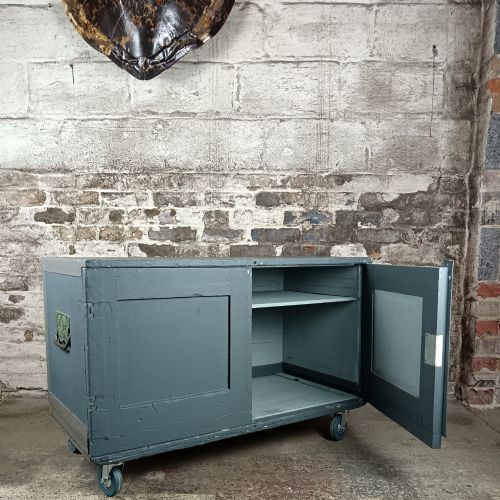
The selections available here span the nineteenth century and the Victorian era, alongside specific regional forms such as Rajasthani damchiya chests and Japanese wheeled chests.
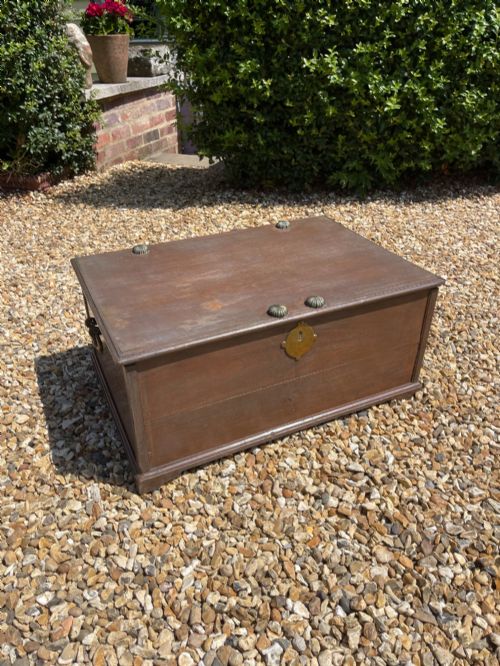
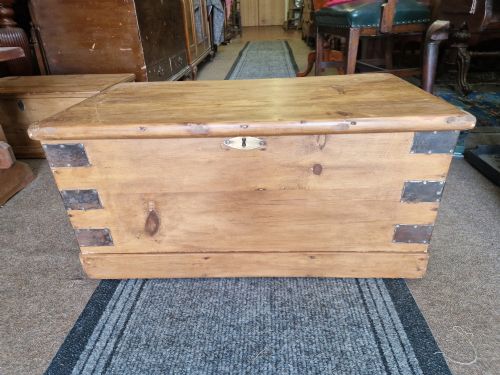
Most pieces on this page take the form of silver chests, travelling trunks, and blanket boxes constructed from durable woods and reinforced with metal bands.
How they were made
Construction relies on sturdy hardwoods and softwoods including oak, pine, teak, and occasionally leather, providing a solid foundation for heavy contents.
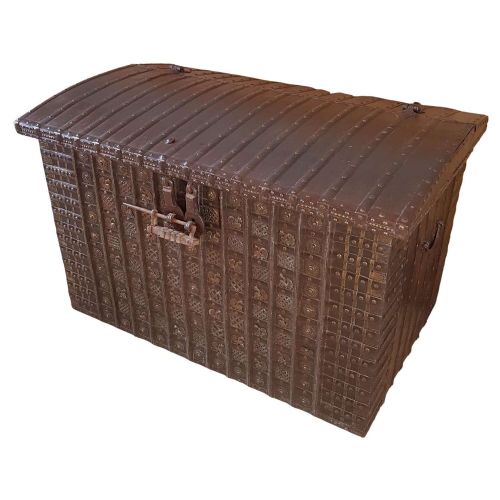
Makers reinforced these wooden carcases with iron, wrought iron, and brass bands, brackets, and corners to withstand the rigours of nineteenth-century transport.
Internal fittings often include trays, compartments, and painted linings tailored for specific valuables like silverware or documents.
Antique Iron Fitted Trunk Retail Price Guide 2026
Typical asking prices for iron fitted trunk among the pieces listed under this phrase on Sellingantiques today, from the lower quarter to the upper quarter. They describe what is for sale here now, not the wider market.
Materials recorded across the inventory include oak, pine, teak, iron, brass, wrought iron, and leather.
What varies in quality
The calibre of a piece depends on the weight and quality of its timber, ranging from dense golden oak to regional teak and pine.
Hardware execution sets examples apart, with hand-forged iron bands, complex locking mechanisms, and intact internal fittings indicating superior original purpose.
Elkington
The Antique Iron Fitted Trunk Glossary
- Iron-bound
- Describes a wooden chest reinforced with iron straps or bands across the exterior for structural strength. This method protected the corners and seams during transit.
- Silver chest
- A heavy wooden storage box traditionally lined and fitted to hold household silverware securely. These often feature robust iron or brass carrying handles.
- Campaign chest
- Portable furniture designed for military officers on the move, built to dismantle or withstand rough journeys. They typically incorporate recessed handles and protective metal corners.
- Damchiya
- A traditional Indian dowry chest often featuring low profiles, carved details, and iron banding. They served both as storage and as decorative furniture in the home.
- Kuruma-Dansu
- A traditional Japanese wheeled merchant chest used for moving valuables quickly in case of fire. The wheels are integrated directly into the wooden framework.
Antique Iron Fitted Trunk: Frequently Asked Questions
What were iron fitted trunks used for?
These trunks served primarily to transport and protect valuable possessions, uniforms, and domestic silver during journeys. Merchants and travellers relied on their robust construction for security against theft and rough handling.
Over time, many found permanent homes in country houses and town residences as stationary storage for blankets, linen, and family valuables.
How do I date a nineteenth-century trunk?
Dating relies on examining the construction methods, timber choices, and hardware styles present on the piece. Nineteenth-century examples often feature machine-sawn elements alongside hand-forged ironwork.
Specific clues appear in the locks, hinges, and retail labels pasted inside the lid, which help narrow down the decade of manufacture.
Are these trunks heavy?
Most antique iron fitted trunks are exceptionally heavy due to their dense hardwood carcases and thick metal reinforcements. They were engineered for stationary security rather than daily mobility.
Lifting or repositioning usually requires two people, and permanent placement should take the weight of the timber and iron into account.
How should I clean the wood and iron?
Maintenance involves dusting the wooden surfaces gently and applying a quality wax to nourish the oak, pine, or teak. The iron bands benefit from a light wipe with a dry cloth to remove dust without disturbing the aged patina.
Avoid using harsh chemical polishes or water on the metal fittings, as moisture can cause rust to form around the joints.