

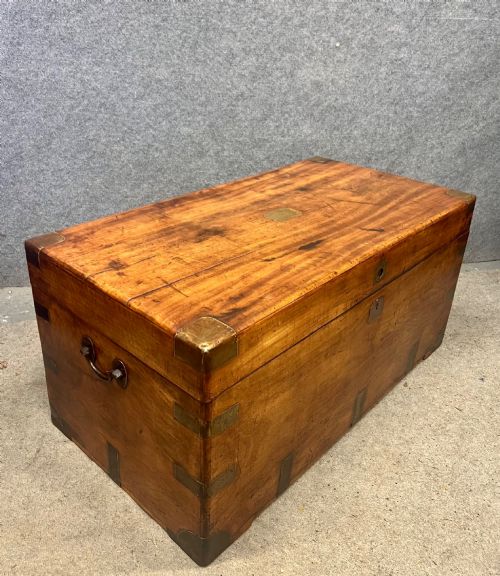
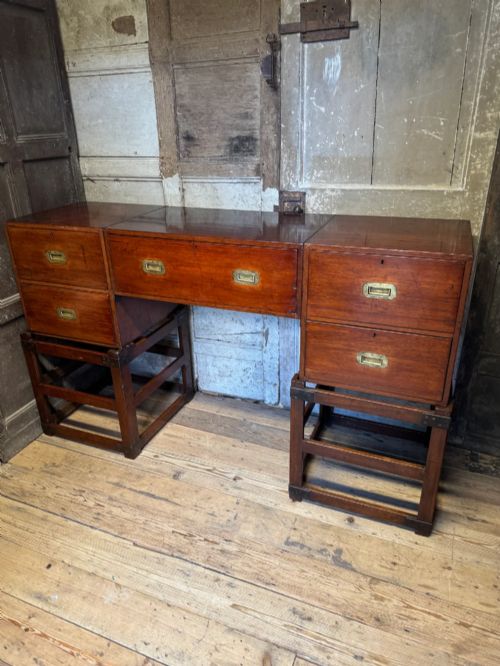
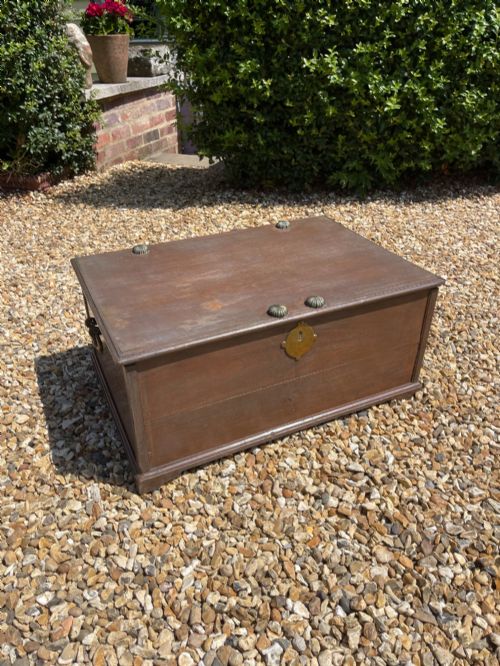


Brass Fitted Teak Chest
These brass fitted teak chest pieces offer robust storage built for travel across distant colonies during the nineteenth century.
Brass Fitted Teak Chest
A brass fitted teak chest serves as sturdy transport furniture designed for military officers and travellers during the nineteenth century. These items include large trunks, blanket boxes, desks, and two-part military chests originating from Anglo-Indian, Victorian, and Regency contexts.
The versions most frequently met on this page are Indian teak trunks and campaign chests constructed from solid timber with distinct metal mounts. Makers shaped these pieces for endurance, combining storage capacity with portability for journeys across the British empire.
How they were made
Craftsmen built these items using dense teak timber selected for its resistance to tropical humidity and heavy handling during transit. The wood forms the structural carcass of trunks, storage boxes, and writing desks.
Makers reinforced the corners, edges, and joints with brass straps, plates, and corners secured by iron fastenings. These metal fittings protected the timber from impact and held the joints tight during long sea voyages.
Brass Fitted Teak Chest Retail Price Guide 2026
Typical asking prices for brass fitted teak chest among the pieces listed under this phrase on Sellingantiques today, from the lower quarter to the upper quarter. They describe what is for sale here now, not the wider market.
One recorded chest carries the name Captain Fairbrother, reminding us that an officer's desk went everywhere he did.
What varies in quality
The refinement of the brass work separates standard utility boxes from superior examples intended for senior officers. Finely cast or hand-beaten mounts sitting flush with the teak surface indicate higher workshop skill.
Internal configuration also distinguishes these pieces, as demonstrated by fitted writing compartments, secret drawers, and secretaire sections. Comprehensive interior joinery elevates a simple storage trunk into a sophisticated portable desk.
The Brass Fitted Teak Chest Glossary
- Teak
- A dense tropical hardwood known for durability and resistance to moisture. It forms the primary body of nineteenth-century campaign furniture.
- Campaign chest
- A modular chest of drawers built in two separate sections for ease of transport during military deployment. Brass corners and recessed handles protect the edges.
- Anglo-Indian
- A style describing furniture made in India by local craftsmen for British residents or export during the colonial period. It often combines traditional forms with European utility.
- Secretaire chest
- A chest featuring a pull-out drawer with a hinged front that drops down to reveal a writing surface and small compartments. This combines storage with a desk.
- Dowry chest
- A large storage trunk created to hold household goods and textiles for a marriage. These pieces frequently feature elaborate brass mounts and decorative hardware.
Brass Fitted Teak Chest: Frequently Asked Questions
What is a brass fitted teak chest?
A brass fitted teak chest is a portable nineteenth-century storage trunk built from dense teak wood and reinforced with brass corners and straps. These items were designed for transport by military officers and travellers.
Such pieces range from large storage boxes to modular military chests and writing desks created in Indian and British colonial workshops.
How were campaign chests used?
Campaign chests provided secure storage and writing facilities for officers on the move during the Victorian and Regency eras. Their modular construction allowed large furniture to separate into manageable parts for shipping.
Many examples feature recessed brass handles and iron fittings to withstand rough handling on sea voyages and overland journeys.
How do I date an antique teak chest?
Dating relies on examining the construction methods, the style of the brass mounts, and recorded periods such as the nineteenth century or Regency era. Earlier pieces from around eighteen hundred often display simpler joinery.
Makers incorporated specific hardware styles that shifted over the decades, helping distinguish an eighteen-thirty campaign trunk from a later Victorian celebration chest.
Where were these chests made?
These pieces originated primarily in Indian workshops serving British military and civilian personnel during the colonial period. Local craftsmen utilised native teak and traditional woodworking techniques.
Design influences blended British campaign requirements with Indian decorative traditions, resulting in distinctive Anglo-Indian storage boxes and desks.
How do I live with a campaign chest?
Campaign chests function well as coffee tables, bedside storage, or statement sideboards in modern living spaces. Their flat tops and sturdy construction offer practical utility alongside historical character.
Maintenance involves keeping the teak nourished with appropriate oils and cleaning the brass fittings gently to preserve their natural finish.