
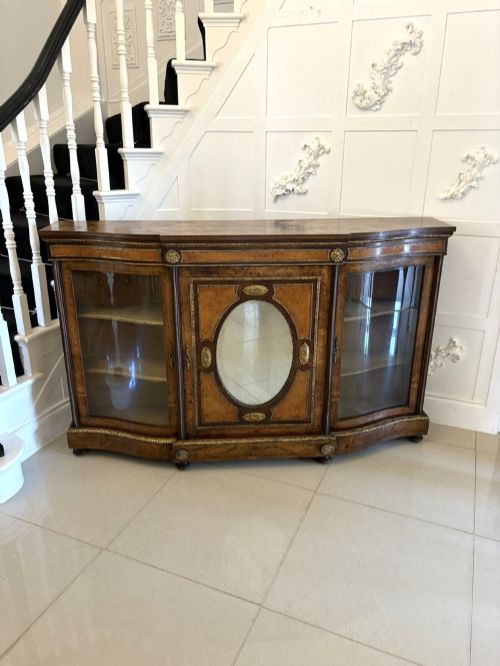
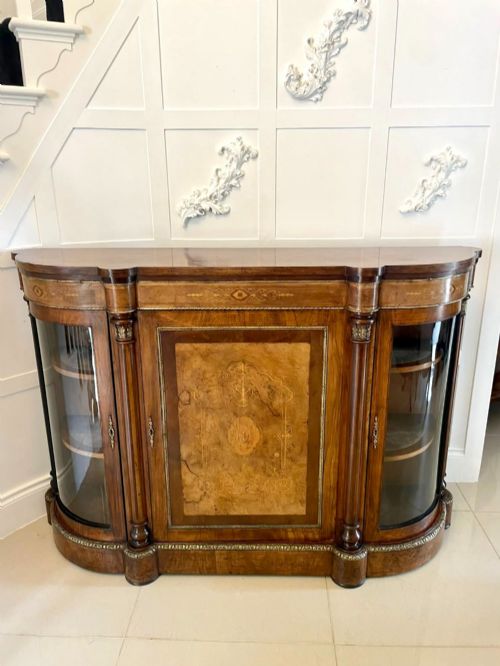
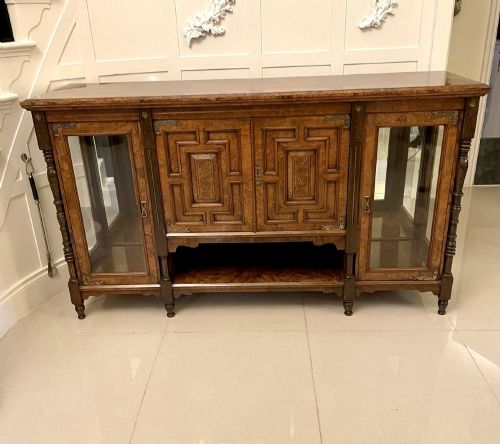
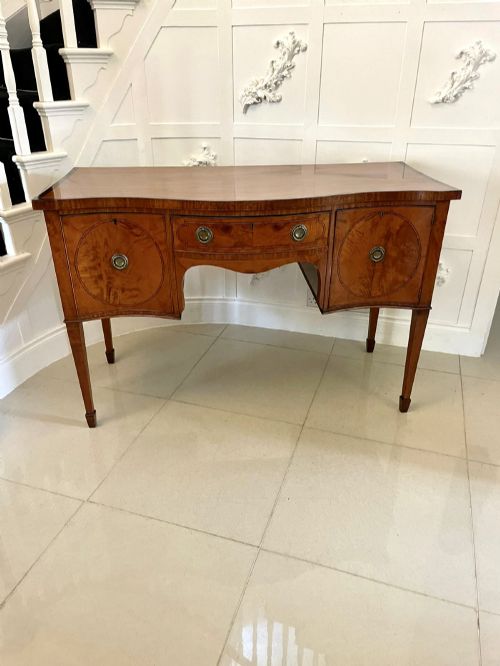
Antique Inlay Buffet Cabinet
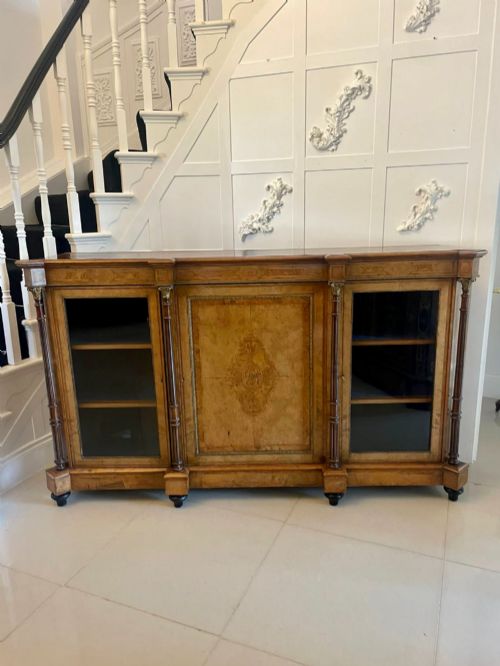
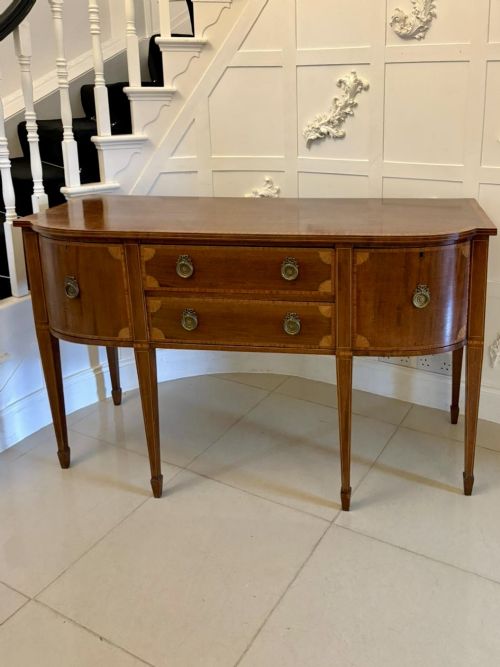
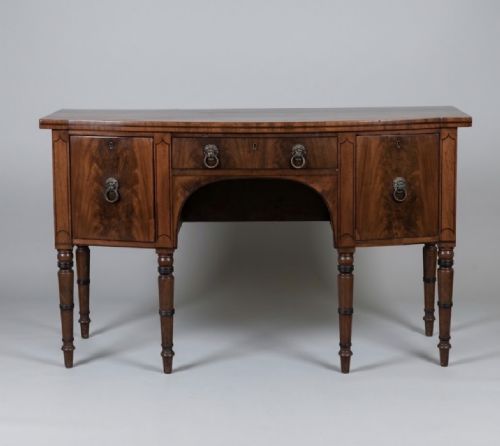
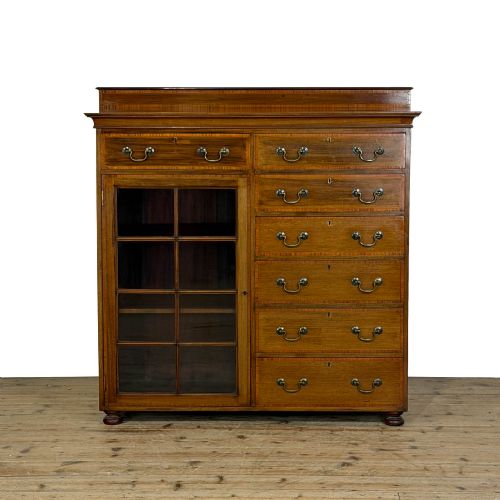
These antique inlay buffet cabinet pieces combine timber and marquetry to anchor a dining room.
Antique Inlay Buffet Cabinet
When you search for an antique inlay buffet cabinet, you are looking at substantial storage furniture built to hold dining silver and linen.
The pieces listed on this page span several centuries, drawing heavily on Georgian, Victorian, and Edwardian periods.
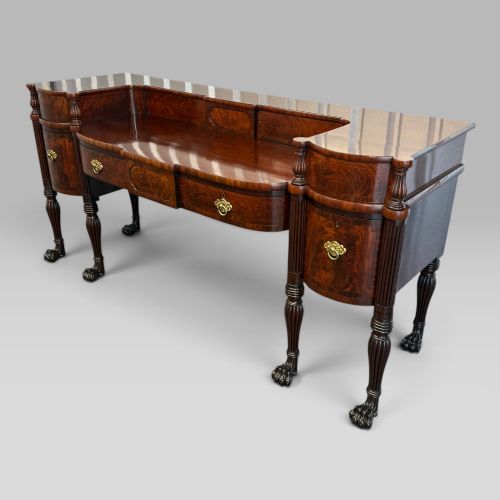
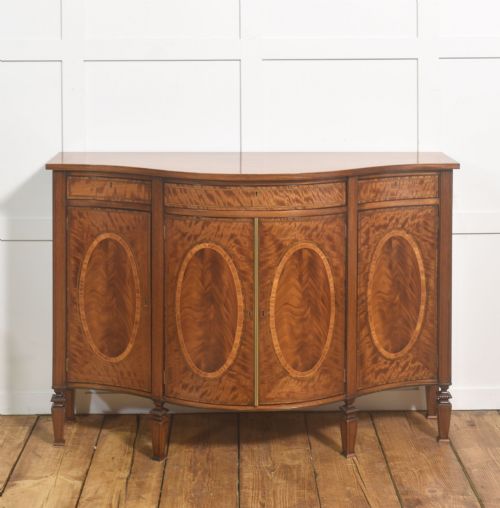
You will encounter forms described variously as sideboards, credenzas, side cabinets, and dresser bases.
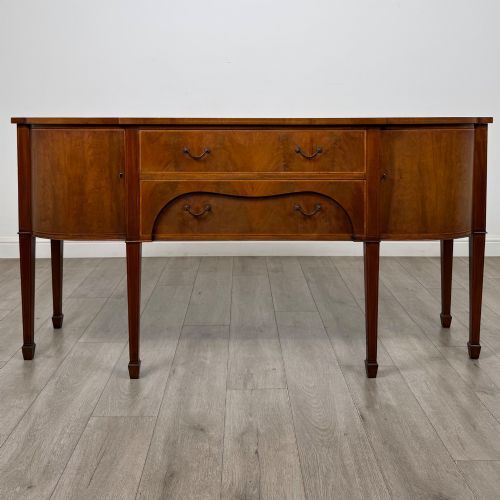
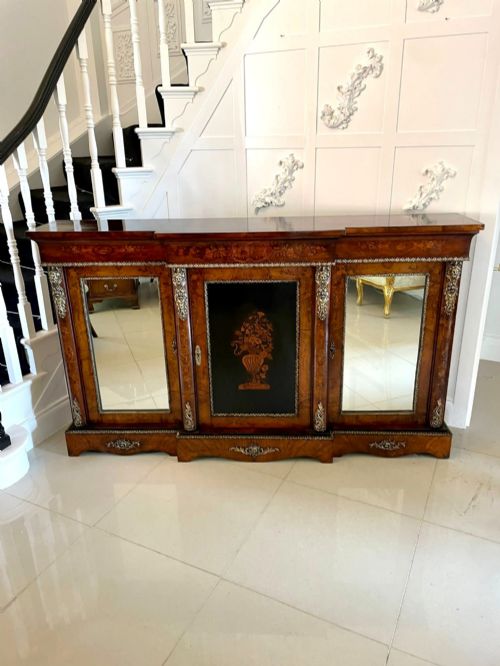
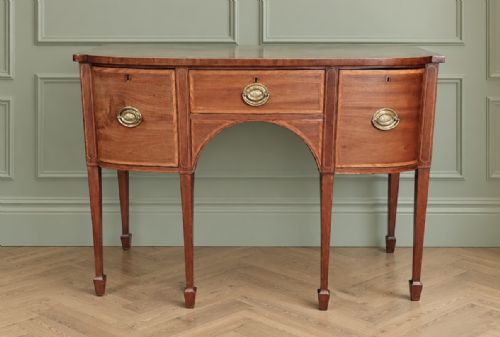
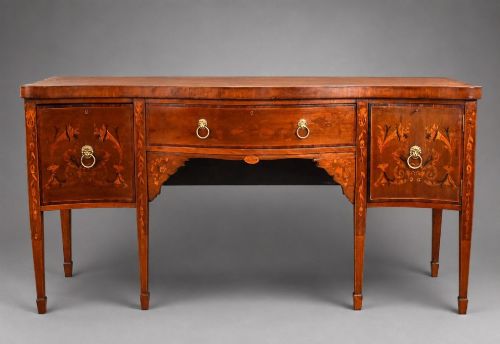
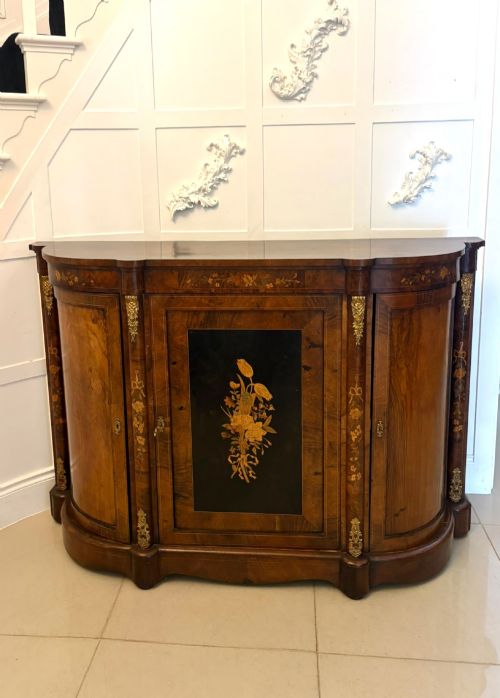
Victorian burr walnut credenzas and Georgian mahogany sideboards dominate the selection available here.
How they were made
Cabinetmakers constructed carcass frames from solid timbers such as mahogany, oak, and walnut, applying decorative veneers to prominent surfaces.
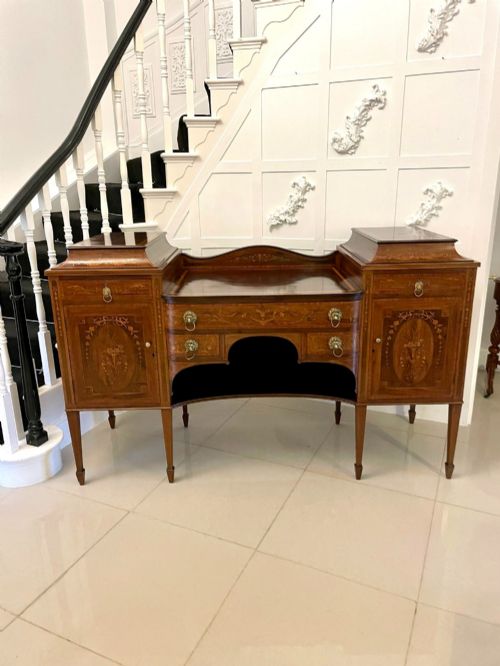
Intricate surface decoration relies on contrasting lighter woods like boxwood and satinwood cut into floral or geometric marquetry patterns.
Makers integrated polished brass mounts, ormolu details, and occasional mother-of-pearl accents to elevate the visual weight of the doors and drawers.
One exceptional piece incorporates mother-of-pearl alongside standard fruitwood marquetry.
What varies in quality
The distinction between standard workshop production and exhibition quality lies in the depth of the marquetry and the choice of timber burls.
Secondary timbers used inside drawers and back panels indicate whether a piece received meticulous attention or was built for utility.
The crispness of brass inlays and the smoothness of serpentine or breakfront curves separate ordinary furniture from superior examples.
Hewetsons London·Shapland and Petter
The Antique Inlay Buffet Cabinet Glossary
- Marquetry
- A technique of gluing decorative veneer pieces onto a structural panel to form pictorial or geometric designs. It differs from inlay by covering the entire surface rather than being set into hollowed recesses.
- Credenza
- A low cabinet, often fitted with glass doors or curved ends, originating in Italy and adopted by Victorian cabinetmakers. These pieces served to display ornaments alongside serving food.
- Crossbanding
- A border technique where thin strips of veneer are laid around the perimeter of a drawer front or tabletop so the grain runs perpendicular to the centre.
- Serpentine
- A furniture front curved with a convex centre flanked by concave ends, creating a gentle wave shape. This contour requires skilled woodworking to maintain alignment across doors and drawers.
- Ormolu
- Gilded bronze ornamentation applied to furniture mounts, feet, and key escutcheons during the nineteenth century. The metal is cast and then treated to achieve a rich gold finish.
Antique Inlay Buffet Cabinet: Frequently Asked Questions
What is an antique inlay buffet cabinet?
An antique inlay buffet cabinet is a large dining room storage piece featuring decorative wood veneers and brass details. These items functioned as serving surfaces and enclosed cupboards for household silver.
Today they serve similar display and storage purposes in large living spaces or dining rooms.
How do I tell Georgian from Victorian pieces?
Georgian pieces tend to rely on architectural proportions, linear satinwood stringing, and solid mahogany construction. Victorian items often feature burr walnut veneers, curved serpentine shapes, and gilt bronze mounts.
Examining the internal secondary timbers and drawer construction helps confirm the period of manufacture.
Where were these cabinets used originally?
These cabinets stood in formal dining rooms and reception halls of grand houses. Staff used the flat top surfaces to arrange dishes before serving meals to guests.
Cupboards and drawers underneath stored heavy tableware, linens, and bottles.
How do I care for inlaid wood surfaces?
Inlaid surfaces require consistent indoor humidity levels to prevent veneers from lifting or cracking over time. Gentle dusting with a dry cloth protects the delicate boxwood and satinwood details.
Applying traditional beeswax feeds the timber without damaging the historic polish.