
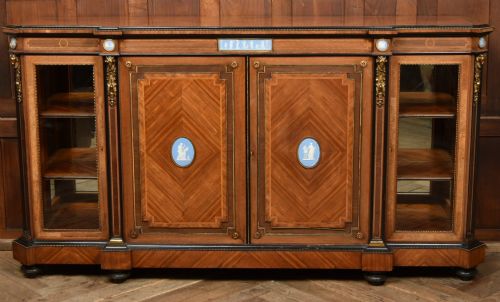
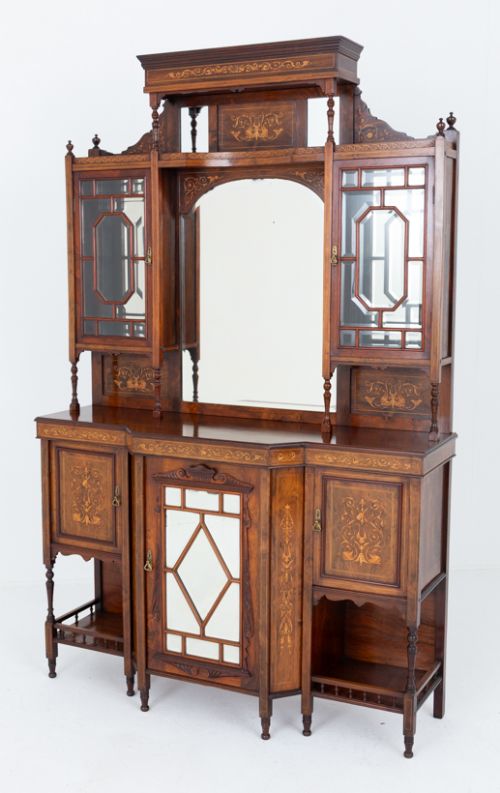


Marquetry Rosewood Sideboard
These marquetry rosewood sideboards combine rich timbers with intricate floral and geometric inlays to anchor a formal dining room or salon.
Marquetry Rosewood Sideboard
When searching for a marquetry rosewood sideboard, buyers encounter a variety of forms including side cabinets, credenzas, breakfronts, and display pieces. The selections span the nineteenth and early twentieth centuries, drawing on Victorian, Edwardian, Regency, and French Louis XVI design vocabularies.
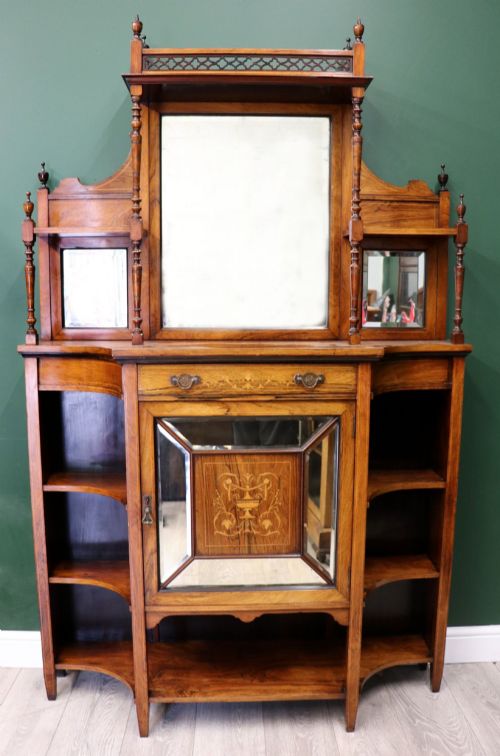
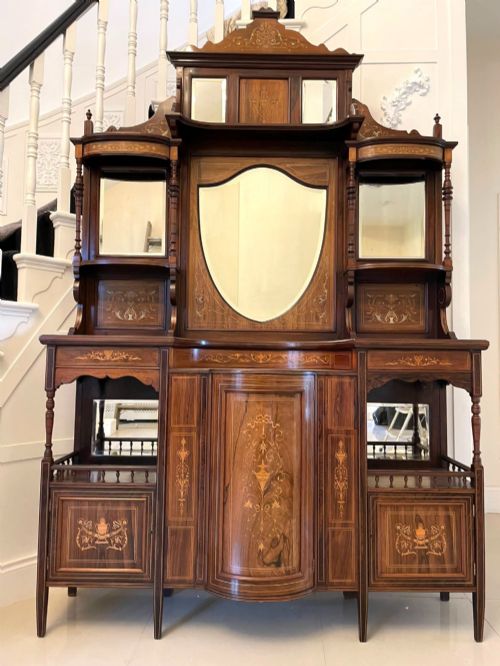
The version most commonly met on this page is the Victorian or late nineteenth-century side cabinet featuring detailed marquetry panels and contrasting wood inlays. These pieces function as both storage units and display surfaces, often incorporating mirror backs, ormolu mounts, and glazed doors.
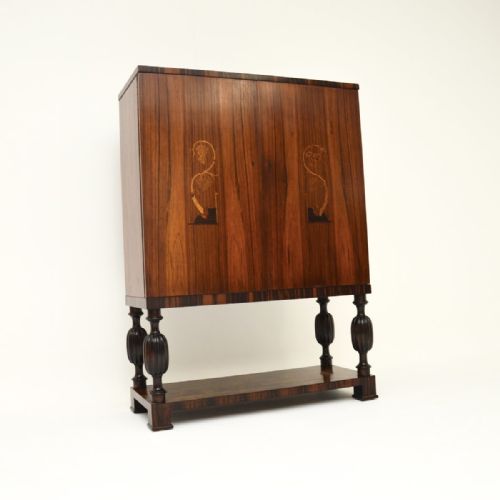
Origins range across English workshops and French cabinet makers, alongside Swedish examples from later decades. The forms vary from serpentine credenzas to demi-lune cabinets and chiffoniers, each utilising rosewood as the primary visible carcass or veneer timber.
How they were made
Cabinet makers built these pieces using dense rosewood foundations enhanced by contrasting veneers of satinwood, kingwood, boxwood, and ebony. Floral and geometric marquetry patterns were hand-cut and fitted into the surface to create pictorial or decorative panels.
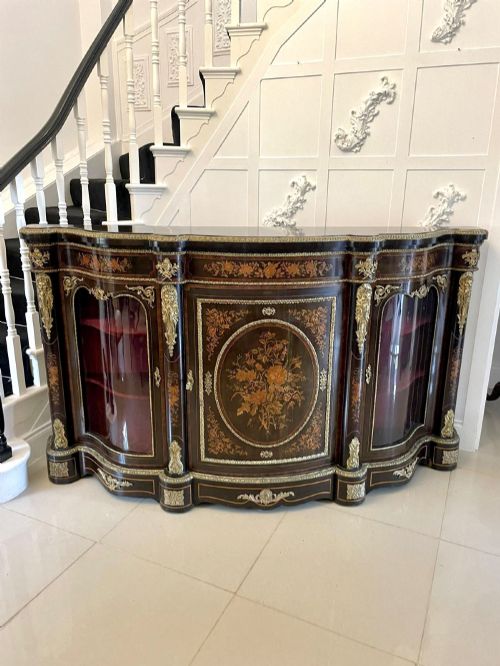
Gilt bronze or ormolu mounts frequently accent the corners, borders, and feet, while brass inlays and stringing define structural lines. Interior compartments often feature glass doors, mirrored backs, and marble tops.
Joinery techniques combined traditional carcass construction with precise veneer laying. Surfaces received hand-rubbed French polish finishes to highlight the deep grain and colour variations of the rosewood.
Listings feature rosewood sideboards across the nineteenth and twentieth centuries, incorporating satinwood, kingwood, ormolu, and marble elements.
What varies in quality
The standard of a marquetry rosewood sideboard is defined by the precision of its cutting and the complexity of its timber selection. Finer examples display meticulous pictorial inlays using diverse exotic woods rather than repetitive stamped motifs.
Mount quality distinguishes workshop output significantly. Heavy, chased ormolu hardware and substantial brass stringing indicate higher production standards than thin, pressed metal trims.
Structural integrity and the preservation of the original polish affect the standing of each piece. Cabinets retaining unblemished marquetry panels without lifting veneers represent the upper tier of surviving examples.
Collinson and Lock·Edwards and Roberts·Mercier Frères·James Plunckett·Stephen Webb
The Marquetry Rosewood Sideboard Glossary
- Marquetry
- Decorative inlay work using various coloured veneers to form pictures or geometric patterns. This technique covers the doors and panels of many cabinets.
- Ormolu
- Gilt bronze mounts used for decorative edging and feet. Makers applied these to accent the corners of French and Victorian pieces.
- Credenza
- A sideboard or display cabinet originating in Italy and adapted in Victorian rooms. These units often feature central cupboards flanked by curved glass doors.
- Boulle
- A form of marquetry employing tortoiseshell and brass inlay. It appears on select nineteenth-century breakfront cabinets.
- Palisander
- A dense timber name often applied to rosewood varieties. It forms the dark, figured background of Regency chiffoniers.
Marquetry Rosewood Sideboard: Frequently Asked Questions
What is a marquetry rosewood sideboard?
A marquetry rosewood sideboard is a storage and display cabinet featuring patterned wood veneer inlays on a rosewood carcass. These pieces range from compact side cabinets to large credenzas.
Cabinet makers produced them across the nineteenth and early twentieth centuries in English, French, and Swedish workshops. They served as formal room furnishings for displaying porcelain and storing dining silver.
How do I date these cabinets?
Dating relies on stylistic clues such as ormolu mounts, leg shapes, and inlay motifs. Victorian and Edwardian examples often feature eclectic revivals of French or Georgian designs.
Maker stamps, brass locks, and construction methods inside the carcass provide further chronological markers. Pieces span from the Regency period through the 1930s.
Where were they used?
Original placement was primarily in formal dining rooms, drawing rooms, and parlours. They functioned as serving surfaces and display areas for valuable tableware.
Mirror-backed parlour cabinets and glass-fronted display pieces also appeared in reception rooms to reflect light and showcase collections.
How do I care for rosewood?
Rosewood surfaces require stable humidity and protection from direct sunlight to prevent veneer fading and timber splitting. Regular dusting with a soft, dry cloth preserves the French polish.
Avoid silicone-based polishes which can degrade the historic finish over time. Professional wax applications maintain the sheen of the wood.