


Victorian Parlour Credenza
A victorian parlour credenza brings monumental presence to a room, offering grand display and storage through richly figured timbers and delicate marquetry.
Victorian Parlour Credenza
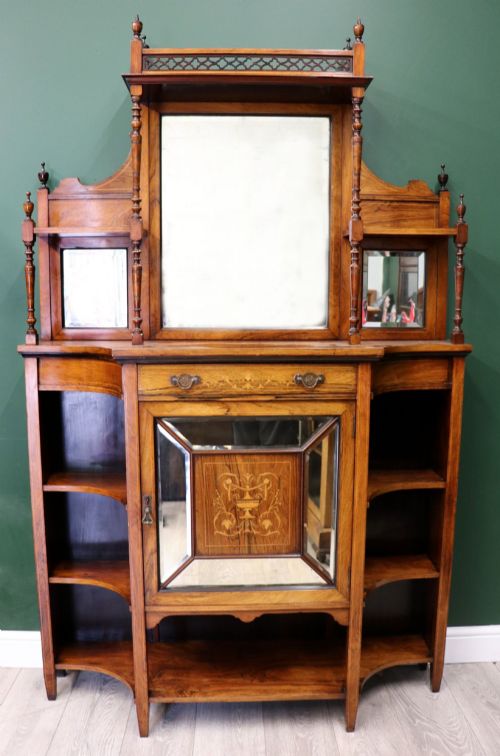
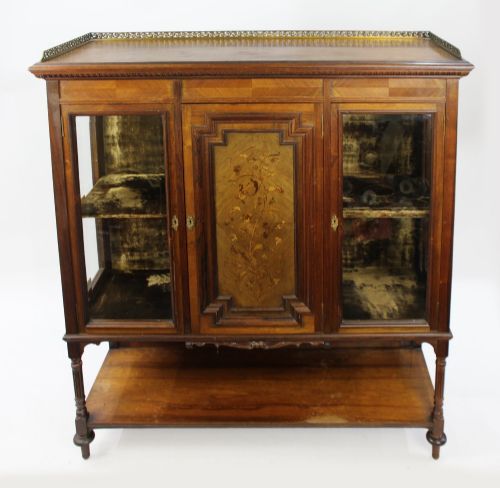
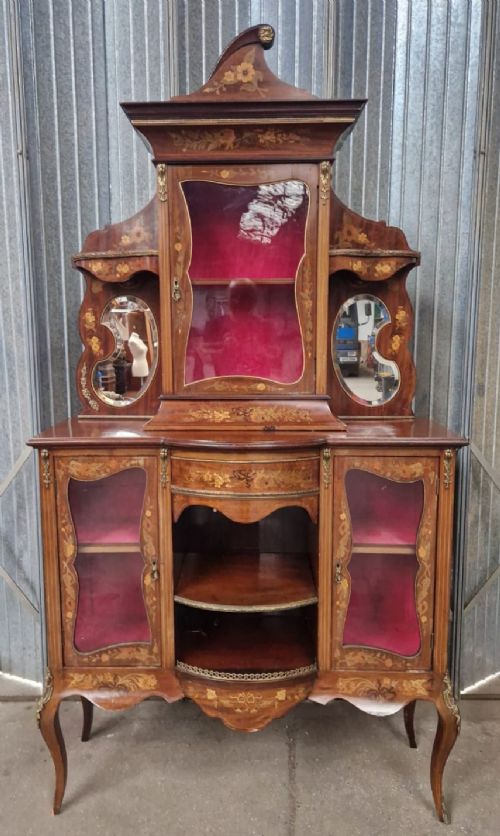
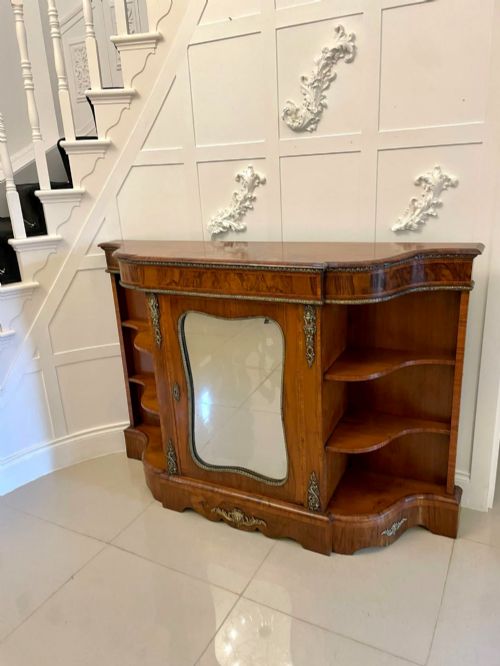
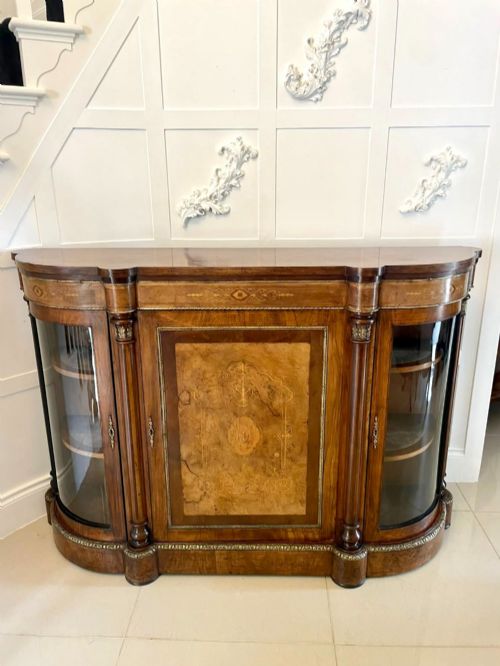
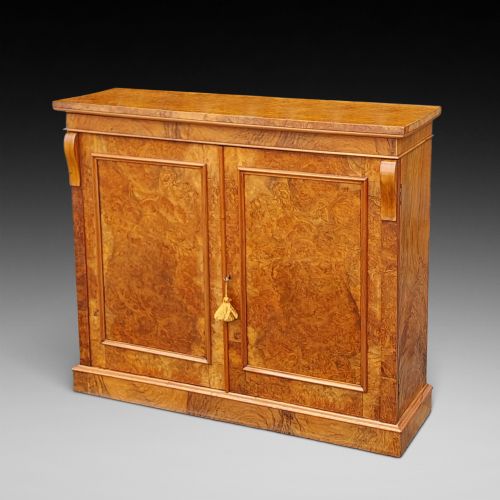
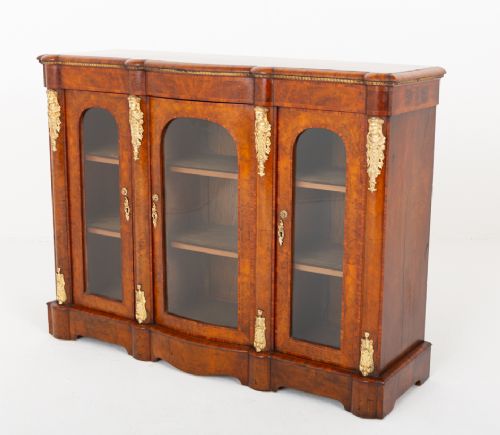
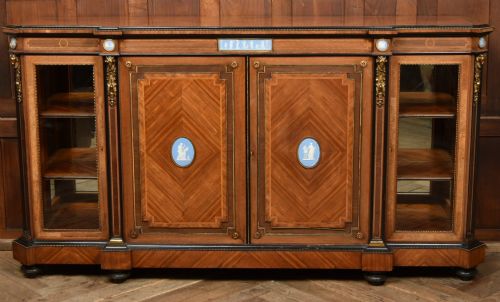
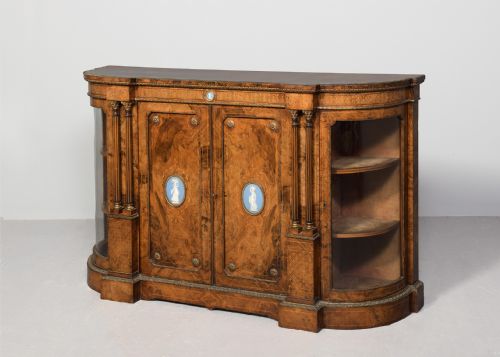
A victorian parlour credenza serves as a principal reception room piece, combining glazed display spaces with enclosed cabinetry. These low-profile side cabinets anchor a room while presenting prized ceramics or glass behind curved or flat glass doors.
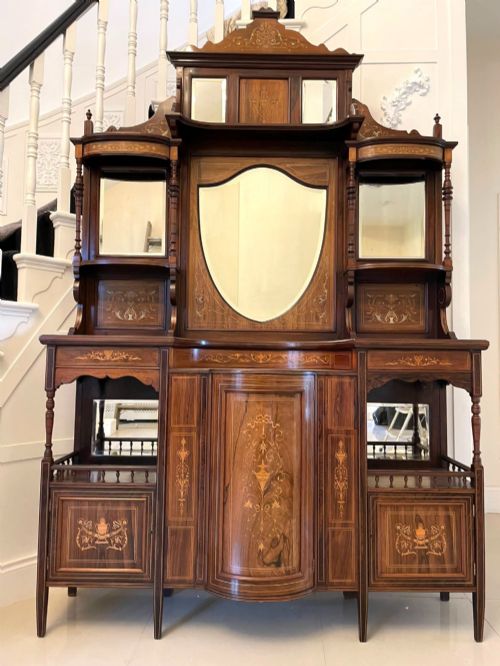
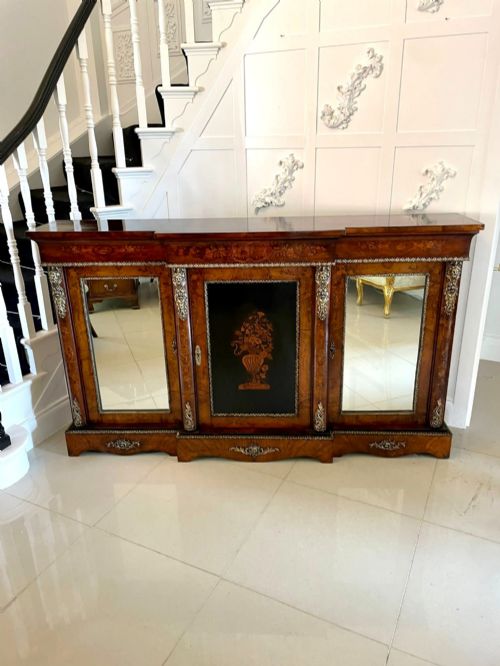
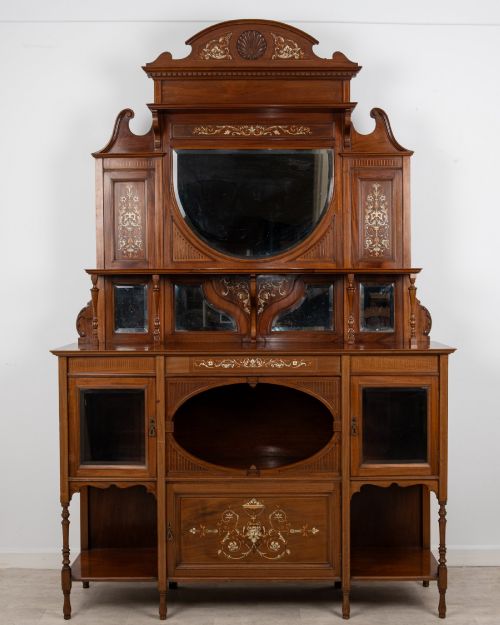
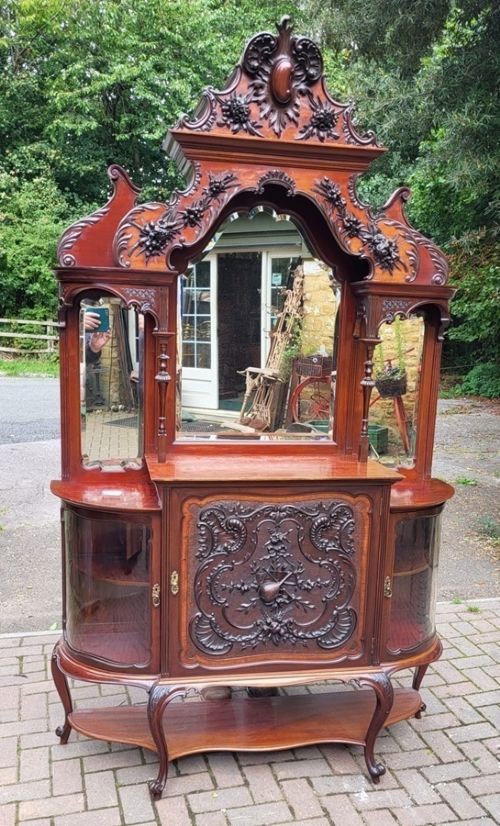
The most common examples on this page are fashioned from burr walnut or rosewood, frequently enhanced with boxwood inlay and ormolu mounts. Makers utilised serpentine fronts and mirrored backs to catch the daylight and reflect the interior of the parlour.
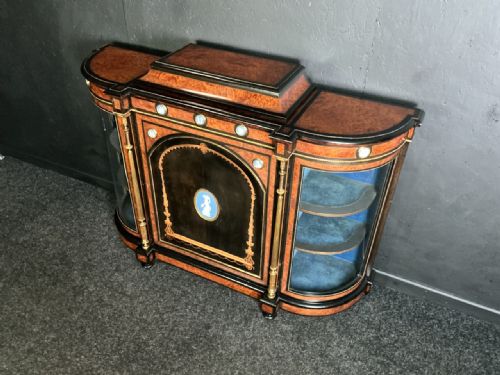
The form evolved through the decades, spanning mid-Victorian burr walnut showpieces to later aesthetic movement ebonised designs. Pieces often incorporate side cupboards flanking a central door, presenting a balanced facade designed to impress visitors.
Judgements of Quality
The distinction between standard cabinet work and exhibition quality lies in the depth of the marquetry and the choice of veneer. Finer pieces display dense, lively burr walnut across every surface without interruption, matched by crisper ormolu castings and heavier brass hardware.
Listings feature burr walnut, rosewood, and mahogany, with decorative accents in ormolu, brass, and boxwood inlay.
Collinson & Lock·Garnett & Sons
The Victorian Parlour Credenza Glossary
- Marquetry
- Decorative veneer work formed by fitting together small pieces of wood, bone, or ivory to create pictorial or geometric patterns. Craftsmen utilised this technique on cabinet doors and friezes.
- Ormolu
- Gilded bronze mounted onto furniture pieces as decorative feet, edgings, or handles. The technique involves applying a mercury and gold amalgam to cast bronze.
- Burr Walnut
- Timber taken from walnut tree growths, producing swirling, highly decorative grain patterns. It served as the primary veneer for high-status nineteenth-century parlor furniture.
- Aesthetic Movement
- A late nineteenth-century design style emphasising art for art's sake, yielding ebonised cabinets with minimal lines and stylised floral inlays.
Victorian Parlour Credenza: Frequently Asked Questions
What is a victorian parlour credenza used for?
These cabinets served primarily to display porcelain, glassware, and decorative objects in formal reception rooms. The enclosed side cupboards and central compartments also provided practical storage for household silver, linens, or documents.
The low profile allowed the top surface to hold lamps, clocks, or additional decorative items without obstructing the paintings or mirrors hung upon the parlour walls.
How do I identify an aesthetic movement piece?
Aesthetic movement furniture departs from heavy walnut revival styles by favouring ebonised wood surfaces, gilt highlights, and stylised Japanese-inspired floral motifs. These pieces often carry the stamp of makers such as Garnett and Sons.
They reflect a deliberate turn towards artistic simplicity and craftsmanship during the late nineteenth century, contrasting sharply with earlier ornate ormolu-mounted designs.
What woods were used to build them?
Cabinet makers relied heavily on rich timbers such as burr walnut and rosewood for their striking grain patterns. Mahogany and ebonised hardwoods also appeared frequently across different decades and provincial workshops.
Contrasting light timbers like boxwood were employed specifically for delicate marquetry panels and stringing inlay work across the doors and friezes.
How do I date a credenza from this period?
Dating relies on observing changes in timber preference, hardware styles, and overarching design movements like the mid-Victorian French revival or late Victorian aesthetic school. Earlier examples from the eighteen-fifties and sixties often feature heavy burr walnut and ornate ormolu.
Later pieces from the eighteen-eighties and nineties lean towards ebonised finishes, rosewood, and refined marquetry reflecting changing domestic tastes.
Can I use a credenza for modern storage?
The interior shelving and enclosed cupboards provide practical space for modern storage, whether housing books, tableware, or media equipment. The glass-fronted sections remain ideal for displaying collections while keeping dust at bay.
Care should be taken to balance loads upon historic shelving and protect the polished wooden surfaces from heavy or damp objects.