

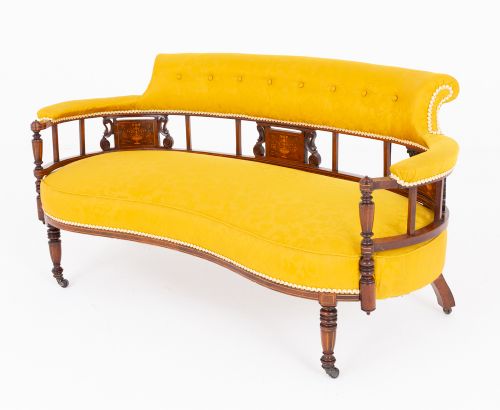


Antique Inlaid Parlour Seat
An antique inlaid parlour seat brings ornamental woodwork and upholstered comfort to a sitting room, drawing the eye with contrasting timbers.
Antique Inlaid Parlour Seat
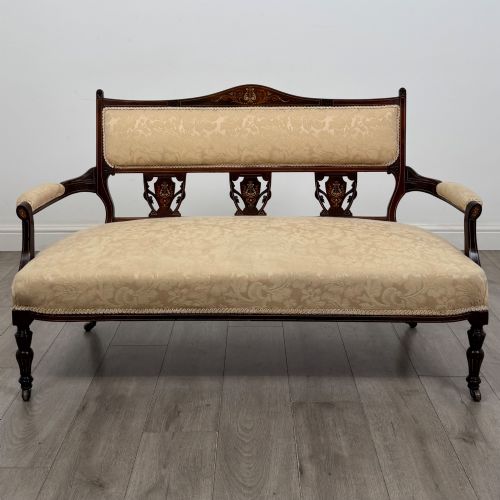
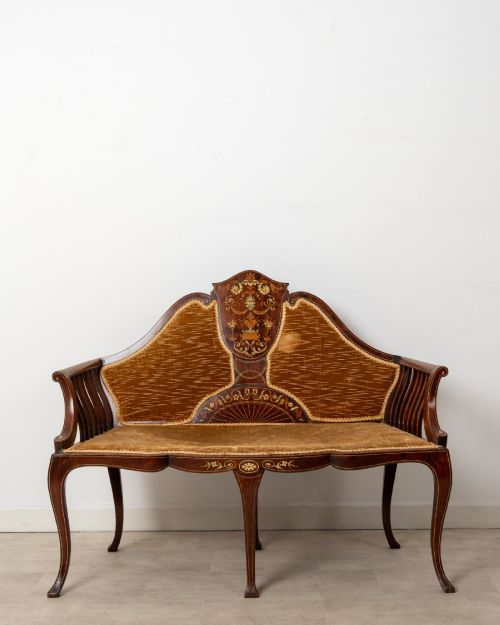
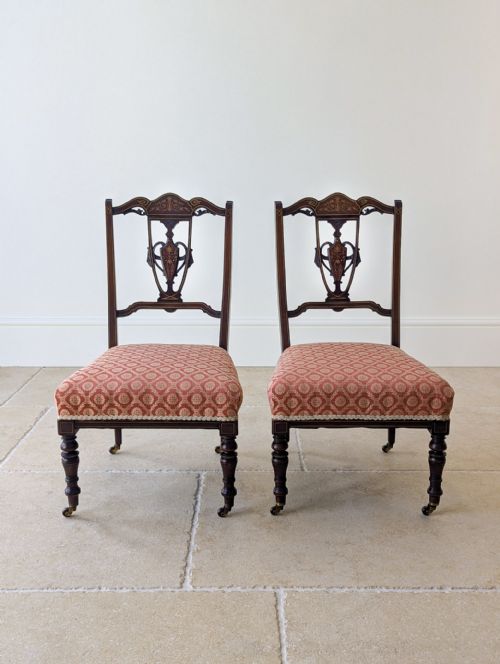
An antique inlaid parlour seat encompasses various forms of upholstered furniture designed for formal reception rooms, including settees, sofas, salon chairs, and benches. Buyers seeking these pieces encounter examples ranging from late Victorian to Edwardian periods, with Edwardian mahogany and satinwood pieces appearing most frequently alongside earlier rosewood designs.
The styles recorded span standard Victorian and Edwardian iterations to Sheraton Revival interpretations, Art Nouveau framing, and French Empire or Qing Dynasty suites. Most pieces function as compact two-seater settees or salon armchairs intended for lighter domestic use rather than heavy lounging.
How they were made
Cabinet makers built the structural frames primarily from solid mahogany, rosewood, or Chinese hardwood, frequently shaping the timber into curved settees, tub shapes, or corner chairs. Upholstered elements rely on traditional fabric coverings, occasionally accompanied by bone details or mother of pearl elements.
Decoration centres on contrasting wood veneers applied through satinwood inlay, marquetry, and boxwood inlay to form geometric or floral patterns along the crest rails and backsplats. Brass fittings occasionally provide structural reinforcement or decorative accents on specific frames.
Some Edwardian settees double as end-of-bed furniture, proving that Victorians understood the absolute necessity of sitting down before taking off one's boots.
What varies in quality
The standard of craftsmanship shows in the precision of the timber inlay, where superior examples exhibit seamless joints between contrasting veneers without gaps or filler. The crispness of carved mahogany or rosewood details and the structural integrity of the frame differentiate fine salon seating from simpler commercial output.
Material selection also dictates overall grade, with richly figured rosewood or finely chosen satinwood commanding higher regard than plain secondary timbers. The integrity of the original framing, even when re-upholstery is required, determines the long-term character of the piece.
The Antique Inlaid Parlour Seat Glossary
- Inlay
- A decorative technique where pieces of contrasting timber, bone, or shell are fitted into depressions carved into the primary wood surface. This creates a flush, ornamental design along the backrest or legs.
- Marquetry
- Formed by assembling sliced veneers into pictorial or decorative patterns before gluing them onto the structural carcase. It differs from simple linear inlay by covering broader expanses with complex motifs.
- Satinwood
- A durable, yellowish timber prized for its lustrous sheen and used extensively for contrasting stringing and decorative panels on Edwardian furniture. It provides bright visual accents against darker mahogany and rosewood.
- Parlour suite
- A coordinated set of seating furniture, typically comprising a settee and matching armchairs or salon chairs, designed to furnish a formal reception room in a unified style.
Antique Inlaid Parlour Seat: Frequently Asked Questions
What is a parlour seat used for?
These seats served primarily in formal reception rooms for receiving guests, entertaining visitors, or light social seating. Their lighter construction suited formal entertaining rather than heavy daily lounging.
Today, homeowners place them in hallways, bedrooms, or drawing rooms where their decorative woodwork and compact proportions add period character without dominating a smaller space.
How do I identify an Edwardian settee?
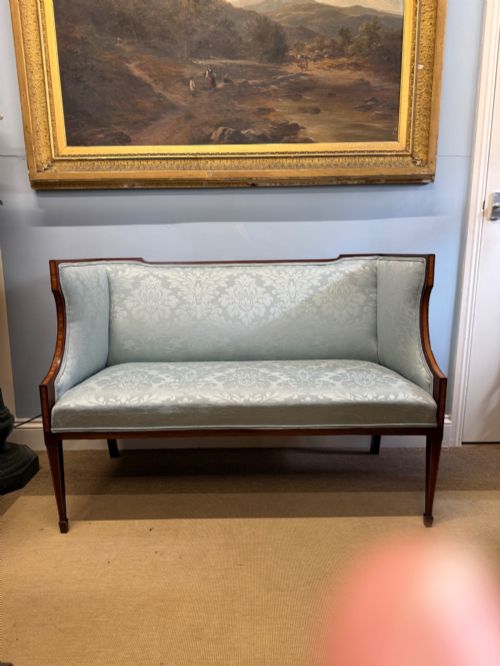
Edwardian settees typically feature lighter mahogany frames, often enhanced with satinwood inlay or Sheraton Revival motifs. The proportions tend to be more slender than heavier Victorian pieces.
Many examples incorporate subtle tapering legs, stringing, and upholstered seats designed for formal drawing rooms rather than heavy Victorian interiors.
Can I use these seats daily?
While structurally sound, antique salon seating was built for lighter formal use rather than heavy family lounging. Many surviving pieces benefit from careful placement and occasional rather than strenuous daily sitting.
Frames requiring re-upholstery offer an opportunity to refresh the internal webbing and padding while preserving the historic timber structure underneath.
What is Sheraton Revival style?
Sheraton Revival furniture draws inspiration from late eighteenth-century classical designs, featuring neoclassical motifs, delicate proportions, and refined inlay work. Makers in the Edwardian era revived these lighter geometries.
Pieces in this style often display symmetrical patterns, tapered legs, and contrasting satinwood banding against a mahogany ground.