


Antique Inlaid Mirror Frame
An antique inlaid mirror frame brings texture and history to a room, framing glass within centuries of timber and decorative detail.
Antique Inlaid Mirror Frame
When you search for an antique inlaid mirror frame, you encounter wall mirrors, overmantels, and dressing mirrors spanning from the seventeenth century through the Edwardian period.
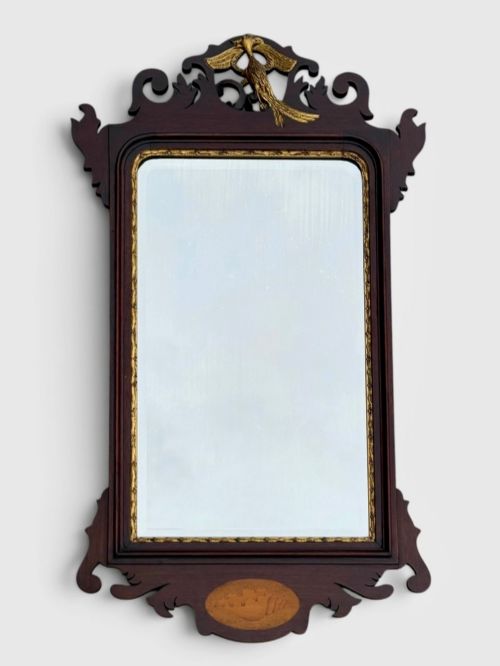
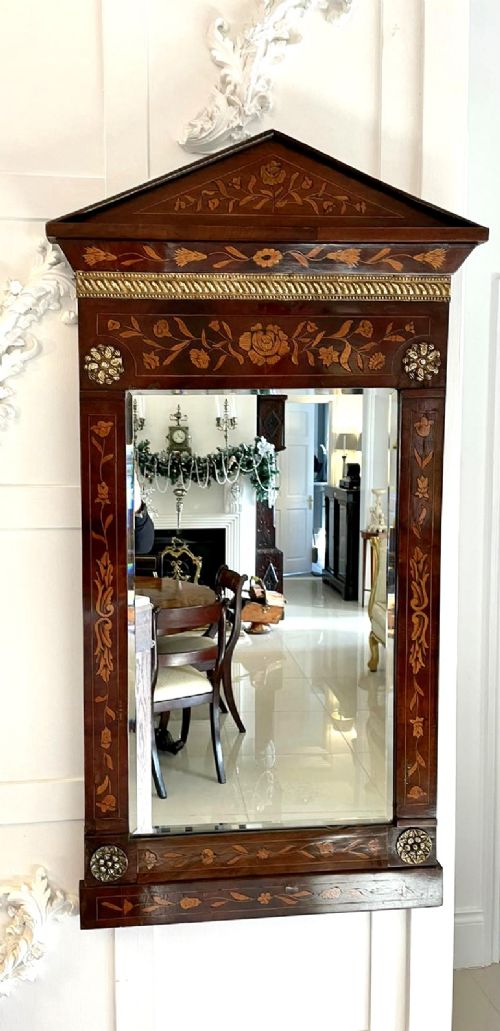
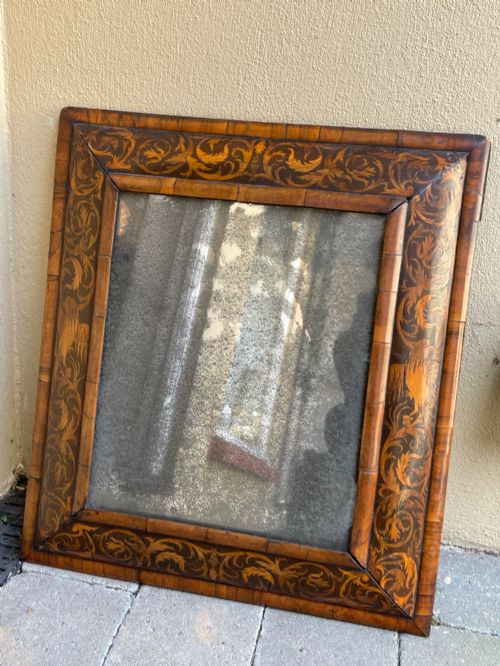
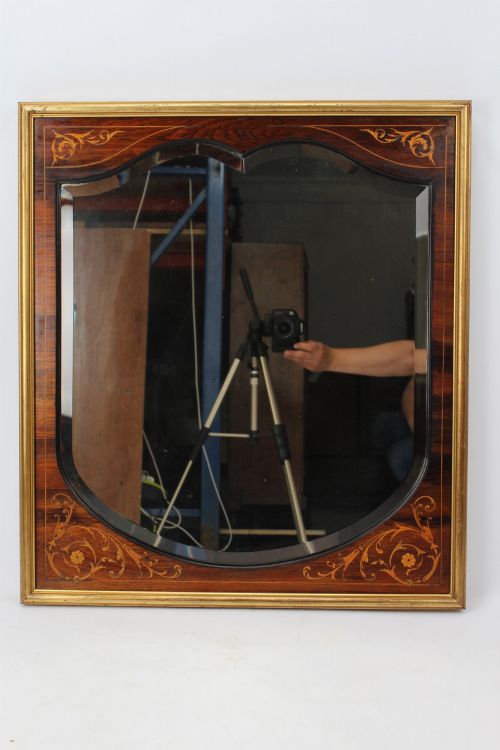
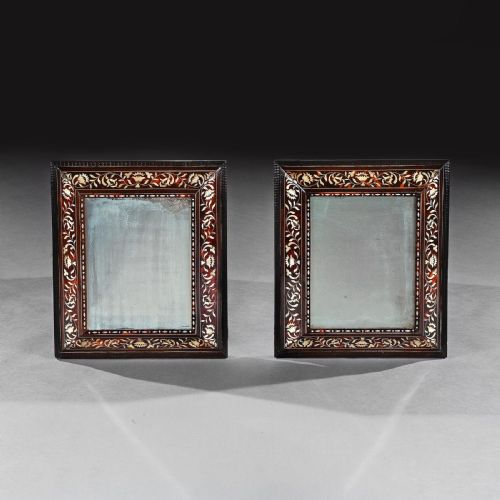
The versions most likely to appear on this page include mahogany, walnut, and rosewood wall mirrors bearing marquetry, ivory, brass, or wood inlay, alongside distinctive regional work from Hoshiarpur, Kashmir, and Damascus.
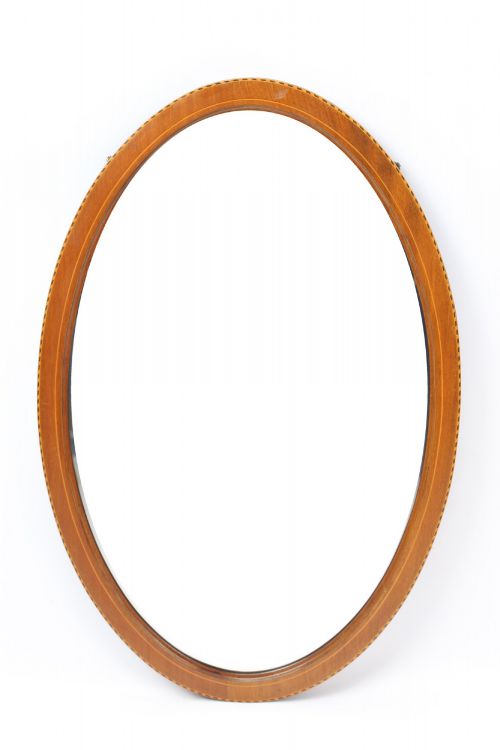
Forms range from small oval hanging frames to large pier and cheval mirrors designed for nineteenth-century reception rooms and hallways.
Materials and construction
Cabinetmakers constructed these frames using dense hardwoods like mahogany, walnut, rosewood, and shisham, frequently applying fine veneers over secondary timbers.
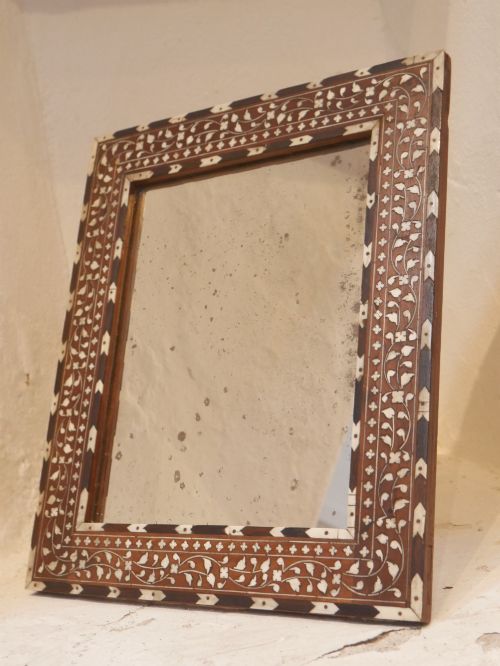
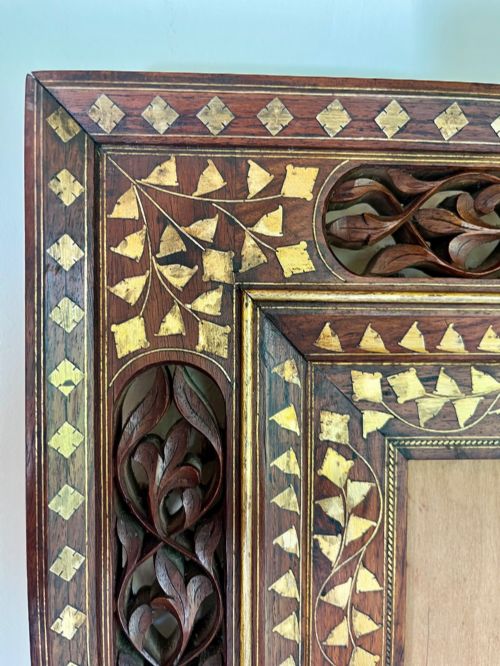
Decoration relied on contrasting wood inlay, marquetry, mother-of-pearl, and brass wire, often combined with carved fretwork, giltwood accents, and hand-bevelled glass.
Several frames travelled thousands of miles from workshops in Hoshiarpur and Damascus to Victorian British drawing rooms.
Assessing quality in inlaid frames
Quality rests in the crispness of the fretwork, the precision of the marquetry or stringing, and the integrity of the underlying timber frame.
Pieces showing intricate hand-carved details, well-fitted geometric or floral inlays, and original glass plates sit distinctly apart from simpler mass-produced variations.
A.J Rowley·Rowley Gallery
The Antique Inlaid Mirror Frame Glossary
- Marquetry
- Decorative patterns formed by fitting together thin slices of wood veneer and other materials. This technique creates pictorial or geometric designs across the surface of the frame.
- Fretwork
- Openwork carving produced by piercing thin wood boards with a scroll saw. It defines the lightweight, fret-cut silhouettes seen on many eighteenth-century and Edwardian wall frames.
- Overmantel
- A large mirror designed to hang specifically above a fireplace mantelpiece. These frames often incorporate wider proportions and gilt or inlaid detailing to anchor the room.
- Cheval mirror
- A full-length dressing mirror suspended on a vertical swivelling frame between four standing legs. This freestanding form appears in Edwardian bedroom furniture.
- Pier glass
- A tall mirror intended to hang on the narrow stretch of wall between two windows. They frequently match console tables and utilise vertical proportions.
Antique Inlaid Mirror Frame: Frequently Asked Questions
How do I date an inlaid mirror frame?
Dating relies on combining the timber species, the style of the inlay, and the construction methods used at the back of the frame. Secondary woods and mirror glass manufacturing techniques also offer clear chronological clues.
Later Edwardian and twentieth-century interpretations often borrow earlier Georgian or William and Mary motifs, meaning you must examine the joinery and backing boards carefully to confirm the true period.
Were these mirrors meant to hang or stand?
Most wall mirrors, oval hanging frames, and overmantels were built with fixed hanging loops or heavy wooden battens for wall placement. Cheval mirrors and dressing mirrors utilised freestanding pivoting structures.
Heavier architectural pieces like pier glasses required secure wall anchoring due to their substantial wooden frames and glass weight.
What is Hoshiarpur inlay work?
Hoshiarpur in northern India became renowned for intricate woodwork featuring dense geometric and floral patterns inlaid with shisham, brass, and ivory. These pieces arrived in Britain in increasing numbers during the late nineteenth century.
The technique creates a distinct tactile surface where the contrasting materials sit flush within the dark timber background.