
Antique Inlaid Dining Server
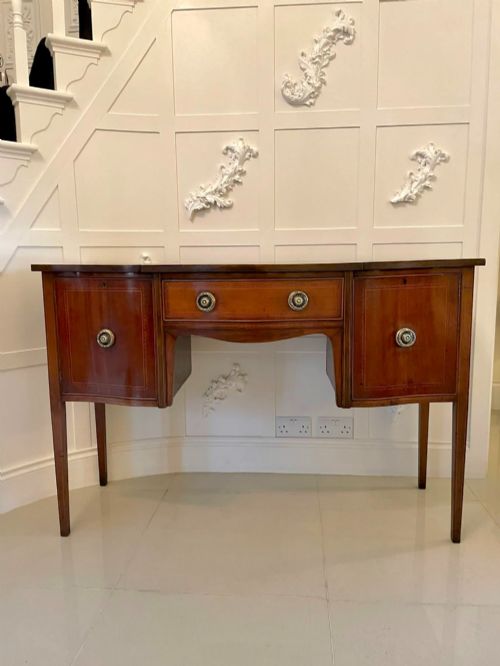
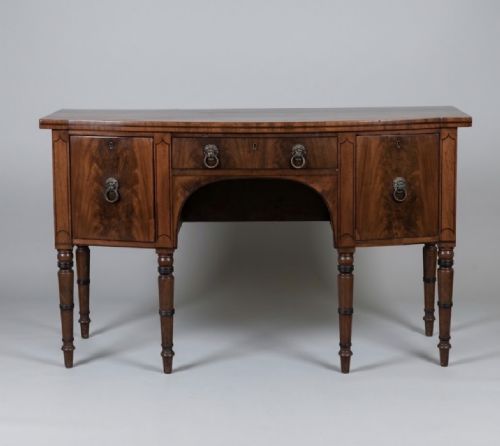
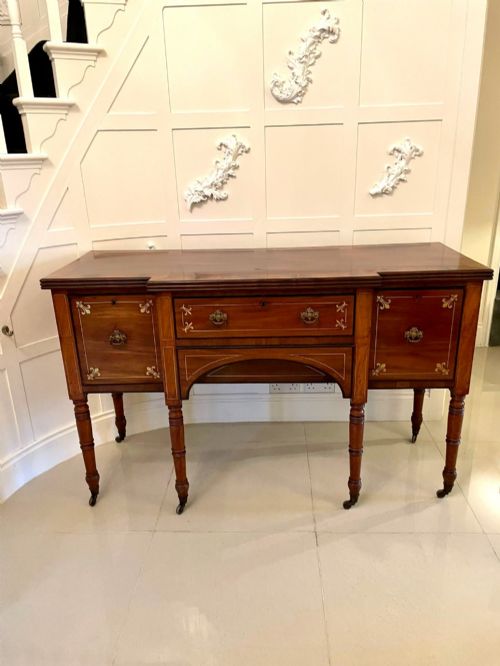
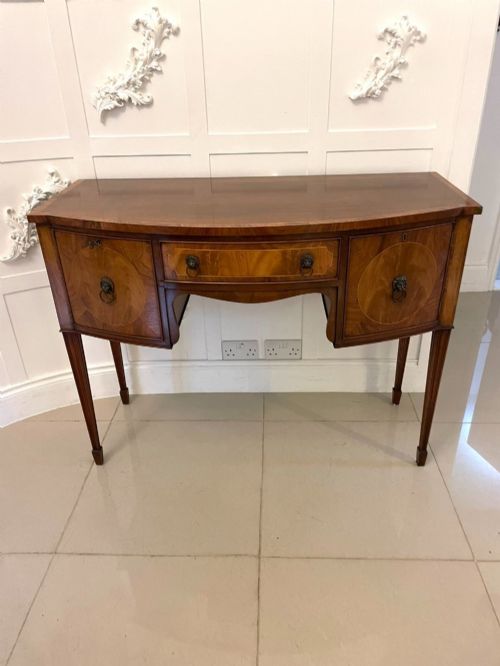
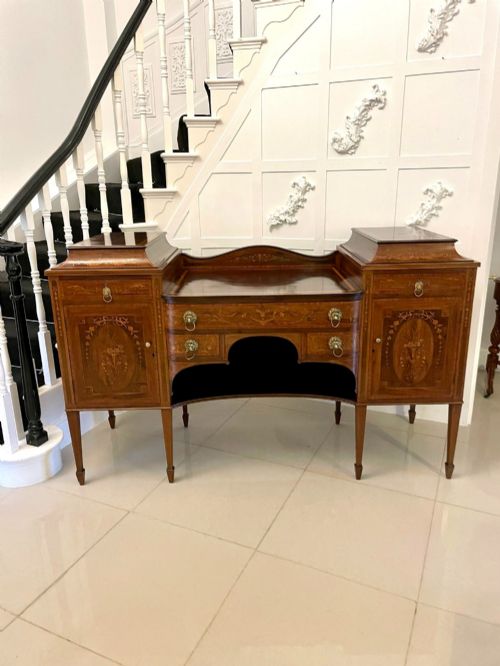
An antique inlaid dining server brings warmth and refined storage to a dining room, uniting Georgian and Regency proportions with crisp marquetry.
Antique Inlaid Dining Server
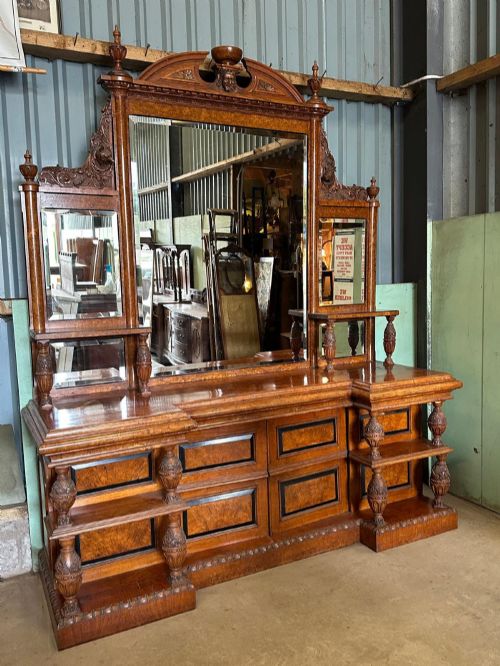
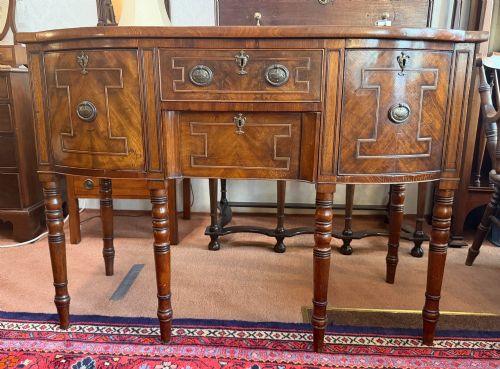
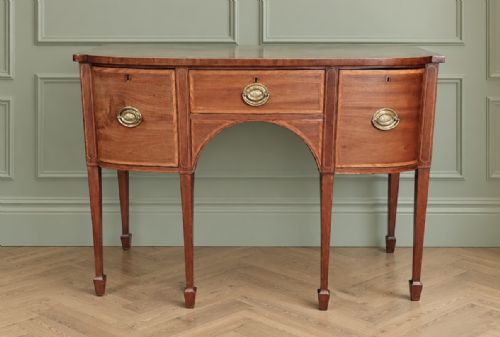
When searching for an antique inlaid dining server, you encounter formal serving furniture including sideboards, side cabinets, and servery tables. These pieces originate primarily from the Georgian, Regency, and Edwardian eras, spanning the eighteenth to the early twentieth century.
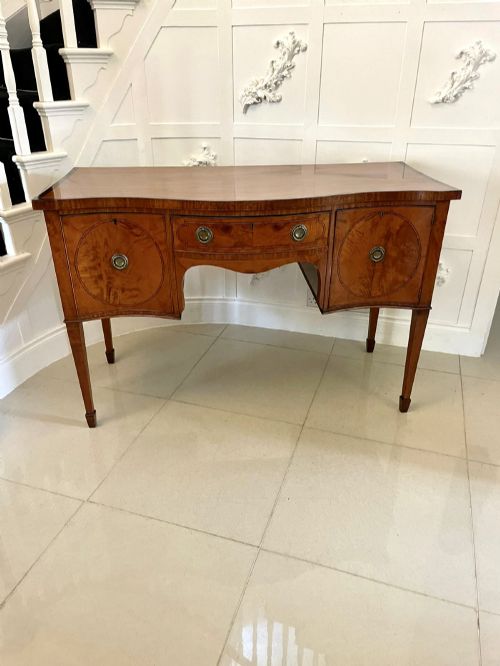
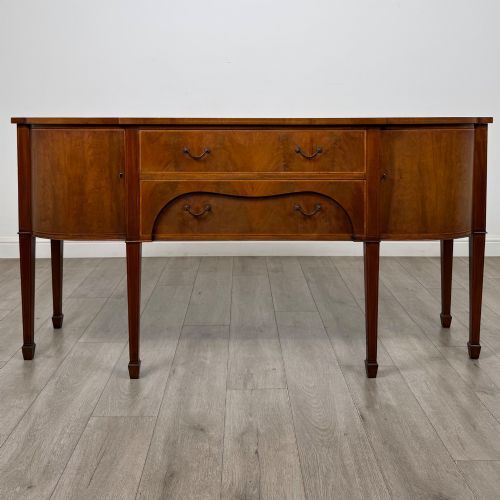
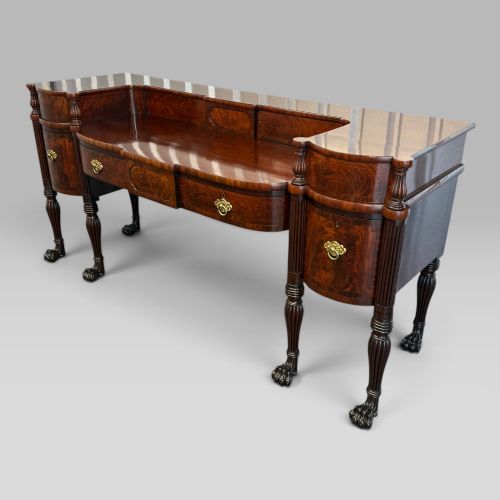
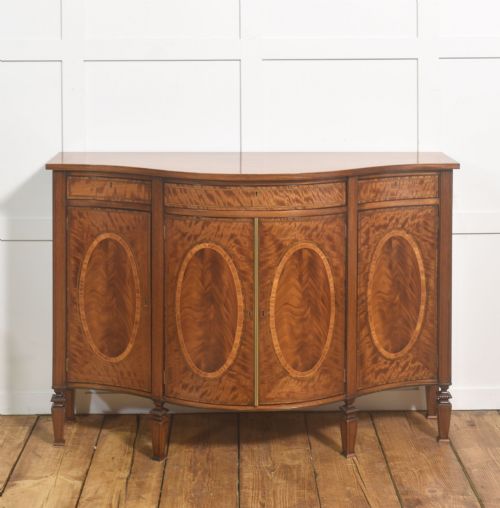
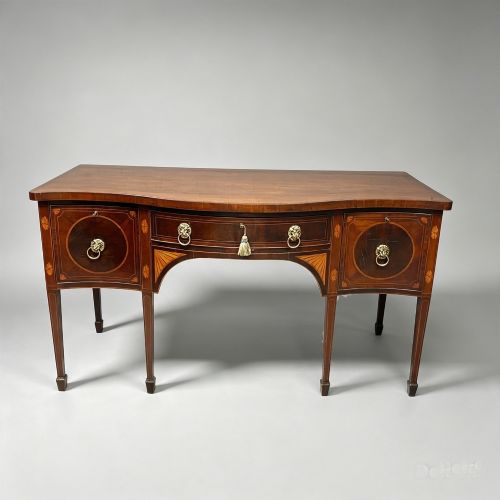
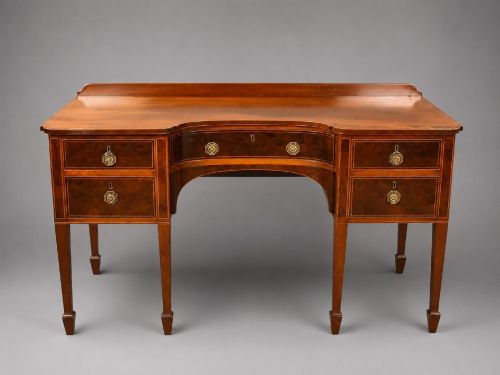
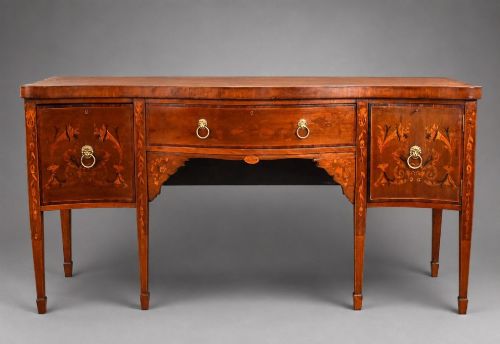
The most common forms on this page take the shape of mahogany sideboards featuring bow-front, serpentine, or breakfront designs. Makers constructed these large serving pieces to hold dining silver, linen, and china while displaying decorative wood veneers.
Examples range from eighteenth-century George III pieces to later Sheraton Revival interpretations and Edwardian productions. Each period brings distinct proportions, from understated stage-back designs to bold flame mahogany surfaces.
Materials and technique
Cabinetmakers built these servers using solid mahogany and figured mahogany veneers, selected for deep grain patterns and rich warm tones. They mounted delicate details in boxwood, satinwood, and ebony to create contrasting borders and geometric patterns.
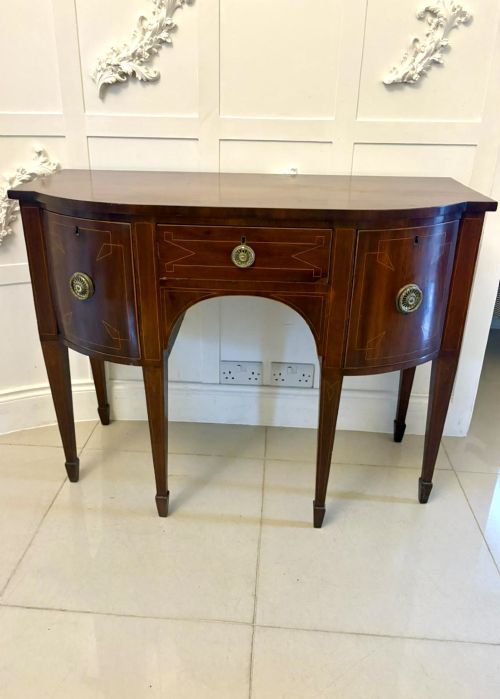
Craftsmen applied intricate wood inlay and marquetry directly into the timber surfaces, framing drawer fronts and tops with fine stringing. Certain Regency and Victorian pieces incorporate brass inlay or brass mounts alongside traditional timber work.
Listings feature mahogany, satinwood, and ebony across Georgian, Regency, and Edwardian periods.
Design and construction
Quality separates simple utility furniture from sophisticated cabinet work through the choice of timber and precision of inlay. Superior pieces utilise figured flame mahogany and crisp, tightly fitted boxwood or satinwood stringing rather than painted substitutes.
The sophistication of the silhouette defines the upper tier, seen in sweeping serpentine fronts, breakfront configurations, and complex marquetry panels. Well-executed pieces retain balanced proportions and original brass hardware or lion paw feet.
Hewetsons London
The Antique Inlaid Dining Server Glossary
- Serpentine
- A shaped furniture front that curves outward at the centre and inward at the ends. This sweeping contour requires considerable woodworking skill to execute properly on a large serving piece.
- Bow-front
- A convex curved front that projects outward in a smooth arc. This profile softens the rigid lines of a dining room while maximising internal storage space.
- Marquetry
- Decorative patterns formed by fitting together small pieces of tinted or textured wood veneer. Craftsmen arrange these veneers into floral, geometric, or pictorial designs on cabinet doors and drawer fronts.
- Crossbanding
- A narrow strip of veneer applied around the border of a furniture top or drawer front with the grain running perpendicular to the main panel. This technique creates a neat framing effect.
- Breakfront
- A large cabinet or sideboard whose central section projects forward from the recessed flanking wings. This architectural arrangement adds depth and visual structure to the piece.
Antique Inlaid Dining Server: Frequently Asked Questions
How do I date an antique sideboard?
Examine the timber selection, secondary woods used in the drawer linings, and the style of the hardware. Construction techniques like hand-cut dovetails help confirm the period of manufacture.
Compare the overall silhouette and inlay motifs against known design books from the Georgian and Regency eras to narrow down the decade.
Where should I place a server?
Position your server against a primary wall in a dining room where it can function as a practical surface during meals. Ensure there is adequate clearance for drawers and cabinet doors to open fully.
Keep the piece away from direct sunlight and heat sources to protect delicate satinwood and mahogany veneers from drying out.
Are brass inlaid servers fragile?
Brass inlaid servers require standard care to prevent the metal strips from lifting as the underlying timber responds to humidity changes. Gentle dusting and stable room environments keep the brass secure within the wood surface.
These decorative elements represent high-status Regency cabinet work and remain stable when protected from extreme environmental shifts.