


Antique Inlaid Chessboard
An antique inlaid chessboard is a tactile battlefield of contrasting timbers, built for quiet hours and displayed today as decorative furniture.
Antique Inlaid Chessboard
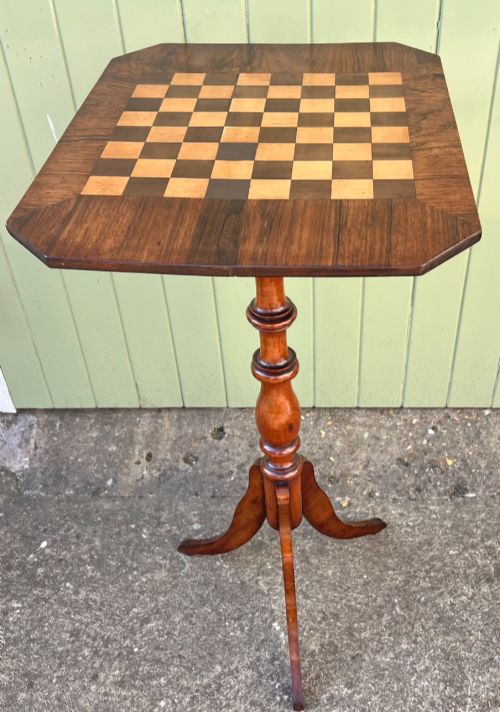
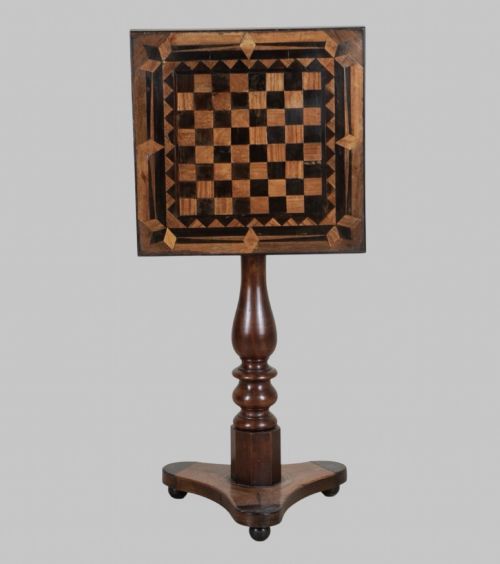
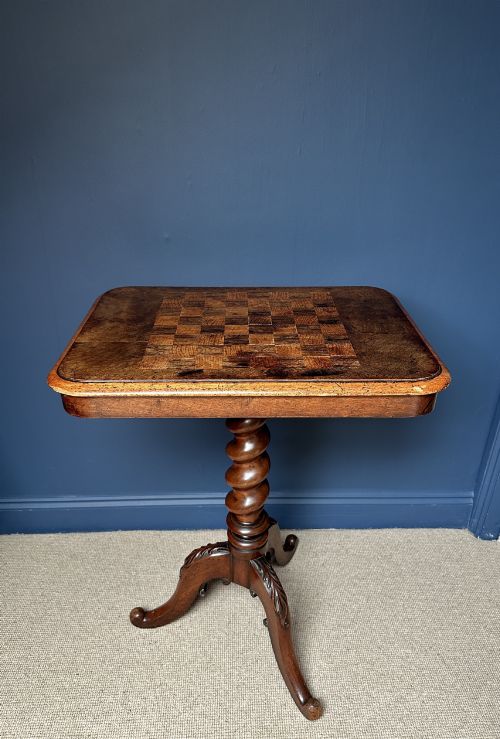
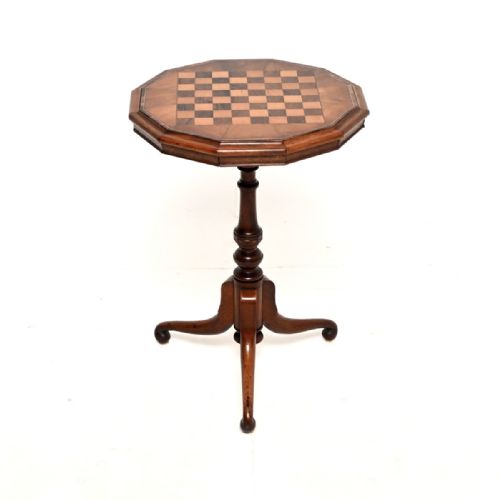
An antique inlaid chessboard appears across several forms, from folding wooden boards to elaborate combination tables and compendiums designed for the parlour. The pieces seen on this page span the Georgian, Regency, Victorian, and Edwardian periods, stretching into the early twentieth century.
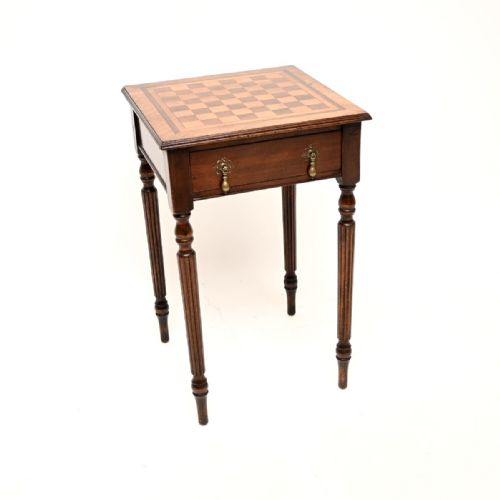
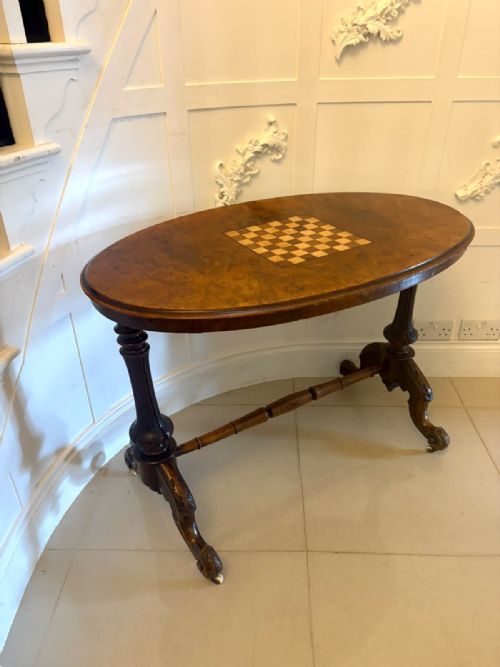
Tables predominate, often combining a chess playing surface with sewing storage, backgammon interiors, or card playing leaves. Rosewood, walnut, and mahogany provide the primary surfaces, while folding boards and standalone boards offer portable alternatives to the heavy centre tables.
Origins range widely across English workshops, Sweden, and Kashmir, bringing regional timbers like birch and exotic materials such as mother-of-pearl into the playing field. These boards served as social focal points in domestic rooms, marrying disciplined geometry with decorative cabinet work.
How they were made
Cabinet makers constructed these boards using contrasting hardwoods, alternating pale boxwood and sycamore with dark walnut, rosewood, ebony, and mahogany to create the distinct playing squares. Precision sawing and dry-fitting ensured the checkered grid remained stable across shifting household temperatures.
Inlay work involved routing recesses into solid timber bases or veneered tabletops to receive delicate lines of brass, satinwood, or mother-of-pearl. Carved pedestals, turned legs, and folding hinges completed the structural framework of the tables and boxes.
The selection includes folding boards, sewing tables, and Kashmiri marble chess surfaces.
What varies in quality
The precision of the joinery and the selection of timber veneers dictate the standing of a board. Finely figured burr walnut and rich rosewood reflect higher workshop ambitions than plain domestic timbers.
The crispness of the inlay work and the harmony of the contrasting squares show the maker's hand. Subtle details in turning, carving, and the retention of original brass fittings separate standard production pieces from finer examples.
A British Chess Company
The Antique Inlaid Chessboard Glossary
- Inlay
- A technique where pieces of contrasting material are embedded into a recessed surface to form a decorative pattern. This method creates the flush grid required for playing pieces to glide smoothly.
- Games Compendium
- A fitted box containing equipment for multiple pastimes, such as chess, checkers, and backgammon. These portable sets gathered various boards and pieces into a single unified case.
- Boxwood
- A dense, pale wood frequently utilised for the lighter squares on a chessboard. Its fine grain takes sharp edges well during precision cutting.
- Staunton Style
- A standardised design of chess pieces introduced in the nineteenth century with characteristic balanced forms. Named after the player Howard Staunton, it became the global template for play.
- Rosewood
- A heavy, dark timber with pronounced grain patterns prized by nineteenth-century cabinet makers. It provides a rich contrast against paler woods on games tables.
Antique Inlaid Chessboard: Frequently Asked Questions
How were these tables used?
Victorian and Regency households utilised these tables for evening entertainment, playing chess, backgammon, and card games in the drawing room. Many featured built-in drawers for storing pieces, sewing equipment, or backgammon boards.
Between games, the tables functioned as decorative centrepieces or work desks within the home. Their dual purpose made them central fixtures of nineteenth-century parlour social life.
How do I care for an antique wooden board?
Keep wooden chess tables away from direct sunlight and sudden temperature shifts to prevent the delicate veneers and inlay from lifting. Dust them gently with a dry cloth and avoid harsh chemical polishes.
Maintaining a stable indoor humidity preserves both the timber and the tiny brass or mother-of-pearl details. Beeswax applied sparingly helps nourish the old polished surfaces.
How do I tell Victorian boards apart from earlier ones?
Georgian and Regency pieces often favour simpler geometric lines, mahogany, and rosewood, reflecting neoclassical tastes. Victorian examples frequently showcase heavier carved pedestals, burr walnut veneers, and elaborate multi-game combinations.
Examining the construction methods, secondary woods, and hinge types helps clarify the period of manufacture. Edwardian pieces later introduced lighter satinwood and more restrained decorative touches.