

Antique Inlaid Armoire
An antique inlaid armoire is a grand timber wardrobe that brings stately storage and intricate decorative detail into a bedroom.
Antique Inlaid Armoire
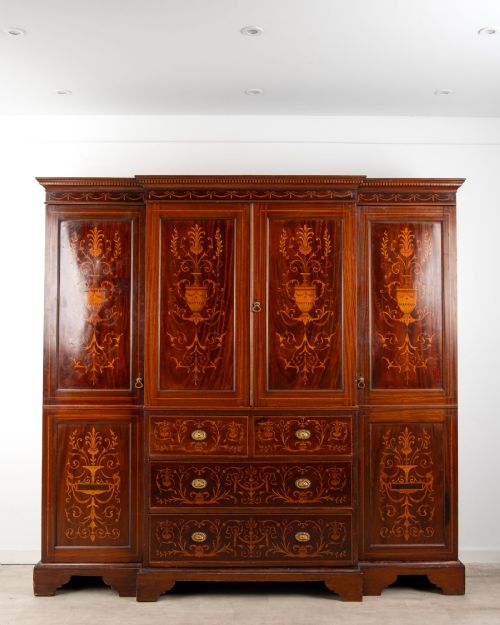
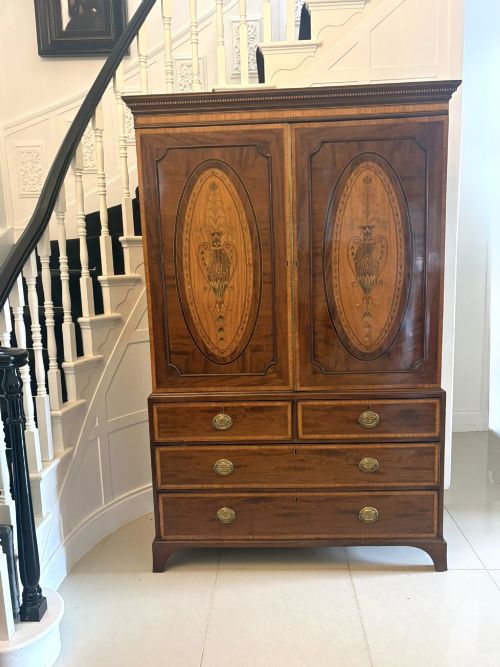
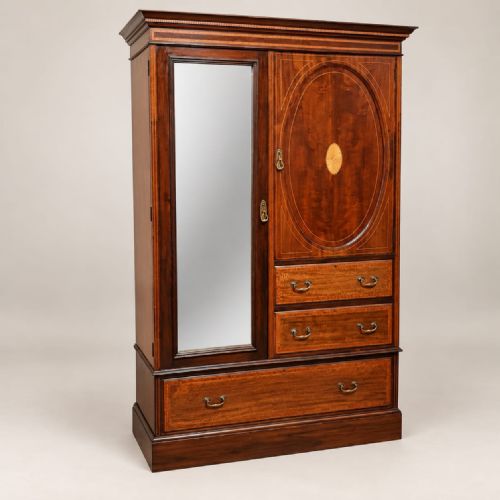
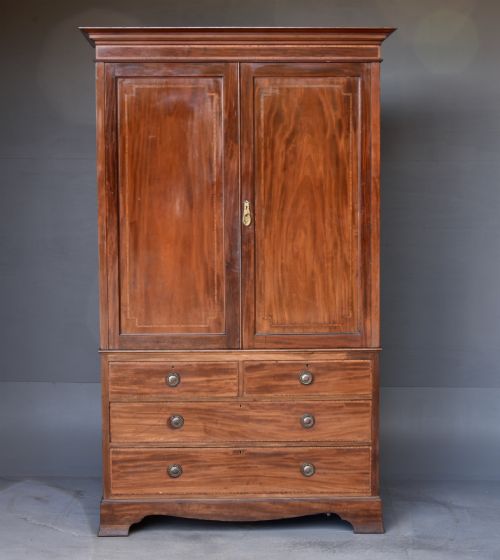
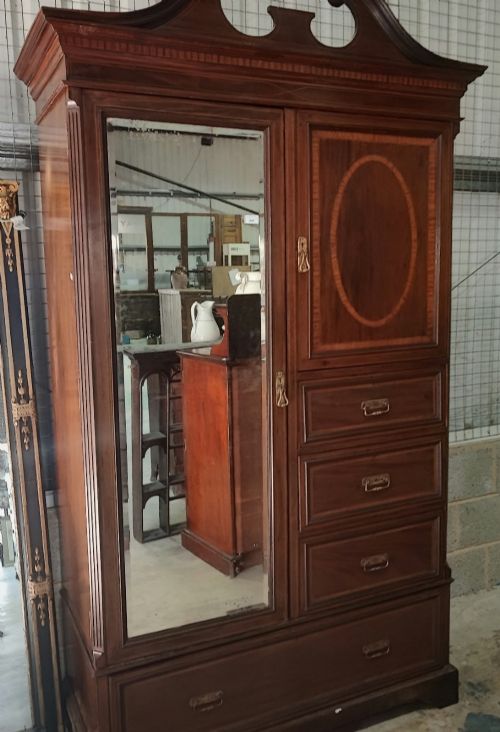
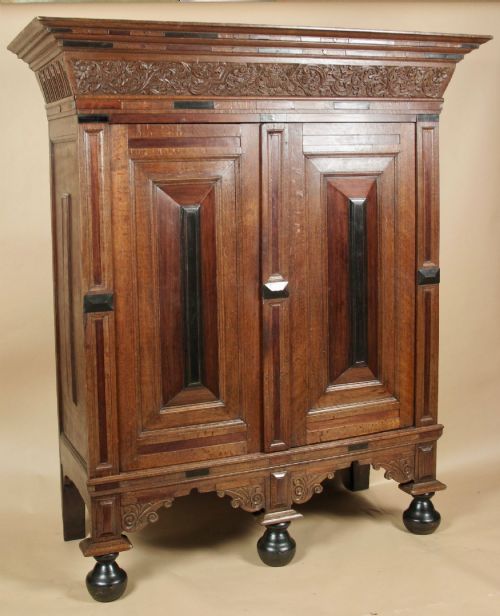
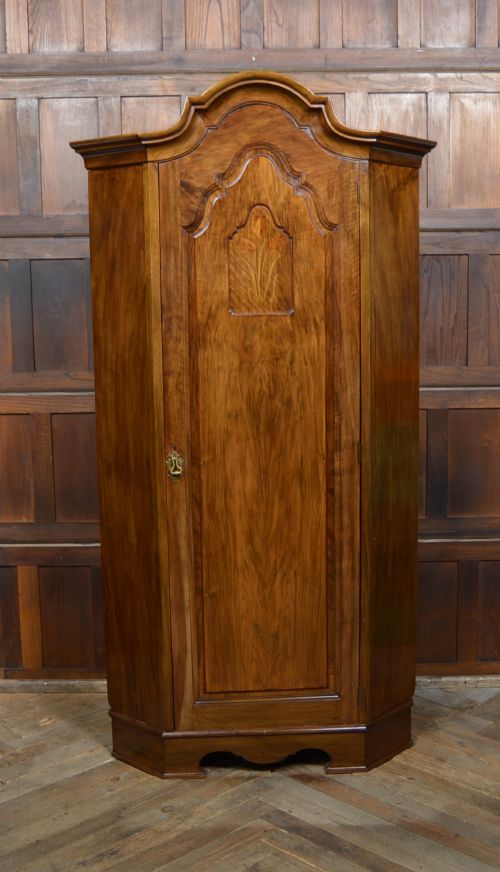
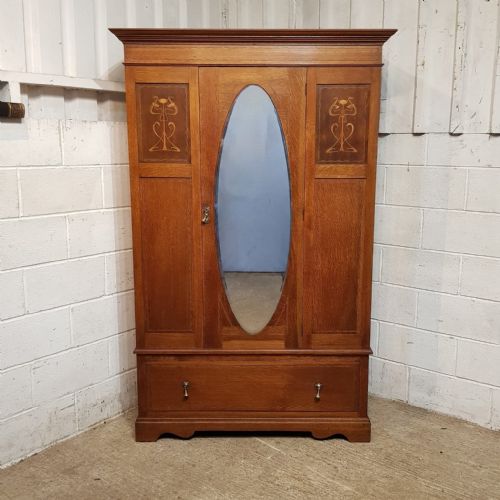
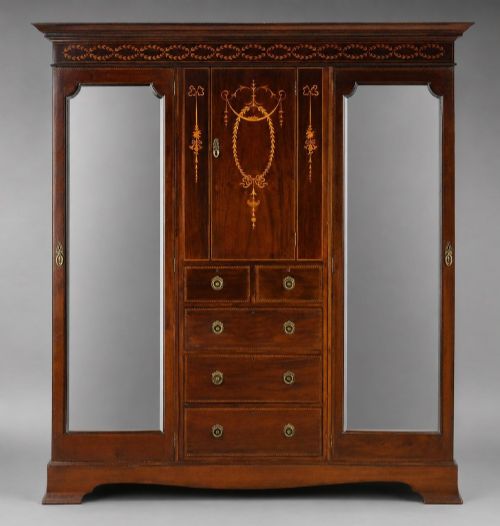
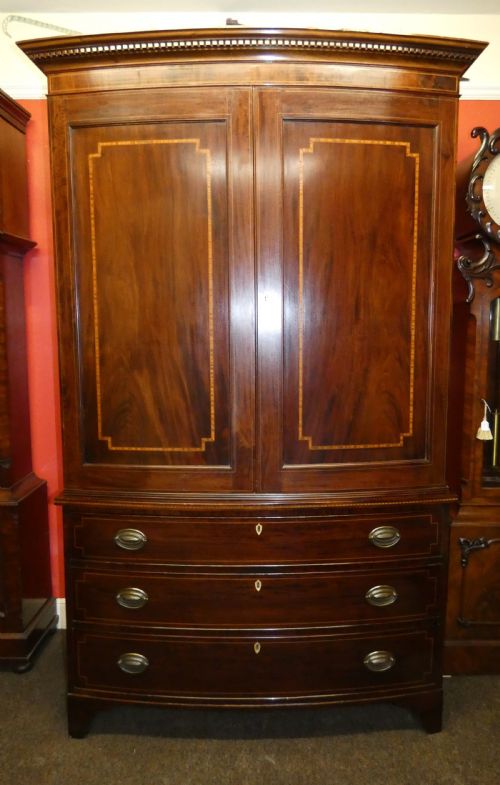
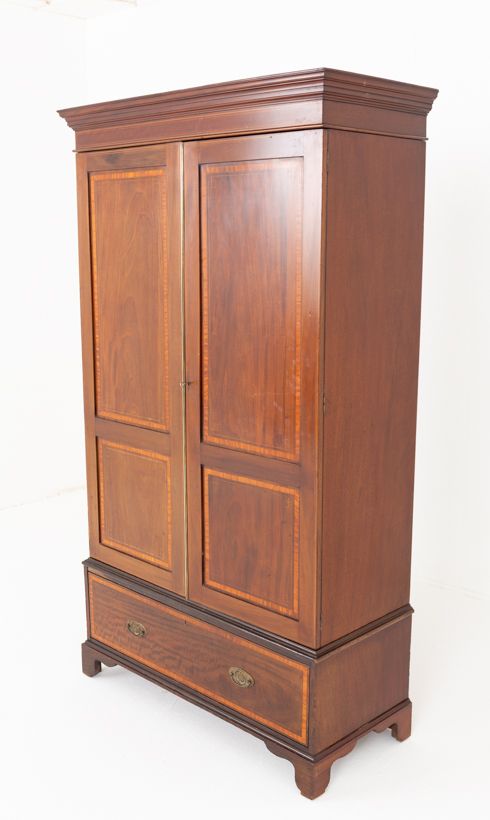
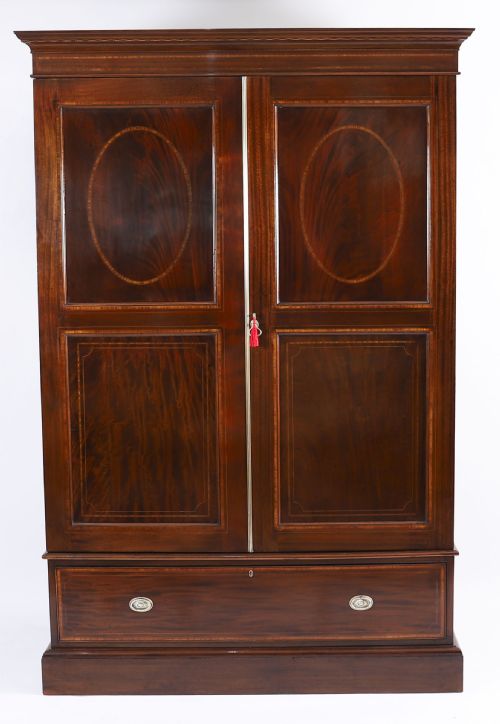
When you search for an antique inlaid armoire, you encounter large timber wardrobes, linen presses, and compactums designed for substantial bedroom storage. These pieces bridge utilitarian function and decorative ambition, offering hanging space alongside drawers and sliding trays.
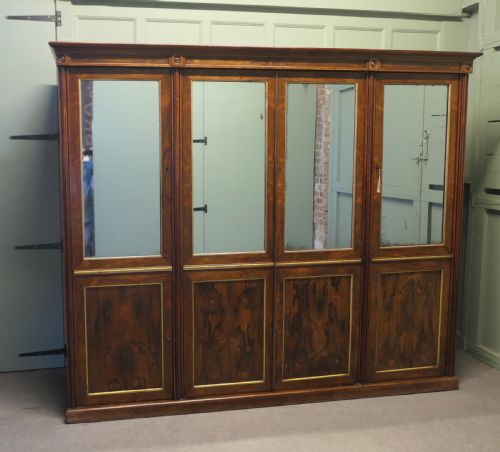
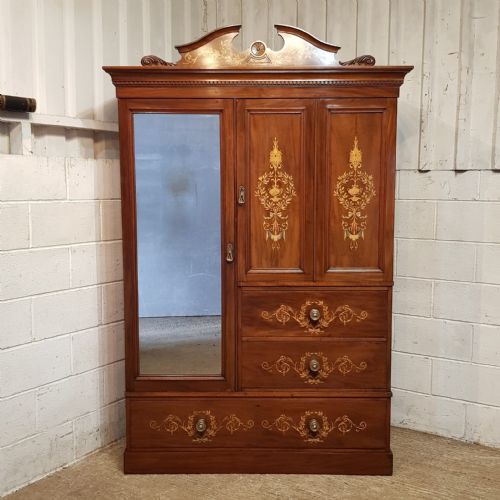
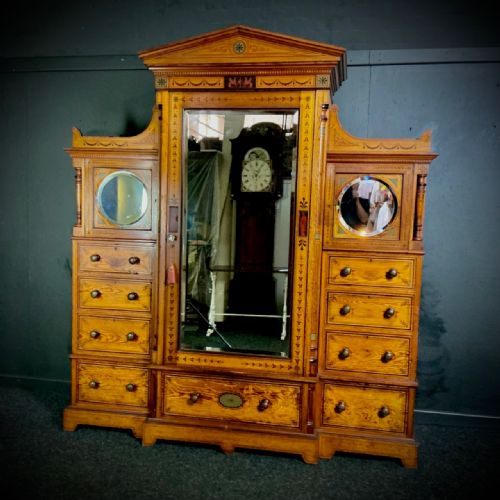
The versions most frequently met on this page date from the Georgian, Victorian, and Edwardian eras, constructed primarily in rich timbers. Many examples incorporate satinwood, boxwood, and marquetry detailing to break up large expanses of door and panel.
Originating largely from British workshops, alongside continental European examples in walnut and fruitwood, these cabinets range from restrained Georgian proportion to expansive Edwardian triple wardrobes. Their presence anchors a room, combining architectural scale with meticulous surface ornamentation.
Materials and Construction Methods
Makers built these wardrobes using dense primary timbers such as mahogany, oak, walnut, and pitch pine, providing a stable carcase for intricate decoration. Flame mahogany veneers and solid panels form the foundation, offering deep natural grain figures.
Inlay work relied on contrasting woods like satinwood, boxwood, ebony, and rosewood, cut precisely into recesses to form geometric banding, floral motifs, or classical urns. Marquetry techniques utilised assorted tinted veneers assembled together to create pictorial scenes on doors and cornices.
Some Edwardian wardrobes hide unexpected mirrored panels inside, designed so homeowners could check their attire while keeping exterior doors closed.
Distinctions in Execution and Materials
Quality rests significantly on the precision of the cabinetmaker's joinery and the depth of the timber selection. Superior pieces display seamless timber matching across large doors and crisp, sharp inlay work where contrasting woods meet without visible gaps.
The standard of internal fittings also separates the exceptional pieces from standard production. Top-tier compactums and linen presses feature well-organized banks of sliding trays, original brass or iron hardware, and secondary woods like oak or mahogany used throughout the interior framework.
maples & co·Edwards and Roberts·Shapland & Petter·Druce & Co·WYLIE LOCHHEAD of GLASGOW
The Antique Inlaid Armoire Glossary
- Armoire
- A tall wardrobe or cupboard, traditionally used for storing clothing. In British antique terminology, the term often overlaps with large wardrobes and linen presses.
- Compactum
- A multi-functional wardrobe featuring a combination of hanging space, linen slides, and internal drawers. These fitted pieces maximise interior storage capacity within a single footprint.
- Linen Press
- A tall cabinet featuring upper cupboard doors enclosing sliding shelves for linens, positioned above a base chest of drawers. Georgian and Victorian examples frequently showcase fine flame mahogany veneers.
- Marquetry
- The art of forming decorative patterns and pictures by assembling thin veneers of various coloured woods. Craftsmen cut these elements meticulously to fit flush into the primary timber ground.
- Satinwood Inlay
- The practice of contrasting dark cabinet timbers with pale, golden satinwood stringing or banding. This technique gained prominence during the Sheraton revival and Edwardian periods.
Antique Inlaid Armoire: Frequently Asked Questions
What is a compactum wardrobe?
A compactum is a specialised multi-compartment wardrobe designed to hold an entire wardrobe within one piece of furniture. It typically combines hanging sections, shelving, and banks of internal drawers.
These pieces emerged to offer organised storage for gentlemen or ladies, separating folded garments from hanging attire in a single architectural unit.
Where should I place an armoire in a bedroom?
An armoire requires a wall with sufficient width and height to accommodate its massive proportions without crowding the room. Because these pieces are exceptionally heavy, placement should also account for easy door clearance and lighting.
Positioning the cabinet opposite a window or under neutral ambient light allows the inlaid details and grain patterns of the mahogany or walnut to catch the eye.
How do I distinguish Edwardian inlay from Georgian work?
Georgian inlay work, particularly from the Sheraton period, tends to feature restrained geometric stringing, fan paterae, and classical urn motifs in boxwood and satinwood. The timber ground is often rich, dark brown mahogany.
Edwardian pieces often display lighter satinwood panels, painted floral swags, and more expansive use of contrasting veneers reflecting a revivalist aesthetic.