


Antique Inkstand Set
An antique inkstand set is a fitted desktop accessory designed to hold writing materials, offering a tactile connection to the history of written correspondence.
Antique Inkstand Set
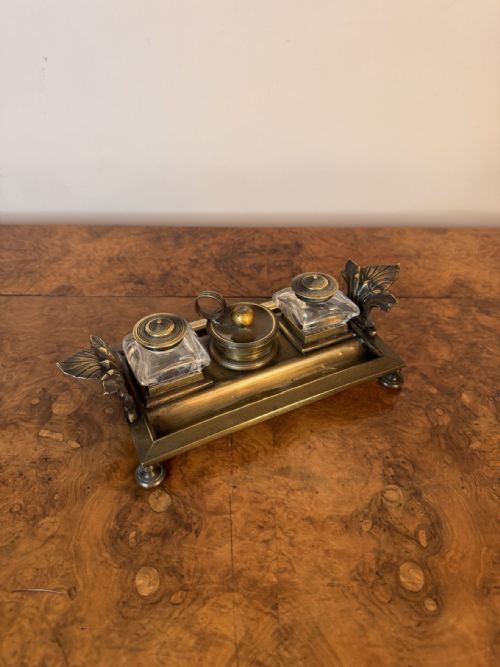
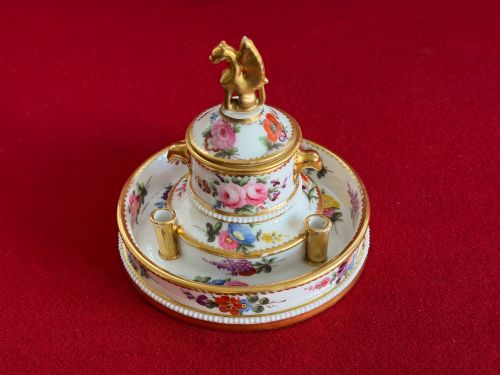
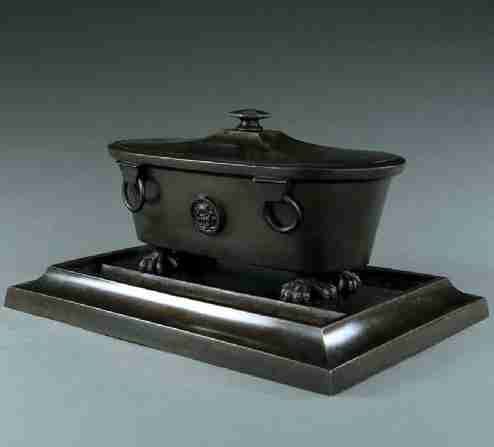
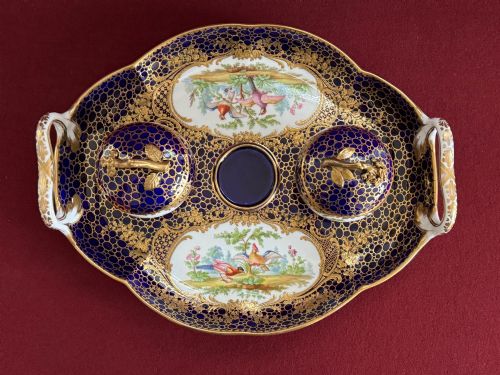
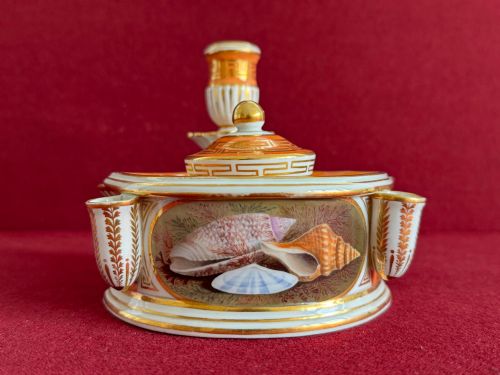
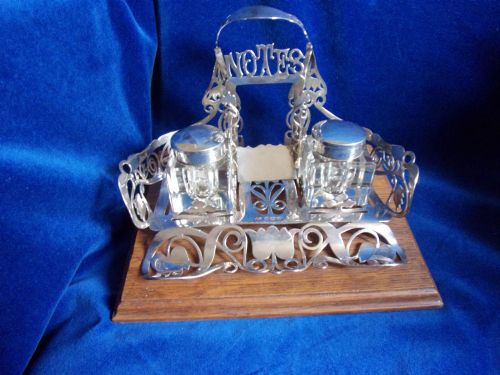
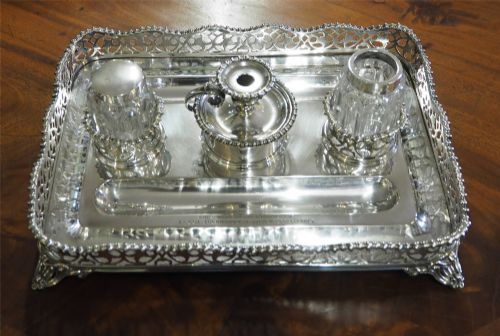
An antique inkstand set serves as a foundational desk accessory, bringing together inkwells, pen trays, and sometimes stationary racks or chambersticks into a single unit. These pieces emerge across the Georgian, Victorian, and Edwardian periods, reflecting the shift towards organised personal correspondence.
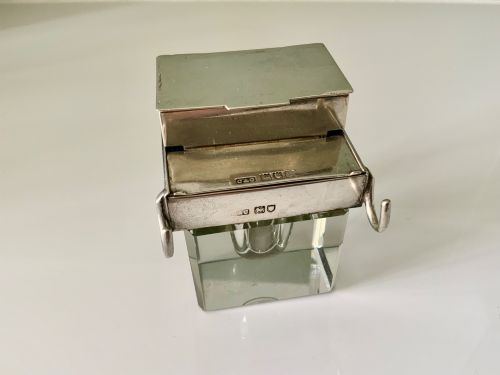
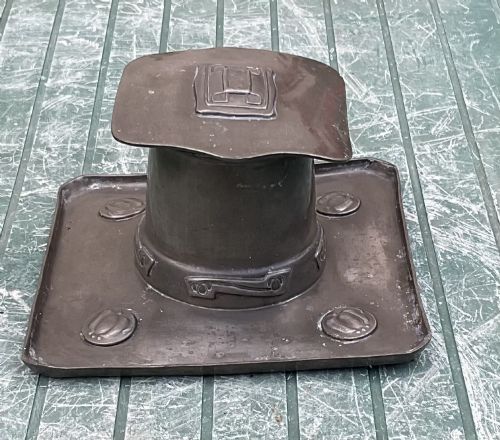
Originating primarily from English, French, and Continental workshops, these stands utilise diverse materials such as cut glass, pewter, and silver plated metals. The selection here captures the transition of writing desk accessories through the nineteenth and early twentieth centuries.
How they were made
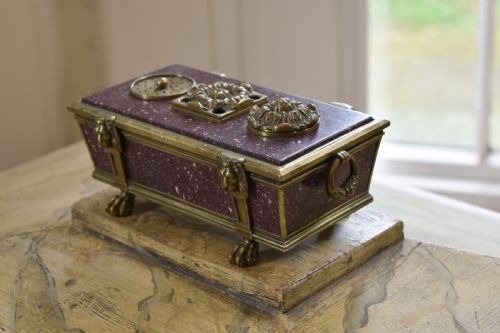
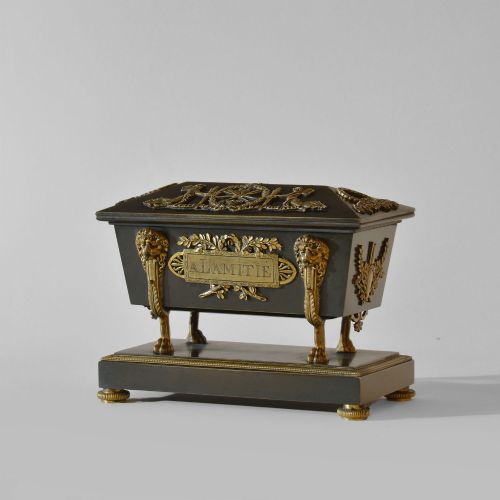
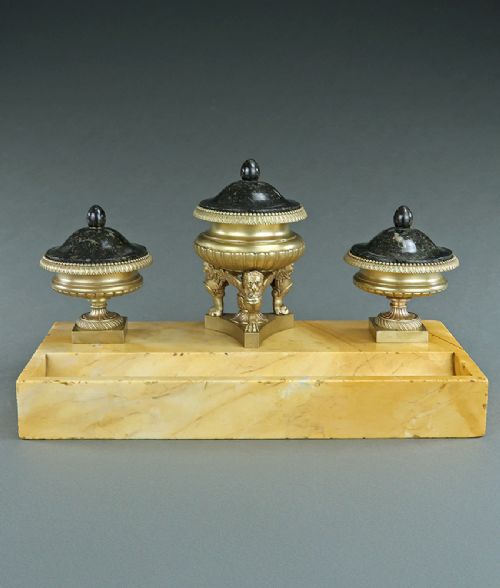
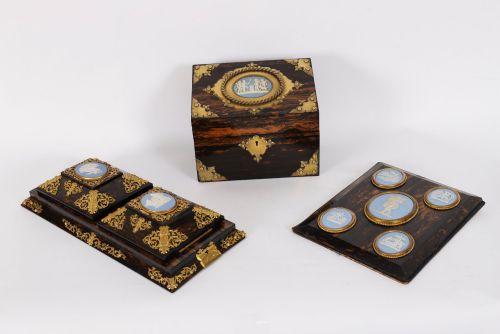
Craftsmen utilised traditional metalworking techniques, casting bronze, brass, and ormolu into ornate stands, alongside silver plating and solid silver construction. Many pieces feature intricate embellishments such as champlevé enamel or applied gilt bronze mounts.
Woodworking played a central role, with bases constructed from walnut, coromandel, and mahogany, often enhanced by Boulle work, brass inlay, or tortoiseshell. Papier-mâché and hand-painted papier-mâché were also shaped into durable desk tidies and inkstands.
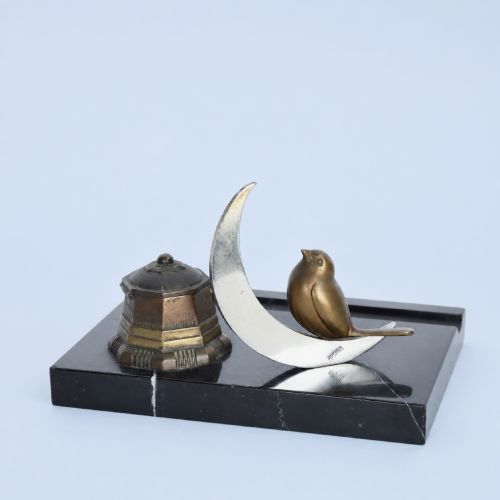
Decorative stones and ceramics added contrasting textures, incorporating Sienna marble, Ashford marble, malachite, onyx, and hand-painted porcelain or Dutch Delft faience. Glassmakers supplied cut glass inserts for inkwells to securely hold the fluid.
Antique Inkstand Set Retail Price Guide 2026
Typical asking prices for inkstand set among the pieces listed under this phrase on Sellingantiques today, from the lower quarter to the upper quarter. They describe what is for sale here now, not the wider market.
Listings feature periods spanning the Georgian era, Victorian times, and the 1930s Art Deco movement.
What varies in quality
Quality manifests in the refinement of the materials and the precision of the assembly, such as the snugness of fitted inkwell lids and the depth of bronze casting. Superior examples display crisp chasing on metal mounts and careful grain selection in timber bases.
The integration of multiple materials distinguishes finer items, requiring skilled joinery to combine tortoiseshell, brass inlay, or semi-precious stones with wood or marble. Details like hand-painted porcelain panels or finely turned wooden figures elevate the execution.
Edmé Samson·Archibald Knox Liberty·Elkington·Spode·Wilkinson Co·Walker And Hall·Flight Barr And Barr·WMF·J M Paillard·Asprey
The Antique Inkstand Set Glossary
- Standish
- A portable tray or stand holding inkwells, pen holders, and sanders for writing. This traditional term often describes larger, more formal antique inkstand sets.
- Ormolu
- Gilded bronze used widely in decorative mounts and decorative hardware during the eighteenth and nineteenth centuries. The technique involves applying a gold-mercury amalgam to a bronze base.
- Boulle work
- A form of marquetry employing brass and tortoiseshell inlaid in elaborate patterns, popularised in France. Named after the cabinetmaker Sébastien Boulle.
- Champlevé
- An enamelling technique where troughs or cells are hollowed out of a metal surface and filled with vitreous enamel. These filled areas are then fired and polished flush with the metal.
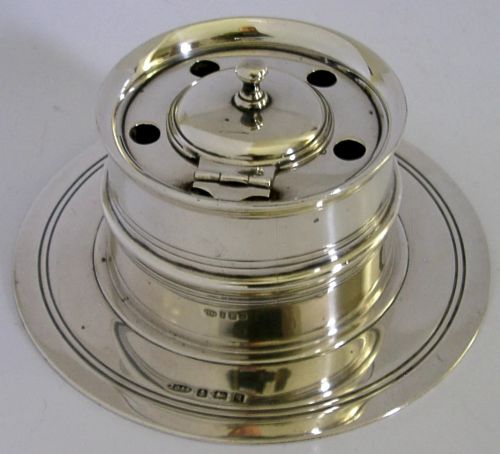
- Capstan inkwell
- An inkwell shaped like a ship's capstan, featuring a wide base that tapers upwards towards the lid. This form was particularly common in silver during the Edwardian period.
Antique Inkstand Set: Frequently Asked Questions
What is an antique inkstand set?
An antique inkstand set is a coordinated desk accessory designed to hold ink, pens, and related writing implements. These sets ranged from simple portable trays to grand centrepieces for a library desk.
They combine utility with decorative arts, often featuring matching inkwells, sanders, and pen rests mounted on a supportive base of wood, marble, or metal.
How were antique inkstand sets used?
These sets served as the primary station for writing letters, signing documents, and managing correspondence before the invention of the fountain pen. The central inkwells held liquid ink, while accompanying trays stored nibs and quill pens.
Larger versions included compartments for blotting paper, postage stamps, and stationery, keeping the writing desk tidy and well-equipped.
How do I care for an antique inkstand set?
Maintenance depends on the materials, requiring gentle dusting for wood and metal surfaces without abrasive polishes. Glass inserts should be washed carefully by hand to preserve any original gilt rims.
Protect delicate elements like tortoiseshell, enamel, and inlaid brass from direct sunlight and excessive moisture to maintain their condition.
How can I tell the period of an inkstand?
Stylistic cues and material choices help date these objects, such as heavy bronze casting in the nineteenth century or sleek onyx in Art Deco pieces. Maker marks, hallmarks on silver elements, and registration numbers provide precise chronological markers.
Georgian and Regency pieces lean towards classical lines and mahogany, while Victorian examples often embrace ornate brass, coromandel, and mixed media.