


Antique Inkpot Stand
An antique inkpot stand is a functional desk accessory that organises writing materials, most commonly met here in brass, silver plate, and bronze from the Victorian period.
Antique Inkpot Stand
When you search for an antique inkpot stand, you examine desk accessories designed to hold writing fluid and pens in domestic and office settings. The pieces listed here span from the seventeenth century through to the early twentieth century, taking the form of standalone vessels or broader desk stands incorporating pen rests.
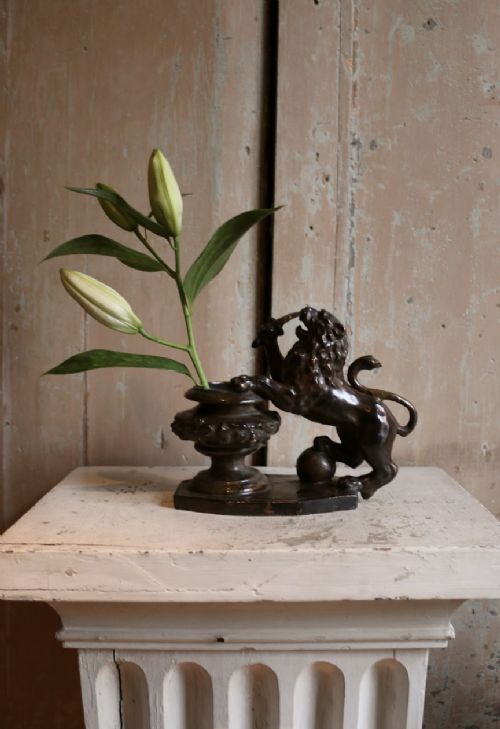
You are most likely to meet Victorian and nineteenth-century examples on this page, alongside pieces from the Edwardian era and the year nineteen hundred. These range from simple ceramic pots mounted on brass bases to elaborate novelty desk sets shaped as animals, clowns, and cornucopias.
How they were made
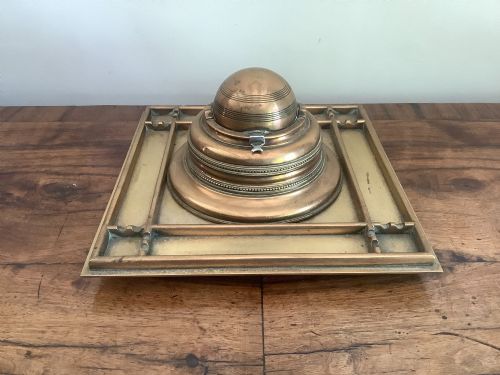
Makers shaped these desk accessories using cast metals such as brass, bronze, ormolu, and pewter, often combining them with ceramic inserts, glass vessels, or marble bases. Silver plating provided a durable metallic finish over base metals for domestic desk use.
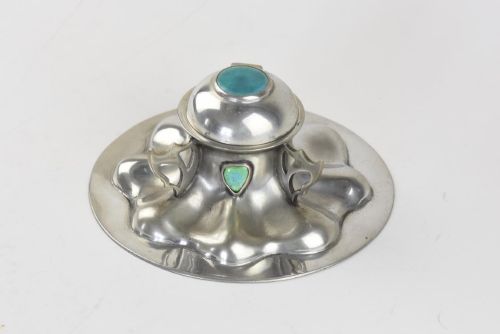
Surface decoration involved applied patinated finishes, hand-painted ceramic glazes in Chinese styles, and decorative cabochons or pen rests integrated into the cast metalwork during the Victorian, Arts and Crafts, and Art Nouveau periods.
Styles represented include Victorian, Art Nouveau, Edwardian, Arts and Crafts, Baroque, Continental, and Chinoiserie.
What varies in quality
The standard of an antique inkpot stand depends upon the crispness of the casting and the integration of decorative elements like Ruskin cabochons or sculpted figures. Novelty pieces rely on the detail of the animal or figurative modelling to separate ordinary production from finer work.
Materials and maker attribution also dictate the level of execution, where signed works in gilded bronze or polished pewter demonstrate superior finishing compared to unmarked commercial desk sets.
William Hutton·Walker And Hall·Albert Marionnet
The Antique Inkpot Stand Glossary
- Capstan inkwell
- A desk vessel shaped like a nautical capstan, featuring a wide circular base tapering towards the top. This shape offered stability on rolling ship decks and nineteenth-century writing desks alike.
- Inkstand
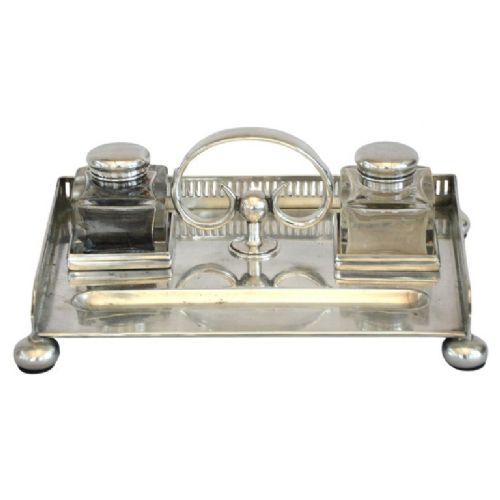
- A complete desk set comprising one or more inkwells, pen rests, and sometimes sanders or stamp boxes fitted to a shared base. These pieces formed the central apparatus of a Victorian writing desk.
- Ormolu
- Gilded bronze produced by applying a mercury and gold amalgam to a bronze base and heating it. The technique created a rich golden finish popular on decorative nineteenth-century desk accessories.
- Pewter
- A malleable metal alloy primarily composed of tin, historically used for domestic vessels and deskware. Arts and Crafts makers polished or hammered pewter to highlight its soft metallic lustre.
- Cabochon
- A gemstone or ceramic piece shaped and polished with a smooth, convex domed surface rather than faceted edges. These were often set into metalwork as decorative accents on Arts and Crafts pieces.
Antique Inkpot Stand: Frequently Asked Questions
What is an antique inkpot stand used for?
An antique inkpot stand held ink and writing instruments on a desk before the widespread use of fountain pens. Writers dipped their nibs into the central well while keeping spare pens on integrated rests.
These accessories kept ink contained and prevented spills on wooden writing surfaces. Desk stands often included multiple compartments for related writing paraphernalia.
How do I date an antique inkpot stand?
Dating relies on stylistic markers, manufacturing techniques, and materials associated with specific design movements. Pieces from the nineteenth century often feature ornate Victorian brasswork or silver plating.
Later items show the distinct curves of Art Nouveau or the hammered pewter and cabochon stones of the Arts and Crafts movement. Registration marks on metalwork can also provide specific production years.
Are inkwells and inkstands different?
An inkwell is the specific vessel that holds the ink, usually featuring a hinged lid to prevent the liquid from drying out. An inkstand is the wider tray or base that holds the inkwell alongside pen rests and other desk accessories.
Many listings combine these terms because inkstands almost invariably incorporate one or more inkwells. Standalone pots lack the supporting base tray typical of a full inkstand.
How do I clean an antique inkpot stand?
Cleaning requires a gentle approach to preserve any original patina or silver plating on the metal surfaces. Using harsh commercial polishes can strip away age-related coloration that collectors value.
Dusting with a soft cloth and addressing ceramic or glass inserts separately keeps the piece stable. Metal parts generally require only light surface cleaning without abrasive scrubbing.