
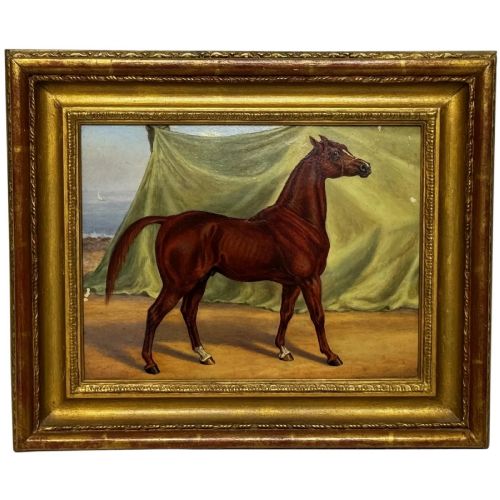


Antique Indian Wall Art
Antique Indian wall art brings together intricate textiles, painted panels, and framed works that reflect centuries of diverse craft traditions.
Antique Indian Wall Art
When you search for antique indian wall art, you encounter a varied selection of framed textiles, painted panels, watercolours, and carved wooden reliefs. These pieces reflect the artistic heritage of the subcontinent through distinct regional styles and colonial interactions.
The items you are most likely to meet on this page span from the nineteenth century into the mid-twentieth century. They include embroidered silks, gouache miniatures, Kalamkari temple paintings, and architectural salvage repurposed for display.
Makers and artists range from traditional temple painters and textile workers to colonial illustrators recording landscapes and portraits. Each object offers a tangible connection to the domestic and ceremonial spaces of its origin.
Materials and construction methods
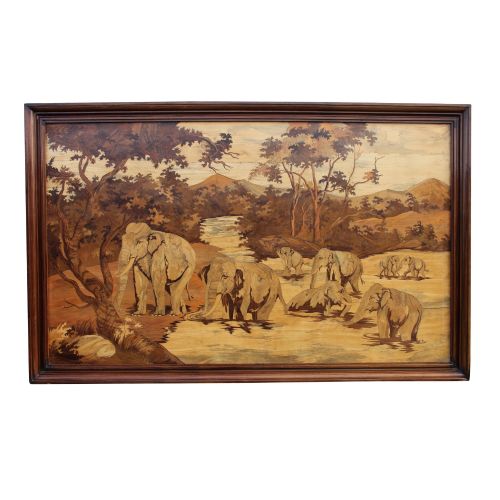
The construction of these pieces relies heavily on organic materials such as teak, shisham, and hardwood, often shaped through deep relief carving or marquetry. Timber panels and architectural doors provide robust structural foundations for painted or inlaid surfaces.
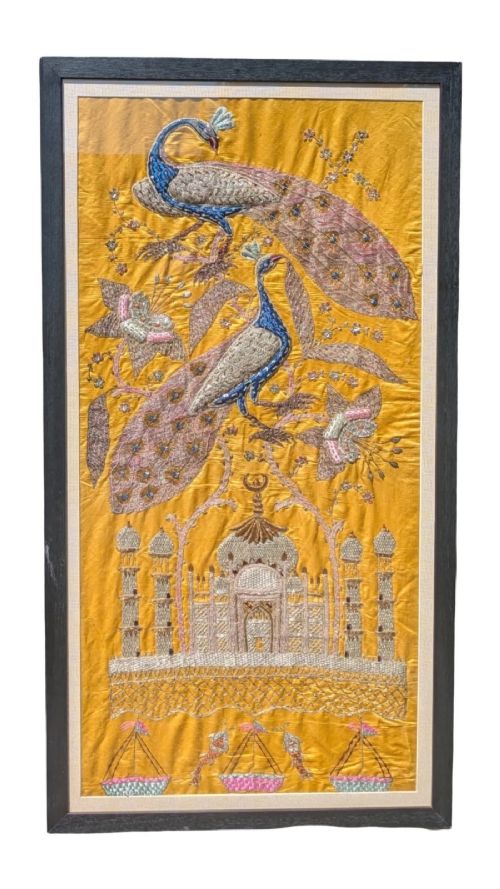
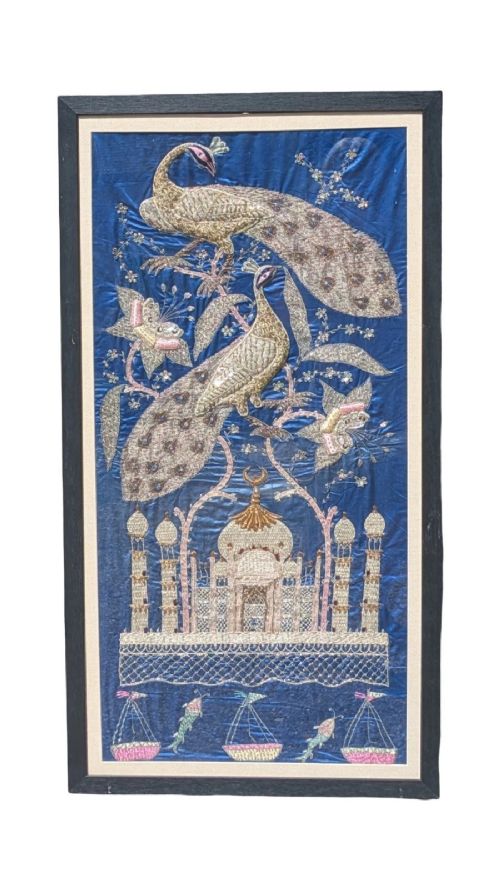
Textile works utilise cotton, silk, and velvet, decorated with detailed embroidery, needlework, or traditional Kalamkari techniques. Pigments appear in gouache, watercolour, and oil formats applied to paper, board, cloth, or canvas.
Metals such as brass and bronze also feature in plaques and chargers, shaped through casting and surface engraving. Original framing often incorporates native woods or retains period structural elements.
Materials span paper, glass, teak, cotton, timber, watercolour, and iron.
Distinctions in quality and execution
The standard of a piece depends largely on the precision of the handwork, whether in the fine detail of an embroidery or the depth of a carved wooden panel. Superior examples display confident brushwork in miniatures and well-defined iconography in temple cloths.
The preservation of original materials and frames significantly influences the integrity of an object. Pieces retaining their original painted finishes, uncompromised textiles, or structural timber frames command greater attention from collectors.
John Hassall·G Villiers Stuart
The Antique Indian Wall Art Glossary
- Kalamkari
- A traditional type of hand-painted or block-printed cotton textile, often depicting mythological narratives.
- Gouache
- An opaque water-based pigment frequently used in Indian miniature paintings to achieve rich, flat areas of colour.
- Marquetry
- The art of applying pieces of veneer to a structure to form decorative patterns, seen on large wooden panels.
- Shisham
- A durable hardwood native to the Indian subcontinent, commonly utilised for platters and architectural elements.
- Gala
- A term associated with specific textile traditions, denoting elaborate regional fabric compositions.
Antique Indian Wall Art: Frequently Asked Questions
What periods do these pieces come from?
The selection primarily encompasses nineteenth-century works, alongside Edwardian pieces and items from the early twentieth century up to nineteen fifty. This timeframe captures both traditional craftsmanship and colonial-era artistic exchanges.
Dates are established through stylistic analysis, material composition, and recorded historical attributions within the available evidence.
How were these artworks used originally?
Many items served as domestic decoration, architectural elements within buildings, or narrative temple hangings for religious storytelling. Textiles such as embroideries and painted wall cloths functioned as portable domestic adornments.
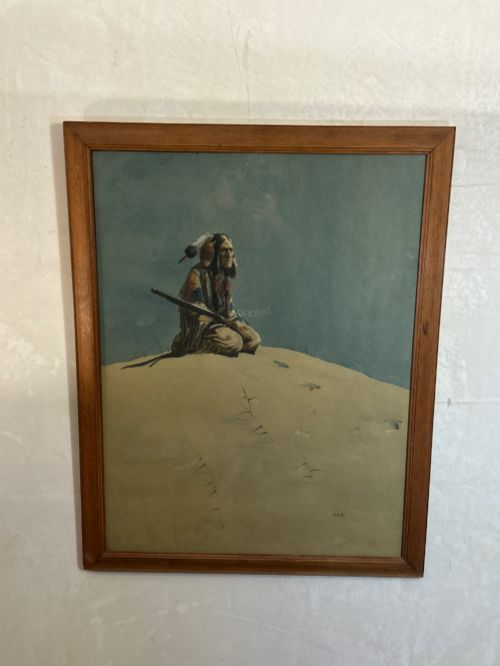
Other objects, including maps and watercolours, recorded landscapes and notable figures during the Raj period for private collections.
How should I care for antique textiles?
Textiles require protection from direct sunlight to prevent the fading of natural dyes on cotton, silk, and velvet. Maintaining stable humidity levels helps preserve organic fibres.
Professional framing behind appropriate glazing safeguards delicate embroideries and painted cloths from airborne dust and physical handling.
What is the difference between gouache and oil paintings here?
Gouache miniatures employ opaque water-based colours on paper or cloth, typically featuring fine brushwork and detailed narrative scenes. Oil paintings utilise canvas or board supports, often depicting portraits, animals, or larger architectural vistas.
Each medium dictates a different visual texture, with miniatures offering intimate detail and oil works presenting bolder compositions.