



Antique Indian Iron Trunk
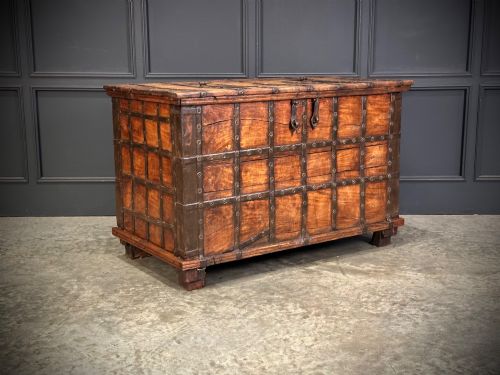
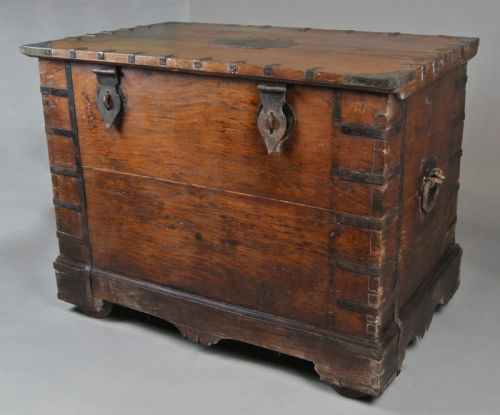
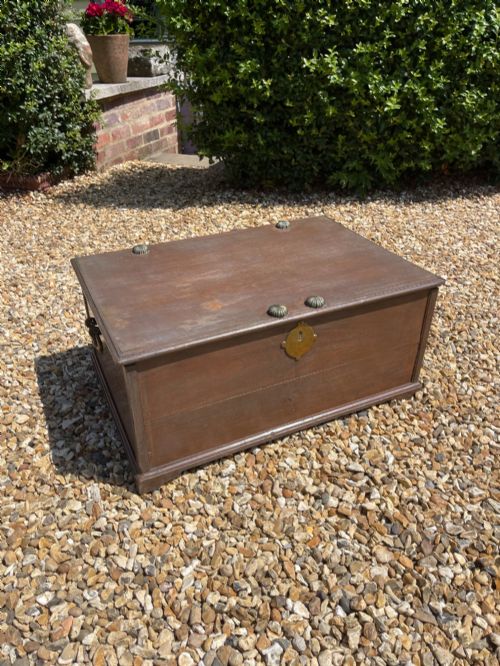
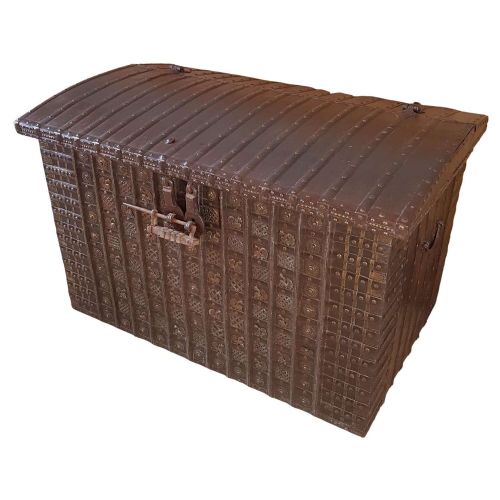
These heavy pieces of utility and security are antique indian iron trunk examples, offering robust storage built to endure centuries.
Antique Indian Iron Trunk
An antique indian iron trunk combines substantial timber construction with heavy strapwork, serving originally for domestic storage, dowries, or secure transport. Examples on this page span the eighteenth, nineteenth, and early twentieth centuries, reflecting diverse regional aesthetics from Rajasthan to the broader colonial sphere. You will encounter forms designated as chests, coffers, dowry chests, damchiyas, and strong boxes, each designed to safeguard valuables against climate and theft.
The most common versions met here are iron bound or iron banded teak chests dating from the nineteenth century, often displaying a rugged utilitarian character. These range from domestic storage trunks to monumental dowry chests and architectural strong boxes incorporating secondary hardwoods such as mahogany. Their presence in a room immediately anchors the space with historical weight and functional purpose.
How they were made
Makers constructed these pieces using dense tropical timbers, predominantly teak alongside mahogany and other regional hardwoods, joined to withstand humid climates. Thick planks form the primary carcase, providing a stable foundation for the heavy metal reinforcement that follows.
Wrought iron straps, bands, and corner brackets are fastened across the exterior with hand-forged rivets, imparting structural rigidity and security. Brass elements occasionally appear alongside the iron work, while bespoke locking mechanisms secure the main compartment.
Antique Indian Iron Trunk Retail Price Guide 2026
Typical asking prices for indian iron trunk among the pieces listed under this phrase on Sellingantiques today, from the lower quarter to the upper quarter. They describe what is for sale here now, not the wider market.
Listings show these trunks spanning the eighteenth, nineteenth, and early twentieth centuries, constructed from teak, mahogany, and assorted hardwoods reinforced with iron and brass.
What varies in quality
Quality rests in the heaviness of the iron work, the complexity of the strapwork patterns, and the integrity of the underlying timber. Pieces featuring intricate hand-forged banding and substantial teak carcases represent the higher end of the range.
The sophistication of the locking mechanism and the survival of original surface patination distinguish finer examples from simpler utility boxes. Artisanal touches in the blacksmithing elevate a standard storage chest into a piece of notable craftsmanship.
The Antique Indian Iron Trunk Glossary
- Damchiya
- A traditional low storage chest or cabinet from Rajasthan, often used for dowries and featuring heavy iron banding. These pieces typically incorporate compartments and secure locking systems.
- Dowry chest
- A large container commissioned or acquired to hold household goods and valuables brought by a bride upon marriage. They are frequently monumental in scale and heavily reinforced with metal.
- Cofer
- A chest or trunk used for storing valuables, characterised by a domed or flat lid and robust construction. They often feature carrying handles on the sides for transport.
- Strong box
- A heavily fortified container designed specifically for the secure storage of money, documents, or precious items. They rely on thick timber cores encased in iron strapping.
- Wrought iron
- Iron that has been heated and shaped with hand tools by a blacksmith, yielding a fibrous structure and distinct surface texture. It provides the primary structural reinforcement on these trunks.
Antique Indian Iron Trunk: Frequently Asked Questions
What were antique indian iron trunks used for?
These trunks served as secure receptacles for valuable possessions, textiles, and family documents in domestic and commercial settings. Dowry chests held the goods a bride brought into a household, protecting them from pests and moisture.
Trunks also functioned as strong boxes for transporting currency or valuables across regions. Their robust iron banding and complex locks ensured contents remained safe from theft.
How do I live with an antique indian iron trunk?
An antique indian iron trunk works exceptionally well as a coffee table, providing internal storage while offering a sturdy surface for books and objects. Its dark timbers and industrial metalwork anchor living spaces and complement rustic or eclectic interiors.
Keep the piece away from direct heat sources to prevent the hardwood from splitting. Periodic treatment with appropriate wax maintains the condition of both the timber and the iron elements.
How can I tell the period of these trunks?
Dating relies on observing construction methods, timber selection, and the style of the iron work. Eighteenth-century examples often exhibit simpler, heavier hand-forged straps and dense teak construction.
Nineteenth-century pieces frequently display more elaborate regional hardware, such as the Rajasthani damchiya designs with specialised locking mechanisms. Early twentieth-century versions may show refined cabinetry techniques alongside traditional iron banding.
What is the difference between a chest and a coffer?
A chest generally refers to a large rectangular box with a hinged lid used for general storage. The term encompasses utilitarian domestic boxes as well as monumental dowry pieces.
A coffer specifically denotes a strong box or chest traditionally used for storing money or valuables. In practice, historical terminology often overlaps across these categories.