


Antique Hunting Dog Painting
An antique hunting dog painting captures the intense energy and loyal companionship of sporting hounds, spaniels, and pointers set within expansive rural landscapes.
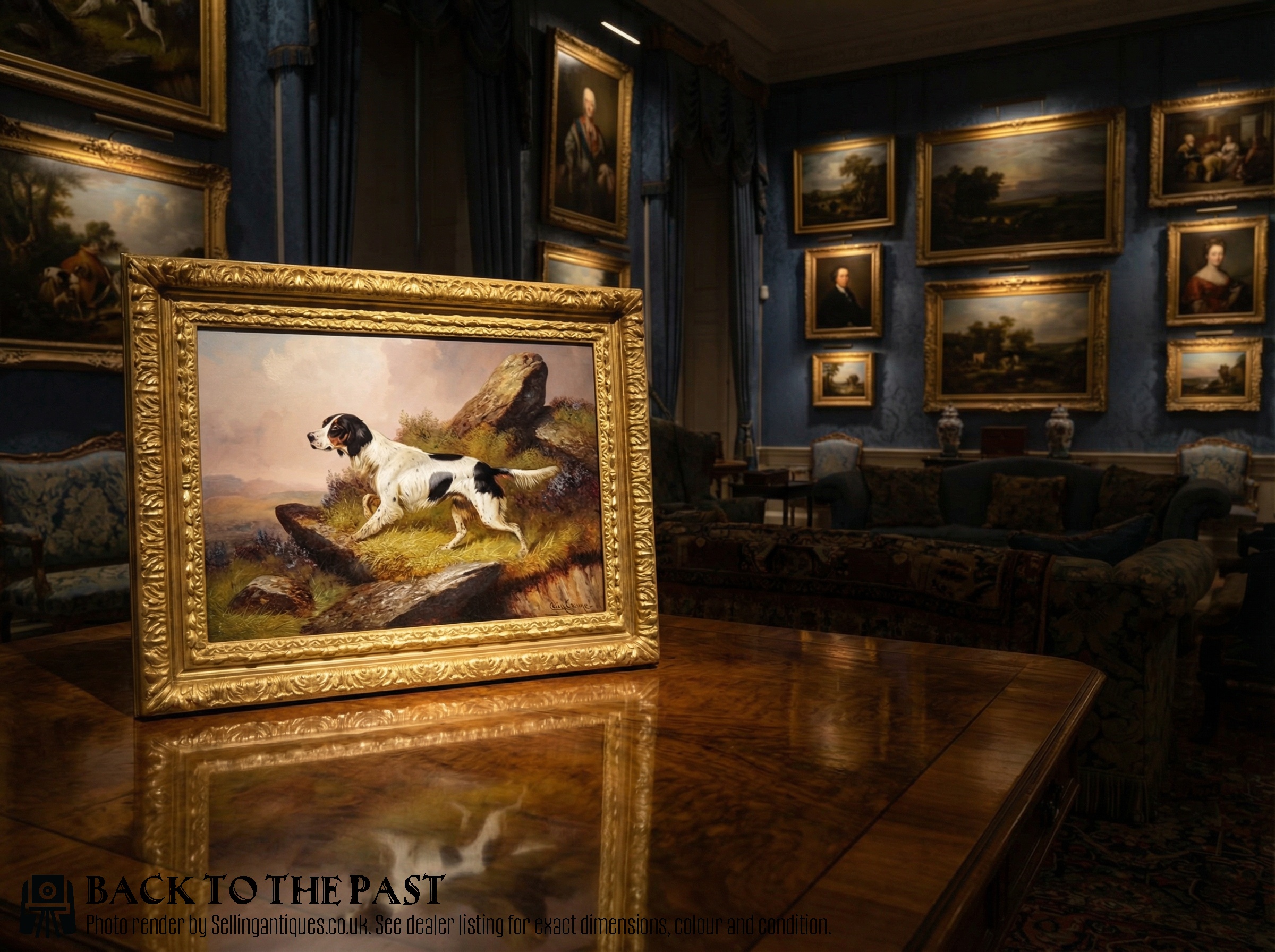
Antique Hunting Dog Painting
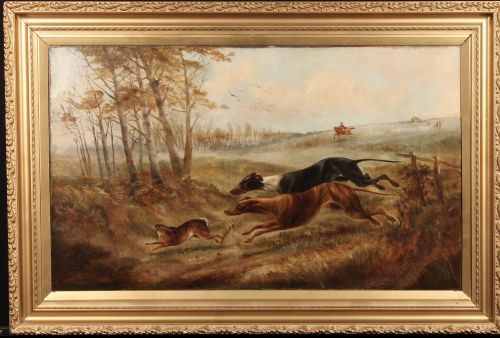
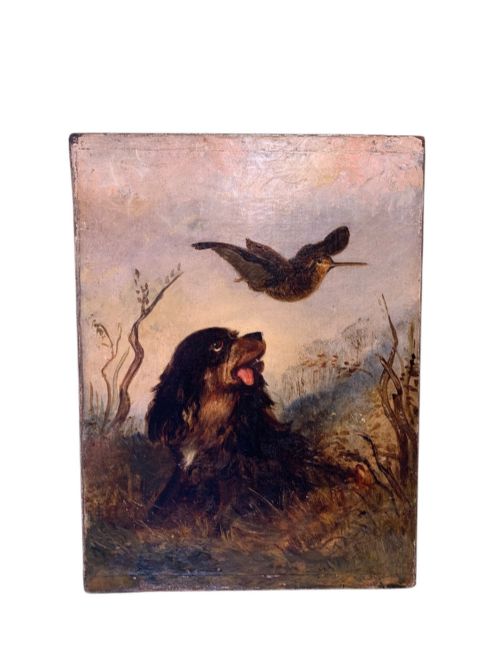
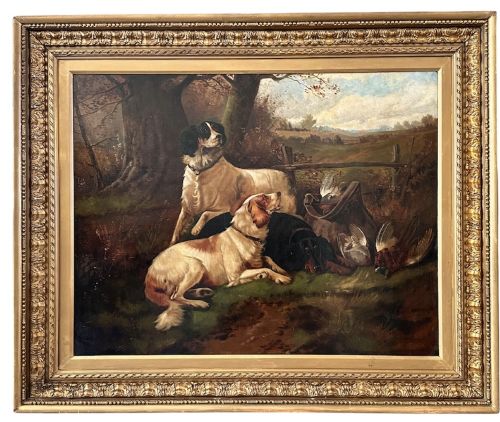
An antique hunting dog painting depicts various sporting breeds, from pointers and setters to foxhounds and spaniels, captured either at rest with the day's bag or in active pursuit across moorlands and winter snow.
Most pieces encountered on this page originate from the nineteenth century, reflecting the strong Victorian appetite for sporting art, though examples stretch from the Georgian era into the mid-twentieth century.
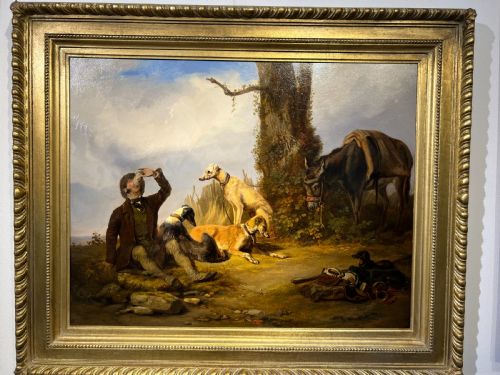
Compositions range from intimate studies of individual hounds and litters to large, dramatic canvases showing full packs in motion, often accompanied by horses, guns, and country gentlemen.
Materials and Technique
Artists predominantly worked in oil paint on canvas or board, applying rich pigments to build up the texture of animal coats and the atmospheric depth of rural landscapes.
Watercolour on paper also appears frequently, offering a lighter, more immediate medium for capturing fleeting field scenes and detailed animal portraits.
Canvases are typically housed in period wood and glass frames, preserving the integrity of the original artwork through decades of display.
Antique Hunting Dog Painting Retail Price Guide 2026
Typical asking prices for hunting dog painting among the pieces listed under this phrase on Sellingantiques today, from the lower quarter to the upper quarter. They describe what is for sale here now, not the wider market.
Surviving works utilise oil on canvas, oil on board, and watercolour on paper.
Judging Quality and Execution
Quality rests primarily on the anatomical precision of the animals and the artist's ability to render the distinctive muscle structure, expression, and coat texture of specific breeds.
The sophistication of the background landscape and the balance between the canine subjects and their environment elevate a standard animal study into a compelling piece of fine art.
George Armfield·John Sargent Noble·Sir Edwin Henry Landseer·John Frederick Herring Senior·Thomas Hicks·Arthur Wardle·Samuel Raven·J F Marie Huet Villiers·Colin Graeme Roe·Fannie Moody·Robert Cleminson·John Charles Tunnard·Jules Chardigny·Alfred Duke·Henri Schouten·Tom Carr·Thomas Beach·Thomas Blinks·James Ward·Henry Frederick Lucas-Lucas·William Albert Clark·Jules Moigniez·Frank Dadd·Samuel John Egbert Jones·William Howard Hardy
The Antique Hunting Dog Painting Glossary
- Canvas
- A heavy woven fabric stretched across a wooden frame to serve as a durable support for oil painting. It provides the characteristic textured surface found on the majority of nineteenth-century works.
- Watercolour
- A paint consisting of pigment suspended in a water-based solution, applied to paper. It creates transparent, luminous washes that were favoured for detailed sporting studies.
- Gun dog
- A classification of dog bred to find, flush, or retrieve game for hunters. Spaniels, pointers, and setters are the most common examples depicted in these paintings.
- Coursing
- The pursuit of game, such as hares, by hounds relying on sight rather than scent. Depictions often show greyhounds and lurchers moving at speed across open ground.
- Provenance
- The documented history of ownership of an artwork. It helps establish authenticity and trace the lineage of the piece through past collections.
Antique Hunting Dog Painting: Frequently Asked Questions
What breeds appear most often?
Pointers, setters, spaniels, and various types of hounds dominate the compositions, reflecting the popularity of specific shooting and hunting practices during the nineteenth century.
Terriers also appear frequently, often shown guarding game or interacting with rural farm equipment.
Are these works signed by the artist?
Many pieces feature visible signatures, monograms, or contemporary attributions written on the canvas or frame.
Unsigned works also appear, relying on stylistic evidence and subject matter to indicate the hand of the artist or studio.
How should I display them at home?
These works suit traditional panelled rooms, studies, or living spaces where their rural subject matter complements wood furniture and classic interiors.
Ensure they are hung away from direct sunlight to protect vulnerable watercolours and oil pigments from fading.
How do I tell Victorian pieces apart from Georgian ones?
Georgian paintings tend to feature more restrained compositions with formal poses and muted palettes, reflecting eighteenth-century portrait conventions.
Victorian works frequently display greater narrative action, looser brushwork, and more dramatic weather or landscape effects.