


Antique Hunting Dog Art
Antique hunting dog art brings canine character and sporting history into the room through oil paintings on canvas and board.
What antique hunting dog art is
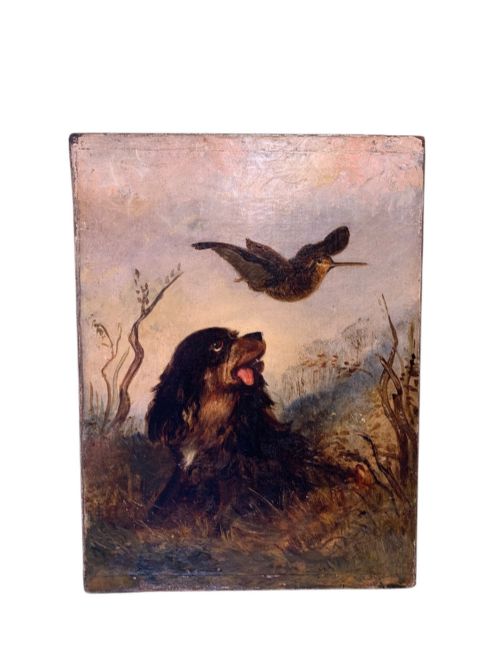
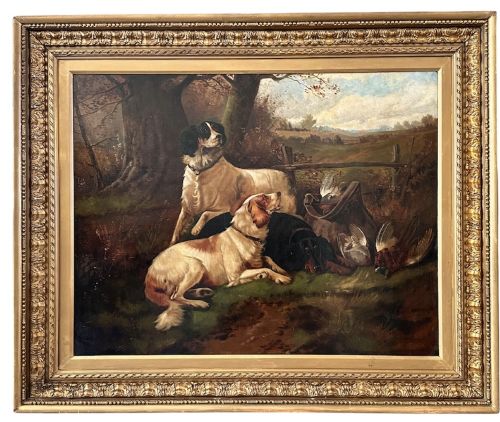
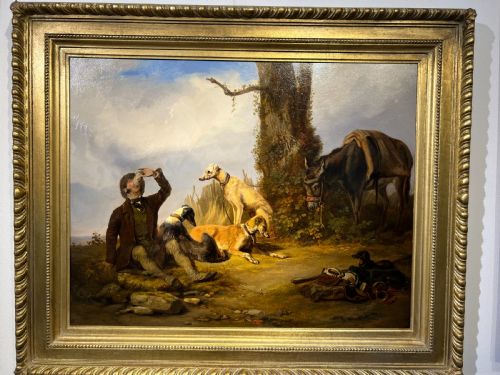
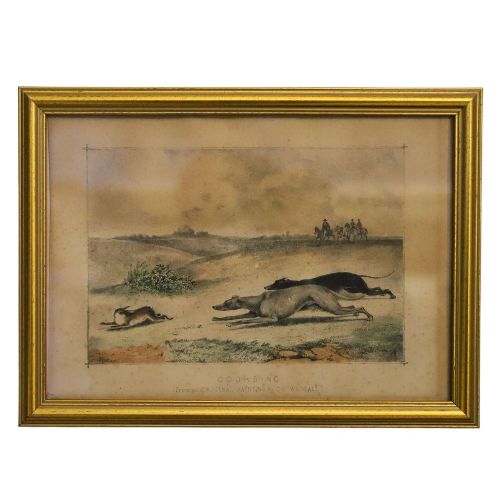
Antique hunting dog art encompasses oil paintings and portraits depicting hounds, pointers, terriers and sporting dogs in various landscapes. Buyers searching this phrase look for authentic nineteenth-century depictions capturing the physical traits and individual personalities of working breeds.
The pieces available here lean towards nineteenth-century British and French works, including Georgian and Victorian examples. Canvases range from single subject studies to paired compositions and family groups with litters.
Subjects include named dogs such as the black pointer and the Grand Griffon Vendéen, alongside unsigned studies of terriers and hounds. These works reflect the high regard for sporting animals during the Georgian and Victorian eras.
How they were made
Artists painted these works using oil paint on stretched canvas and wooden board. The pigment layers build up depth and texture, particularly in the rendering of fur coats and natural landscape backgrounds.
Frames play an integral role in the construction of these pieces, utilising gilded wood and giltwood surrounds. These frames often feature ornate moulding that complements the period aesthetic of the central painting.
Retail Price Guide 2026
Typical UK retail prices for hunting dog art, calculated from the Sellingantiques database of over a million retail prices indexed since 2003. This retail price guide relies exclusively on Sellingantiques data; no external sources or auction records are used, so the figures do not describe the wider market.
Several paintings immortalise specific named subjects, ensuring individual working dogs from two centuries ago retain their personal identities today.
What varies in quality
Quality in these paintings rests upon the artist's ability to render the anatomy and expression of the animal with anatomical precision. Stronger pieces display nuanced brushwork in the depiction of light across fur and landscape.
Provenance and attribution elevate certain works, particularly when pieces connect to known hands such as John Frederick Herring Senior, Samuel Raven or Jules Chardigny. The execution of the surrounding frame, specifically the depth and preservation of the gilding, also contributes to the overall standing of a piece.
John Frederick Herring Senior·Samuel Raven·Jules Chardigny
The Antique Hunting Dog Art Glossary
- Oil on canvas
- A painting technique where pigmented oil paints are applied to a woven fabric support stretched across a wooden frame. This method allows for subtle blending and rich colour depth.
- Giltwood
- Wood that has been treated with a thin layer of gold leaf or gold paint. It provides a decorative and protective border for many nineteenth-century paintings.
- Georgian
- The period spanning the reigns of the four British monarchs named George, lasting from seventeen fourteen to eighteen thirty. Works from this era often display specific classical proportions.
- Victorian
- The period of Queen Victoria's reign from eighteen thirty-seven to nineteen hundred and one. Sporting art from this time frequently romanticises rural pursuits and working animals.
- Provenance
- The documented history of ownership of an artwork. A clear record helps establish authenticity and historical context.
Frequently Asked Questions
What periods do these paintings come from?
The available selection dates from the nineteenth century, including works from around eighteen hundred during the Georgian era through to later Victorian examples.
These periods are defined by distinct stylistic approaches to portraiture and sporting art, reflecting the artistic conventions of the time.
How should I hang oil paintings on wood?
Paintings on wooden boards require stable environmental conditions away from direct heat sources and dramatic humidity fluctuations. This prevents the wood from warping and protects the paint layer.
Ensure the wall fixings are secure and rated for the weight of the gilded wood frames.
What breeds are typically depicted?
The works feature working breeds associated with sporting and hunting traditions, including pointers, hounds, Grand Griffon Vendéens and terriers.
Many pieces capture specific named animals alongside broader studies of working dogs in landscape settings.
Are all the paintings signed by artists?
While some works are attributed to named painters like Samuel Raven or John Frederick Herring Senior, others remain unsigned.
Unsigned nineteenth-century pieces are evaluated through their technique, materials and subject matter rather than a maker's mark.