





Antique Horse Rider Sculpture
An antique horse rider sculpture captures motion and mastery in bronze, marble dust, or wood.
Antique Horse Rider Sculpture
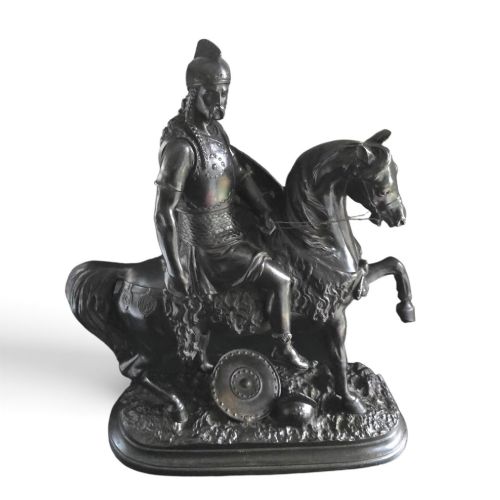
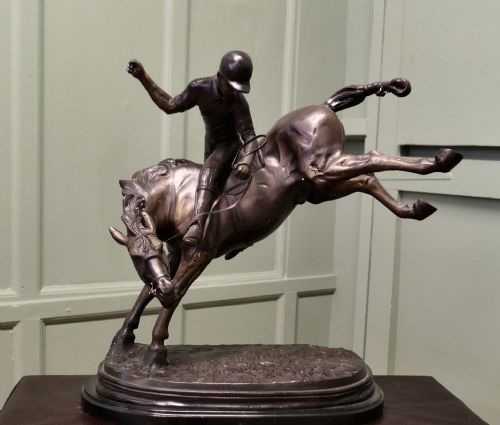
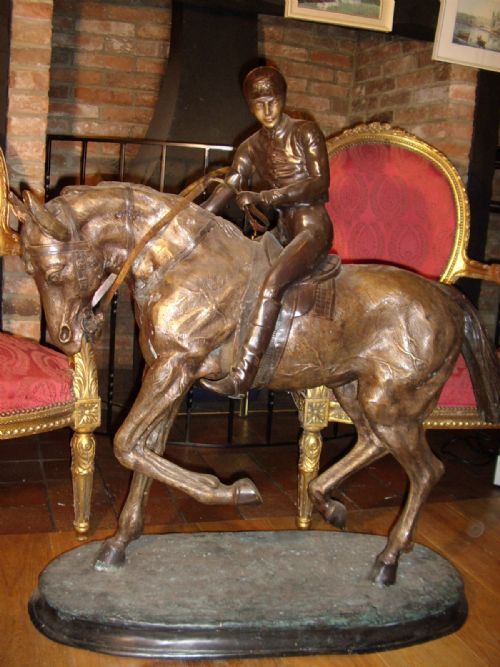
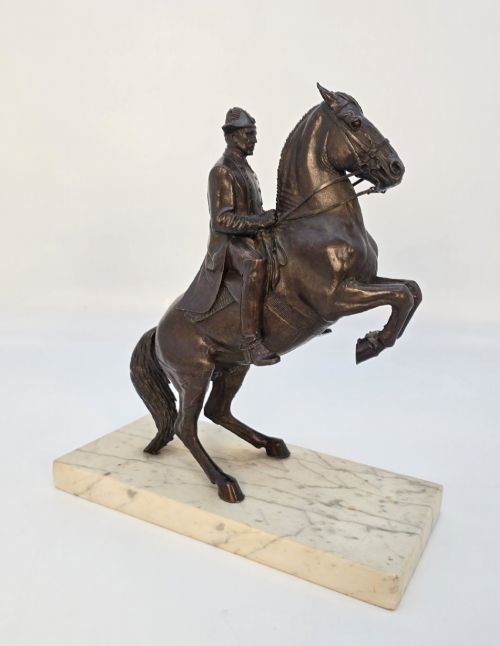
When you search for an antique horse rider sculpture, you are looking at figures of mounted figures rendered in bronze, marble dust, and wood. These pieces capture subjects ranging from classical rulers and literary kings to cowboys, jockeys, polo players, and huntsmen.
The versions you are most likely to meet on this page span the nineteenth century, Edwardian era, and early twentieth century. They draw upon styles such as French Animalier, Academic Realism, Neoclassical, and Western American.
The forms vary from large free-standing desk figures and wall plaques to folk art branch figures. Each object records the intersection of human ambition and equine power through historical and sporting lenses.
Materials and construction methods
Bronze forms the primary medium for these equestrian works, often finished with dark patinas to accentuate musculature and costume detail. Founders utilised traditional casting methods to capture dynamic tension in both mount and rider.
Alternative materials include marble dust and plaster, which provided a dense matrix for relief panels and classical studies. Timber and slate occasionally appear, particularly in folk art interpretations and architectural mounts.
Antique Horse Rider Sculpture Retail Price Guide 2026
Typical asking prices for horse rider sculpture among the pieces listed under this phrase on Sellingantiques today, from the lower quarter to the upper quarter. They describe what is for sale here now, not the wider market.
The listings here feature works from the nineteenth century up to nineteen fifty, predominantly cast in bronze.
Distinctions in quality
The finesse of the chasing and the clarity of the cast separate superior works from simpler productions. Better examples retain crisp detail in the rider's expression, costume folds, and the horse's anatomy.
Surface patination also dictates the visual depth of a bronze sculpture, where hand-applied finishes create subtle tonal variations. Weight, proportion, and the smoothness of integration between horse and base further distinguish accomplished foundry work.
Théodore Gechter·Pierre Jules Meme·Remington·Verrocchio·Isidore Bonheur
The Antique Horse Rider Sculpture Glossary
- Bronze
- An alloy of copper and tin utilised by foundries for durability and fine detail casting. It develops a natural patina over time.
- Patina
- The surface coloration and sheen acquired by bronze through age or chemical treatment. Dark patinas are common in nineteenth-century animalier bronzes.
- Animalier
- A nineteenth-century artistic movement focusing on the realistic depiction of animals, particularly horses and hounds. French sculptors excelled in this genre.
- Grand Tour
- A cultural tradition of travelling through Europe collecting classical art and antiquities. Souvenirs included miniature bronzes of historical riders and monuments.
- Relief
- Sculptural work where figures project from a flat background. Marble dust and plaster were frequently employed for these wall-mounted plaques.
Antique Horse Rider Sculpture: Frequently Asked Questions
How do I clean a bronze horse sculpture?
Dust gently with a soft, dry cloth to remove surface particles.
Avoid using water, chemical polishes, or abrasive cleaners that strip the original patina.
What is an animalier bronze?
It is a nineteenth-century sculptural genre dedicated to lifelike representations of animals.
These pieces emphasise the accurate anatomy and movement of horses alongside their riders.
Are these sculptures solid or hollow?
Most large figural bronzes utilise the lost-wax casting method, resulting in a hollow interior beneath a substantial metal wall.
Smaller decorative items and reliefs may use solid casts or composite mixtures like marble dust.
How do I identify the period of a piece?
Examine the casting quality, the composition style, and the character of the dark patina.
Signatures, foundry marks, and subject matter such as polo players or cossacks also help narrow the date.