


Antique Horse Blanket
An antique horse blanket brings rich tribal textiles and ceremonial colour into a room, offering tactile warmth and history.
Antique Horse Blanket
When you search for an antique horse blanket, you encounter striking ceremonial covers and saddle rugs originating from Central Asian tribes and Persian nomadic groups. These textiles served ritual and practical functions within tribal communities before finding their way into modern interiors as decorative wall hangings or floor coverings.
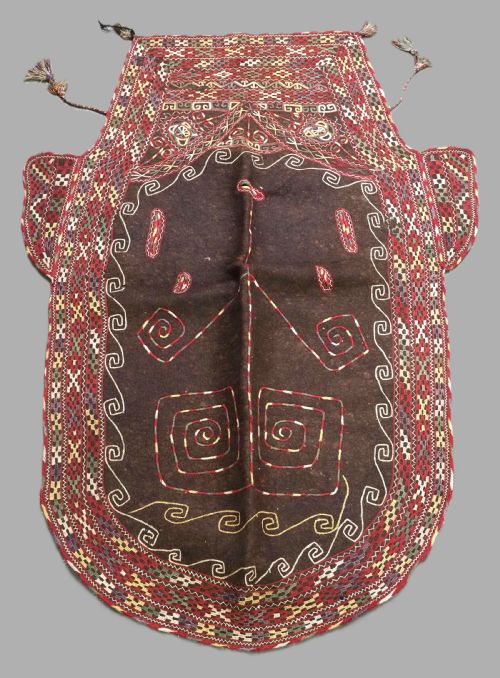
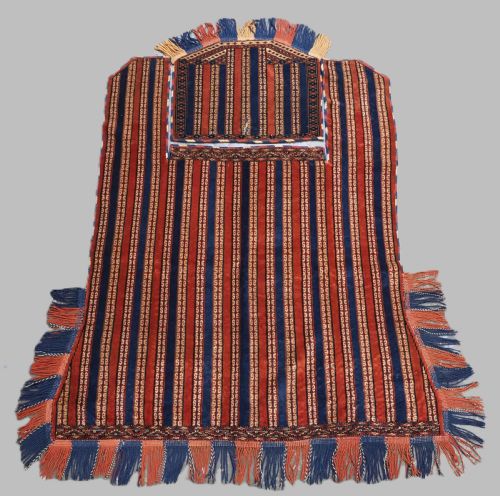
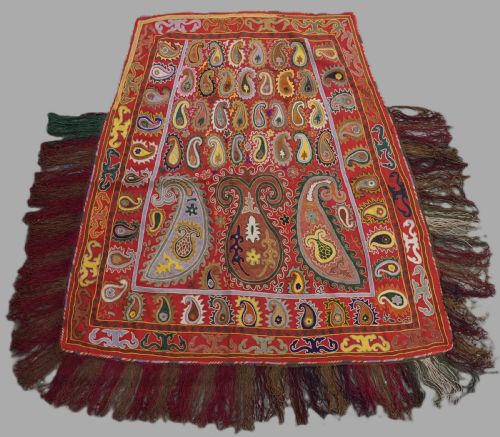
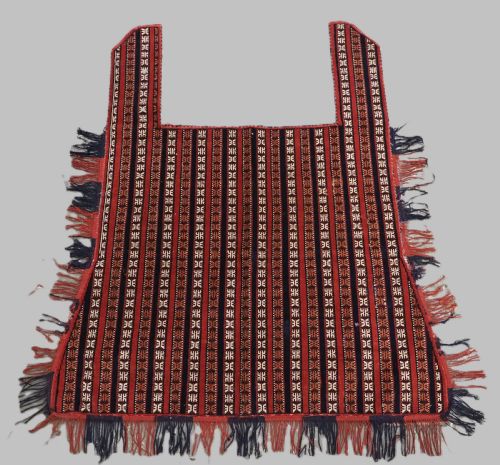
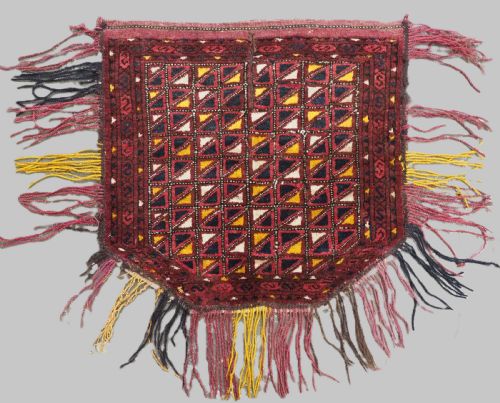
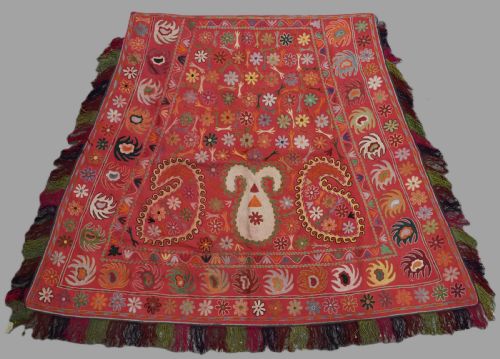
The pieces available include elaborate embroidered examples from the Lakai tribe of Uzbekistan alongside Yomut and Ersari Turkmen ceremonial horse covers dating from the late nineteenth and early twentieth centuries. Qashqai tribal covers from southwest Persia also appear, displaying traditional geometric patterns and rich wool construction.
Buyers often confuse these specialised ceremonial items with standard equestrian equipment or domestic furnishings, yet their distinct artistry sets them apart. They represent a specific tradition of nomadic textile production designed for display during celebrations and important cultural events.
Materials and construction methods
The foundation of these textiles relies primarily on handspun wool, chosen for its durability and ability to hold vibrant natural and synthetic dyes. Artisans utilised intricate embroidery techniques, often working colourful silk threads onto wool or felt bases to create dense, textured geometric and figurative motifs.
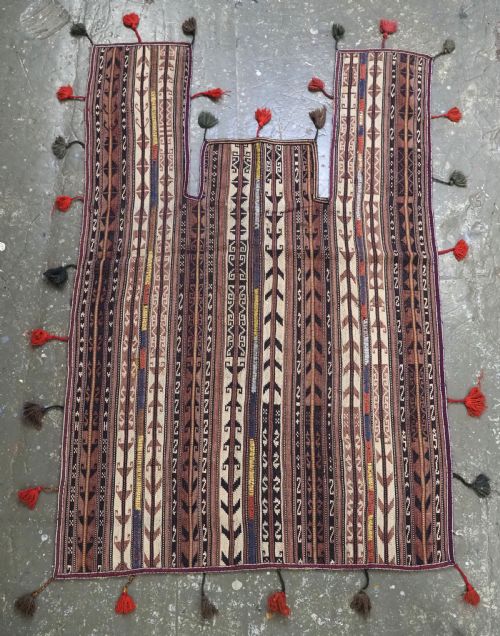
Many surviving examples retain original details such as handmade tassels and braided trim, demonstrating the careful finishing work applied by tribal makers. The combination of sturdy wool foundations with delicate surface embroidery gives these covers their characteristic weight and substantial handle.
Several horse blankets retain their original wool tassels, swaying slightly as if still ready for a nineteenth-century wedding procession across the steppes.
Assessing quality and authenticity
Quality in these textiles rests upon the density of the embroidery, the complexity of the tribal design, and the overall survival of original materials like tassels and edge binding. Pieces that retain their full decorative scheme and structural integrity command greater attention from collectors who value authentic tribal provenance.
The depth of colour and the precision of the needlework distinguish finer examples from simpler utilitarian covers. Gradations in quality stem from the skill of the individual maker and the regional traditions governing the complexity of the ceremonial iconography.
Gillows
The Antique Horse Blanket Glossary
- Yomut
- A major Turkmen tribal group known for distinctive weaving and embroidery traditions, producing ceremonial horse covers with geometric guls.
- Lakai
- An Uzbek tribal group celebrated for spirited, heavily embroidered silk and wool horse covers and saddle rugs created with chain stitch.
- Saddle rug
- A smaller woven or embroidered textile placed beneath a saddle, frequently sharing design motifs with larger ceremonial horse blankets.
- Gul
- A medallion-like design element repeated across Central Asian tribal textiles, often serving as a tribal identifier.
- Ceremonial
- Pertaining to items created specifically for rituals, weddings, and festivals rather than daily practical use.
Antique Horse Blanket: Frequently Asked Questions
How were antique horse blankets used?
Nomadic tribes utilised these decorative covers during ceremonial processions, weddings, and important community gatherings to adorn horses. They demonstrated the status and artistic skill of the maker within the tribe.
Today, collectors repurpose these textiles as wall hangings, draped accents over furniture, or statement floor rugs in traditional and contemporary interiors.
Where do these horse blankets originate?
The pieces originate primarily from Central Asia, including regions associated with Uzbek, Turkmen, and Afghan tribes, alongside southwest Persia. Each region developed distinct colour palettes and embroidery styles.
Nomadic groups passed these design traditions down through generations, resulting in recognisable regional patterns that help experts identify their geographical roots.
How do I care for a textile?
Protect antique wool and silk textiles from direct sunlight to prevent the fading of natural and historic dyes. Gentle vacuuming through a mesh screen helps remove dust without damaging delicate embroidery threads.
Avoid hanging heavy covers by a single point to prevent distortion of the fabric foundation. Professional textile conservators should handle any necessary cleaning.
How do I date a piece?
Dating relies on examining the type of wool, the chemical or natural composition of the dyes, and the style of the embroidery. Late nineteenth and early twentieth-century examples exhibit specific tribal motifs and handspun textures.
Comparing the weave structure and design complexity against documented tribal archives helps narrow the period of manufacture.