

Antique Home Office Bureau
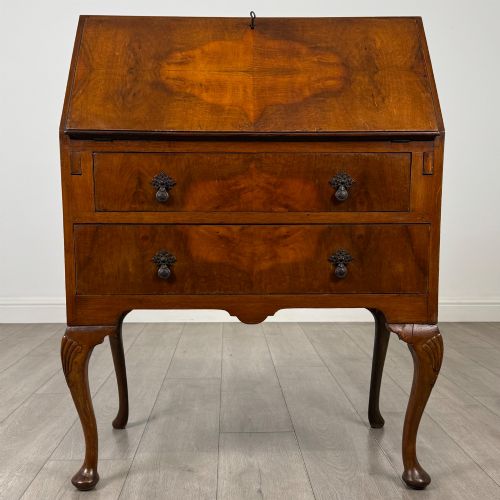
An antique home office bureau brings practical workspace and period character into a modern room through fitted pigeonholes and drop-down writing slopes.

Antique Home Office Bureau
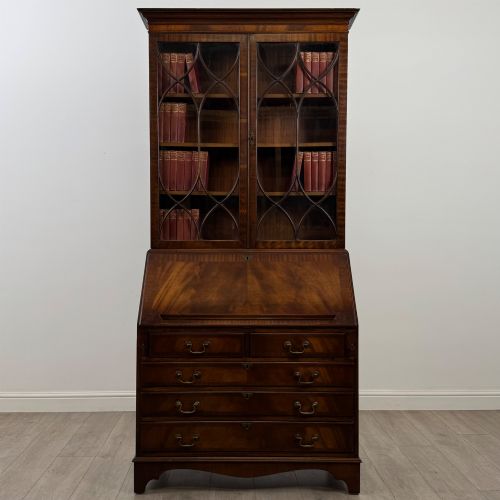
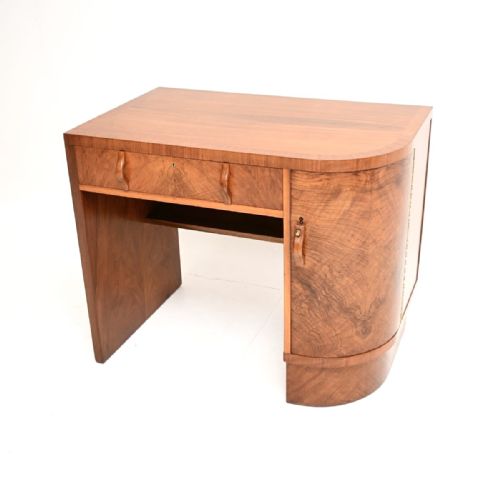
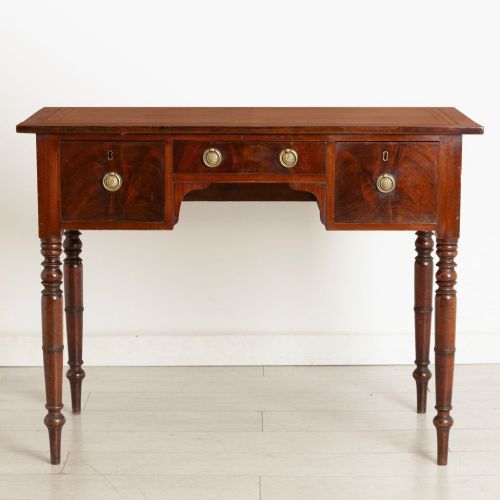
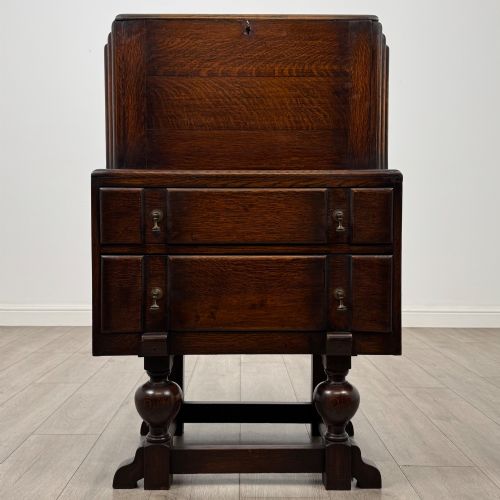
When you search for an antique home office bureau, you encounter a variety of practical work furniture designed for daily writing and correspondence. The selections span several decades, reaching from the Georgian and Victorian eras through the Edwardian period and into 1930s Art Deco designs.
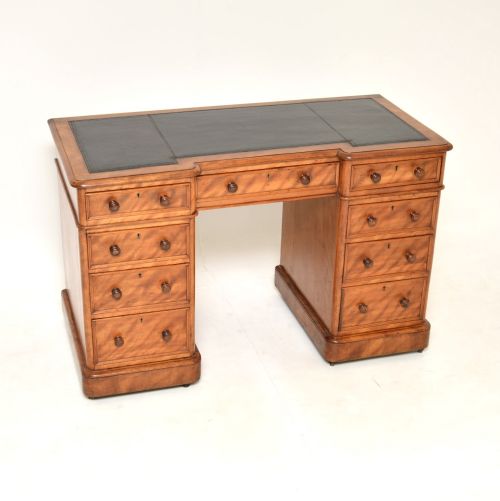
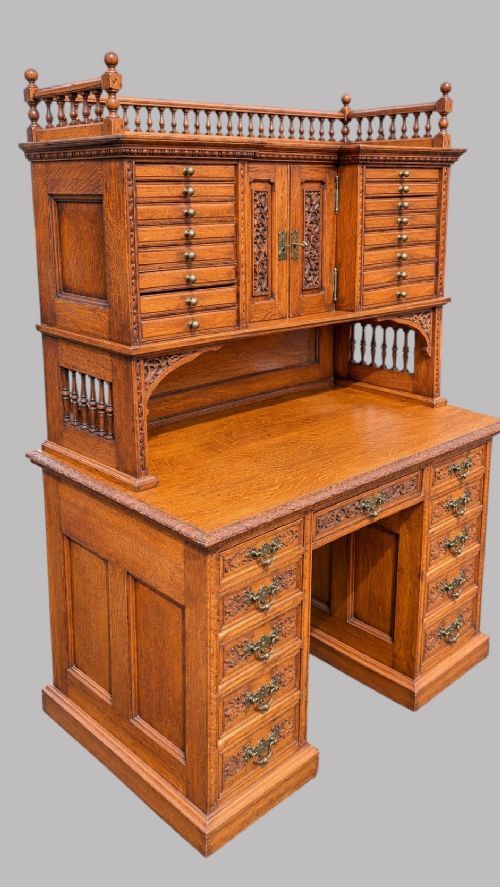
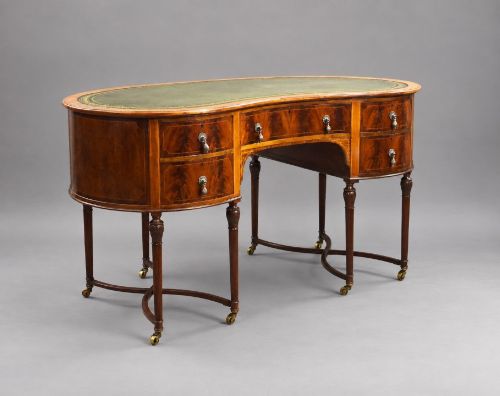
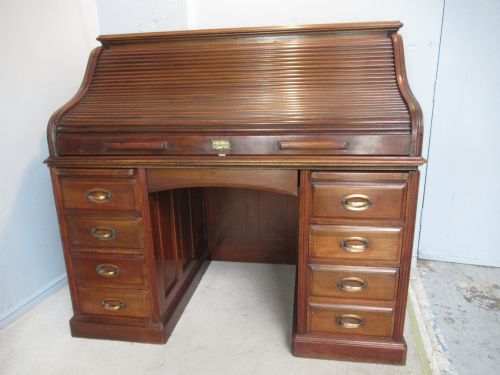
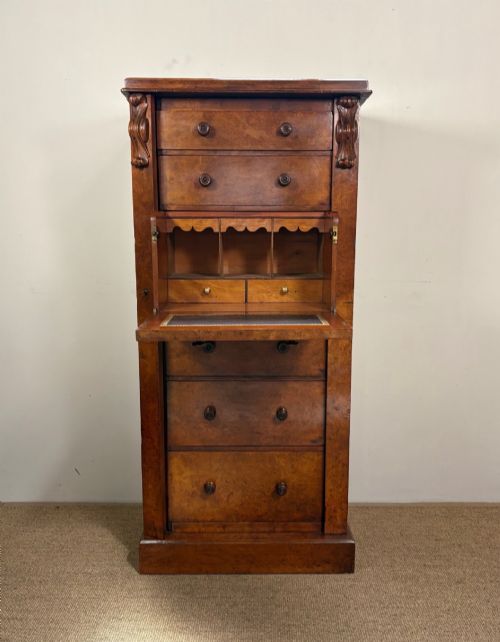
The physical forms include pedestal desks, kneehole desks, bureau bookcases, roll top desks, and writing tables. Pieces constructed in walnut and mahogany appear frequently alongside oak, satinwood, maple, and painted wood.
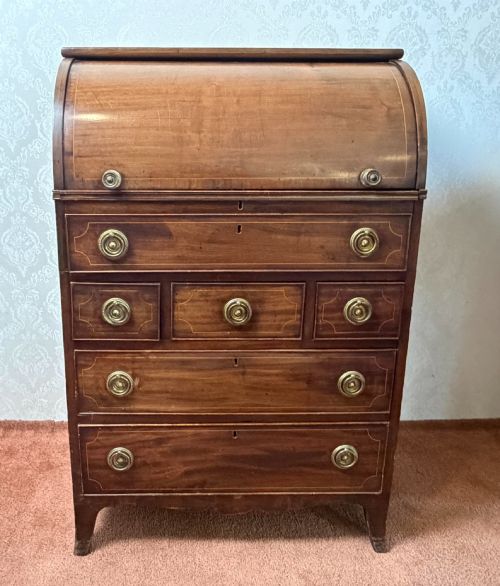
Revival styles such as Queen Anne and Sheraton Revival sit alongside Arts and Crafts cabinets and cylindrical tambour desks. Most pieces integrate functional drawers, leather writing surfaces, or internal compartment layouts suited to working from home.
Materials and Construction
Cabinet makers utilised dense hardwoods including mahogany, walnut, and oak to provide structural integrity for heavy writing furniture. Burr walnut and flame mahogany veneers were often applied to prominent surfaces to create rich grain patterns.
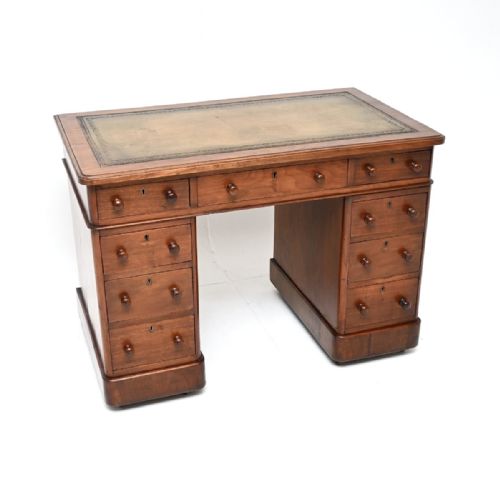
Writing surfaces frequently incorporated inset leather or tooled hide panels bordered by decorative wood framing. Brass hardware, original handles, and specialised internal mechanisms such as tambour shutters or secret compartments completed the construction.
Many Edwardian bureau drawers still retain traces of Victorian ink spots hidden deep inside their secret compartments.
Craftsmanship and Proportion
Superior examples demonstrate careful timber selection, where matched veneers flow seamlessly across drawer fronts and fall-front writing slopes. The precision of dovetail joinery in the internal drawer boxes distinguishes better workshops from standard production.
Proportion and decorative restraint dictate the overall character of a desk, with subtle marquetry inlay and carved details enhancing the design without crowding it. Retaining original brass fittings and leather inserts adds to the integrity of the piece.
Maple & Co·Heal and Son·F.H. Marshall & Co Glasgow
The Antique Home Office Bureau Glossary
- Bureau
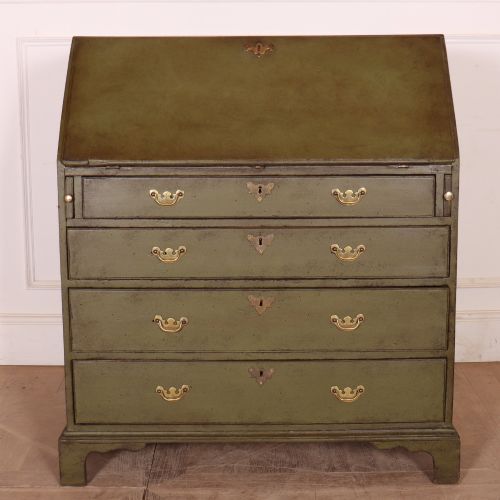
- A desk featuring a hinged sloping flap that opens to reveal a fitted interior of small drawers and pigeonholes.
- Tambour
- A flexible shutter made of narrow strips of wood glued to canvas, allowing a cylinder desk top to slide open smoothly.
- Pedestal desk
- A heavy freestanding writing table supported by two separate stacks of small drawers.
- Carlton House desk
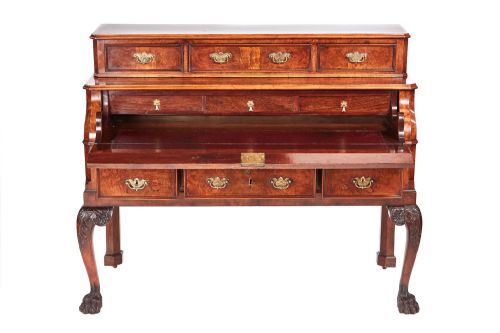
- A refined writing desk with an enclosed superstructure of small drawers and compartments curving around the back and sides.
- Davenport
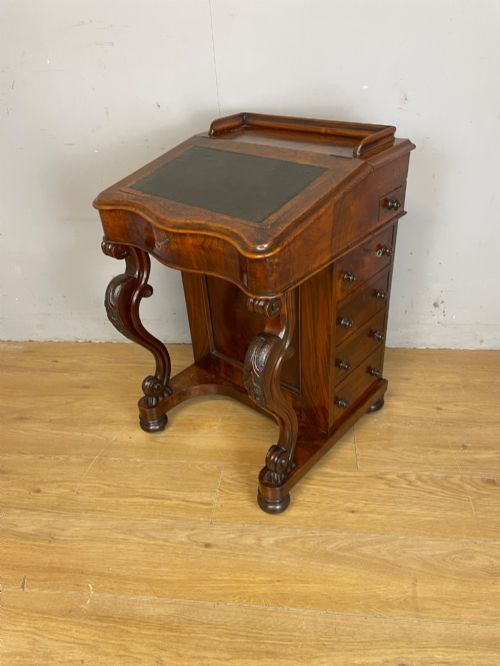
- A compact Victorian writing desk featuring a sloped top above a pedestal of side drawers.
Antique Home Office Bureau: Frequently Asked Questions
How do I use an antique bureau for modern working?
The drop-down flap provides a stable surface for laptops and notebooks, while internal pigeonholes organise correspondence and small stationery items.
Deep drawers and pedestals offer practical storage for modern office supplies, keeping technology out of sight when work finishes for the day.
Are roll top desks practical for home offices?
Roll top desks provide generous surface area and extensive internal compartmentalisation for organising paperwork.
The tambour mechanism allows you to conceal ongoing projects simply by sliding the slatted wooden cover downward.
How do I distinguish Edwardian bureaux from Victorian ones?
Edwardian pieces often display lighter timbers such as satinwood and brighter mahogany, frequently incorporating Sheraton Revival or Sheraton inlay motifs.
Victorian examples tend to use heavier solid walnut or dark mahogany, featuring deeper carved details and sturdier structural proportions.
What is a kneehole desk?
A kneehole desk is a freestanding writing table featuring a central recess for your legs, flanked by pedestals containing banks of small drawers.
This layout allows you to sit directly in front of the desk while maintaining ample storage space on either side.