
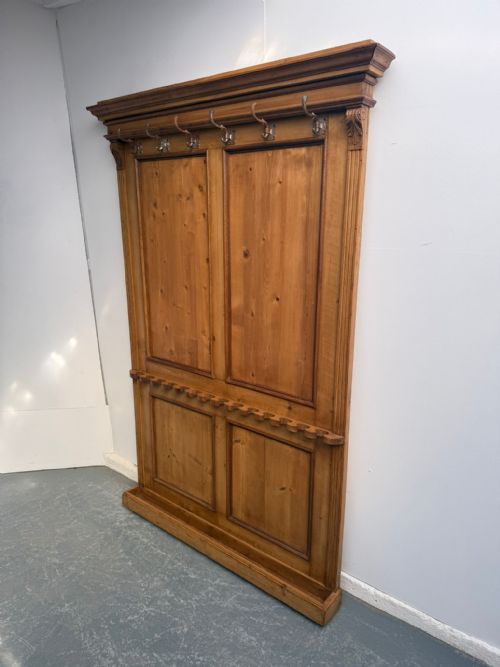


Antique Hat Stand Wall
An antique hat stand wall solves the eternal hallway clutter with fitted brass hooks and rich timber boards.
Antique Hat Stand Wall
An antique hat stand wall provides functional hallway storage by mounting directly to timber panels, masonry or plaster to hold coats and headwear. These practical items kept Victorian and Edwardian domestic entryways tidy before the arrival of fitted cloakrooms.
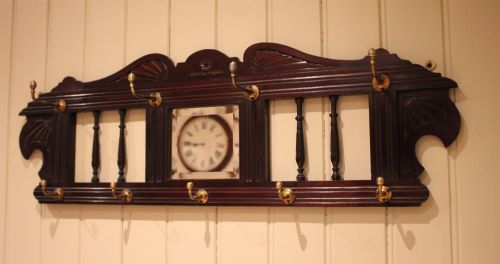
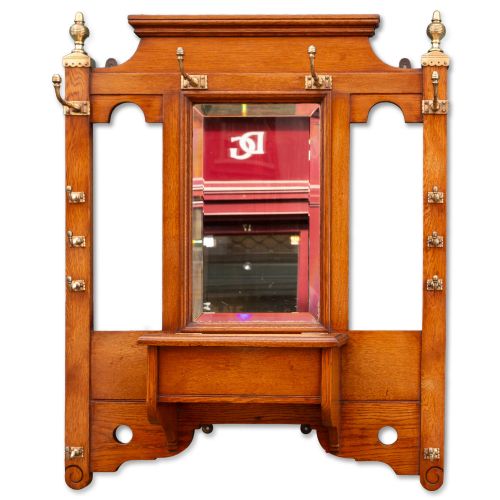
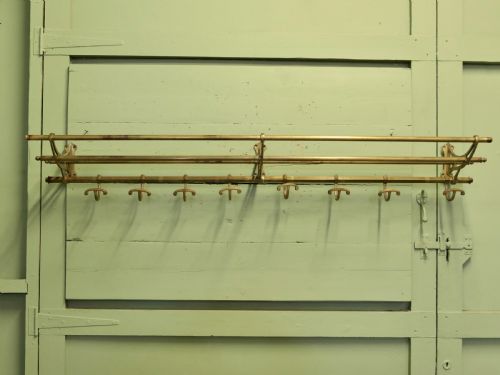
The pieces appearing here span from the late nineteenth century through to the art deco period, taking forms such as long brass portmanteaus, carved wooden boards and mirrored hall racks. Oak, mahogany and walnut backplates dominate the selection, often fitted with metal or brass hooks and occasional display shelves.
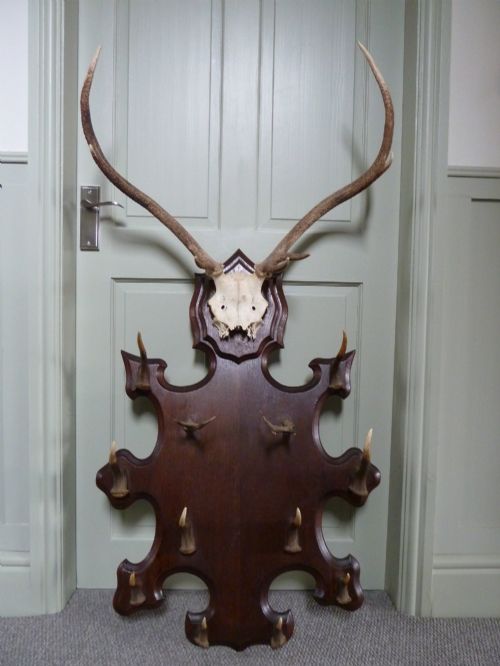
Regional variations emerge clearly across the inventory, ranging from vernacular pine country house boards to ornate continental Black Forest carvings incorporating stags horns and chamois heads. French art deco examples introduce iron and brass combinations with integrated mirrors, while British pieces favour traditional hardwoods.
How they were made
Cabinet makers constructed these wall fixtures using solid hardwoods including oak, mahogany, walnut and pine, shaping them with hand tools and mounting them with durable brass and iron hardware. Timber backplates were frequently planed and polished to display rich natural grain, while structural elements relied on sturdy joinery to bear heavy winter garments.
Decorative detailing involved hand carving, deep bevelled mirror glass insertion and the mounting of robust cast metal or brass brackets. Black Forest pieces utilised specialised carving techniques on linden wood, combining organic materials like deer antlers and stags horns directly into the wooden framework.
French production methods during the art deco era integrated wrought iron and brass shelving with original mirror plates, creating robust portmanteaus designed for utilitarian public or domestic spaces. Hook attachments were typically screwed firmly into solid timber backplates to withstand daily use in busy reception halls.
Listings feature oak, mahogany and walnut timbers alongside brass and iron hardware across Victorian and Art Deco periods.
What varies in quality
The depth of carving and choice of materials separate standard utility boards from exceptional decorative works, particularly evident in specialised Black Forest items where anatomical precision defines the craftsmanship. Superior pieces utilise dense hardwoods like walnut and mahogany alongside thick bevelled mirror plates rather than thin pine and plain glass.
The integrity of the original hardware, including cast brass brackets and matching hooks, determines the overall historical merit of the piece. Replacements or alterations alter the original character, whereas intact French portmanteaus retain their matching structural bars and original mirror glass.
The Antique Hat Stand Wall Glossary
- Portmanteau
- A wall-mounted rack combining coat hooks, a shelf for hats and a central mirror. These units served as compact hallway storage in nineteenth-century homes.
- Black Forest
- A nineteenth-century style of intricate wood carving originating from central Europe. Pieces typically feature naturalistic animal heads and foliage rendered in linden wood.
- Bentwood
- Wood softened by steam and bent into curved shapes. This technique created lightweight, durable frames for hall stands during the Victorian and Edwardian periods.
- Bevelled plate
- Mirror glass with angled edges ground down to a thinner perimeter. This traditional glazing method catches the light and indicates period manufacture.
- Valet
- A wall-mounted fixture designed for organising daily wear in a reception room or hallway. It usually incorporates hooks, a mirror and small storage ledges.
Antique Hat Stand Wall: Frequently Asked Questions
How do I hang a heavy wall rack?
These pieces require secure fixing directly into wall studs or masonry using appropriate heavy-duty screws and wall plugs. The substantial weight of hardwood backplates and cast brass hooks demands proper structural support.
Professional installation ensures the fixture safely bears the weight of multiple heavy winter coats and hats without pulling away from the plaster.
What rooms suit these wall stands?
Hallways, boot rooms and entrance lobbies provide the most practical and historically authentic locations for mounting these racks. Their original purpose was serving guests as they arrived.
Bedrooms and reception rooms also accommodate them well, utilising the hooks and mirrors for daily accessories and cloaks.
How do I date a wooden coat rack?
Dating relies on examining the timber species, screw types, mirror bevels and stylistic markers like art deco geometry or Victorian carving. Oak and mahogany frequently indicate nineteenth-century British origin.
French pieces from the nineteen-twenties often display distinct ironwork and streamlined proportions characteristic of the art deco movement.
Are the mirrors original to the pieces?
Many retain their original bevelled glass plates, showing gentle age spots and foxing consistent with their age. Replacements are sometimes necessary due to historic breakages.
Checking the backing boards and silvering helps determine whether the glass has survived from the Victorian or Edwardian era.