
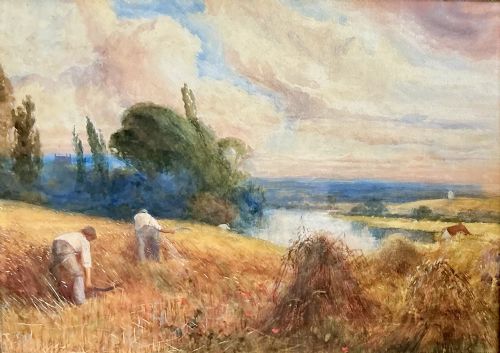


Antique Harvest Artwork
Antique harvest artwork brings the labour of the fields and rural seasons into a room through watercolours and oil paintings.
Antique Harvest Artwork
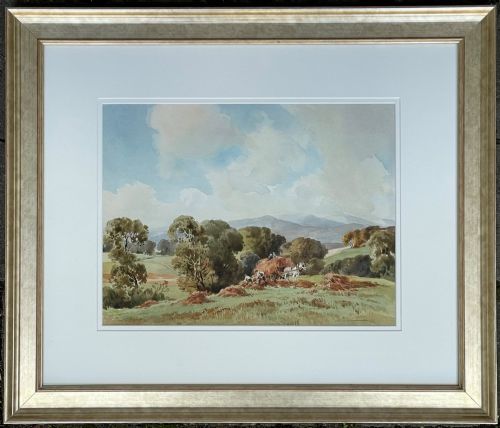
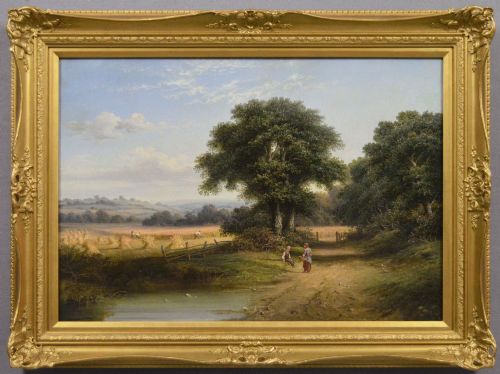
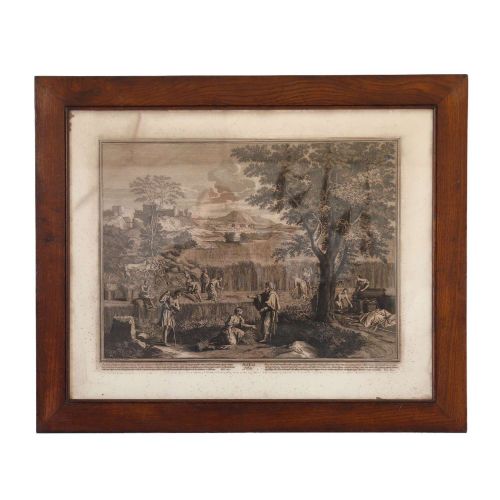
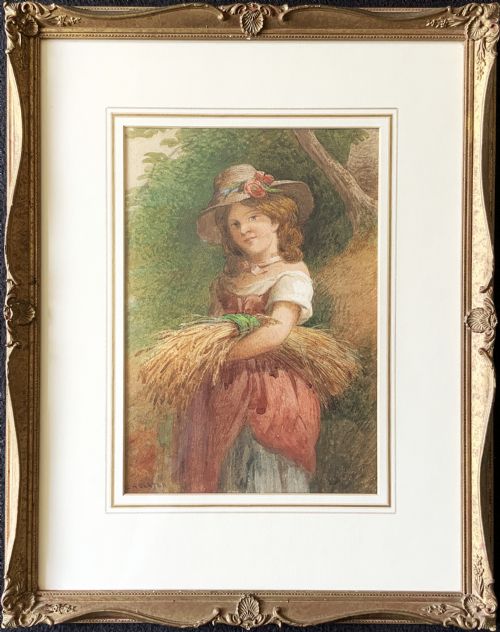
When you search for antique harvest artwork, you encounter paintings that record agricultural labour, haymaking, and rural life across the nineteenth and early twentieth centuries. These works range from watercolours on paper to large oil paintings on canvas, capturing landscapes populated by figures gathering wheat, carting hay, and working the land. The pieces available span Victorian, Edwardian, and early twentieth-century periods, reflecting the shifting styles of British realism and impressionism.
You are most likely to meet watercolours and oil paintings depicting pastoral scenes signed by named artists from the nineteenth century onward. The compositions often focus on traditional farming methods before mechanisation altered the countryside, showing workers with scythes, hayricks, and horse-drawn carts. These works were created as decorative cabinet pieces or gallery paintings, intended to bring the warmth of the harvest season into domestic interiors.
Materials and technique
The works rely upon traditional painterly media, primarily oil paint applied to canvas or wood panels, and watercolours laid upon heavy paper. Painters built up their scenes through layered brushwork, capturing the play of sunlight over cornfields and riverbanks using natural pigments. Canvas supports often retain their original wooden stretchers, while watercolours are protected beneath glass within period frames.
Framing is an integral part of the physical object, utilising giltwood or moulded wooden frames that complement the tonal warmth of the painted subject. The physical construction reflects the studio practices of the period, with signed inscriptions, artist signatures, and occasionally exhibition labels visible on the reverse of the canvas or mount.
Keep an eye out for hidden ducks taking a break near the harvesters' picnic.
Judging quality in harvest scenes
Quality rests upon the artist's ability to handle light, atmosphere, and human anatomy within a landscape. The finest works demonstrate confident brushwork and a convincing sense of depth, where figures engaged in harvesting appear naturally integrated into the surrounding fields rather than posed rigidly.
The preservation of the pigment and the integrity of the original paper or canvas determine the durability of the piece. Works that retain their original colour without excessive fading or past restoration offer a truer representation of the artist's intended palette.
Percy Lancaster·Walter Heath Williams·Charles Henry Slater·Frederick Hines·James William Booth·John Atkinson·William Grant Murray·Henry H Parker·Herbert Royle·Arthur Walker Redgate·Rowland Henry Hill·Frederick J Knowles·Joseph Paulman·Henry John Kinnaird·Frederick William Jackson·Walter Duncan·George Hamilton Constantine·William Greaves·William Savage Cooper·Joseph Thors·David Heward·William Kay Blacklock·Wilmot Pilsbury·John Clayton Adams·Arthur Heinrich Wilhelm Fitger
The Antique Harvest Artwork Glossary
- Watercolour
- A painting method where fine pigments are suspended in a water-soluble binder on paper. It requires a swift and sure hand, as corrections are difficult to make without disturbing the paper fibres.
- Oil on canvas
- A technique using pigments bound in drying oil applied to a woven fabric stretched across a wooden frame. This medium allows for rich texture and deep colour saturation.
- Giltwood
- Wood carved and coated with a thin layer of gold leaf or metal powder. It is commonly found on traditional frames enclosing nineteenth-century oil paintings.
- Victorian Pastoral
- An artistic style celebrating rural life, agriculture, and an idealized countryside. These scenes often emphasise harmonious labour and picturesque landscapes.
Antique Harvest Artwork: Frequently Asked Questions
What subjects appear in antique harvest artwork?
The subjects focus primarily on agricultural labour, including haymaking, corn cutting, and figures resting near harvest fields. Artists also depicted coastal landscapes with harvesting elements and pastoral river views.
These scenes document traditional farming methods before the widespread introduction of heavy machinery, preserving a visual record of rural community life.
How should I hang an antique painting?
Hang paintings away from direct sunlight and damp walls to protect the canvas, paper, and giltwood frames from environmental damage. Stable indoor temperatures prevent the wood and canvas from warping.
Use appropriate wall fixings rated for the weight of the framed artwork, and ensure the piece hangs securely from picture wire or sturdy D-rings.
How do I identify the period of a watercolour?
Examine the paper quality, the style of the mount, and any visible signatures or inscriptions left by the artist. Period framing and handwritten labels on the reverse often provide clues to the exact decade.
Stylistic conventions in clothing and agricultural tools depicted in the scene also help narrow down the date of execution.
Are these works signed by the artists?
Many of the paintings and watercolours feature artist signatures, monograms, or studio inscriptions on the front or reverse. Signatures were commonly placed in the lower corners of the composition.
Documentation on the back of the frame sometimes reveals exhibition history or the specific geographic location of the harvest scene.