


Antique Hand Fan
These antique hand fan pieces bring historic folding designs, painted leaves, and framed wall art straight into a room.
Antique Hand Fan
When you search for an antique hand fan, you encounter both traditional folding objects and framed wall art created from painted leaves. The listings on this page span the 18th century, 19th century, and the Victorian period, offering a mix of delicate handheld items and decorative wall pieces.
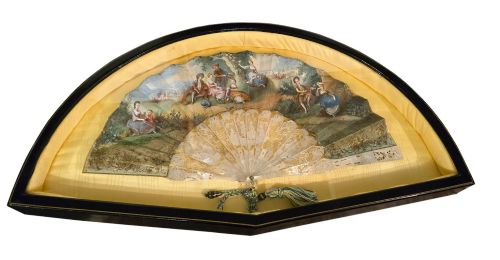
Folding fans appear alongside framed examples featuring silk, paper, and mother-of-pearl. Some items arrive mounted in gilded box frames or display cases, shifting their original function from personal accessory to interior display.
The selection also includes fan-shaped plates and chargers decorated in Japanese Imari styles. These ceramic interpretations demonstrate how the distinctive silhouette crossed over from textiles and paper into porcelain and earthenware.
Materials and construction methods
Maker workshops utilised organic materials such as mother-of-pearl, wood, and paper alongside textiles like silk and lace. Handles and sticks were carved, gilded, or fashioned from black lacquer, providing a rigid support for delicate painted surfaces.
Artists applied hand-painted scenes directly to paper and silk leaves, often depicting biblical narratives, pastoral musical subjects, or traditional figures. Many pieces incorporated gold leaf and gilt metal framing to protect and display the fragile fabric within.
Listings feature Japanese Imari designs alongside French Rococo and Neoclassical styles.
Distinctions in quality and finish
The degree of detail in the hand-painted scenes separates standard items from superior works. Finely executed facial expressions, intricate landscape backgrounds, and delicate brushwork indicate a higher level of artisan skill.
The choice of structural material also defines the tier of the piece. Expertly carved mother-of-pearl sticks and substantial gilt wood framing represent superior craftsmanship compared to simpler wooden handles.
The Antique Hand Fan Glossary
- Folding Fan
- A collapsible personal accessory made with folding sticks and a continuous leaf. These objects fold neatly together when not in use.
- Imari
- A style of Japanese porcelain featuring vibrant underglaze blue and iron red, often highlighted with gold. This aesthetic frequently inspired fan-shaped decorative dishes and chargers.
- Mother-of-Pearl
- The iridescent inner layer of certain mollusc shells, carved to form the slender sticks of handheld folding objects. It provides a luminous surface with natural tonal shifts.
- Face Screen
- A handheld screen designed to shield a person's complexion from the heat of an open fireplace. Victorian examples frequently employed paper maché and painted decoration.
- Canton
- A Chinese port city associated with export goods produced for Western markets. Items from this region often featured intricate thousand faces painting and black lacquer.
Antique Hand Fan: Frequently Asked Questions
How were antique hand fans used?
These objects served primarily as personal accessories for cooling and social communication in formal settings. Many were also preserved behind glass as decorative wall art.
Over time, delicate folding examples moved from personal use into dedicated display cases and gilded frames to protect the fragile paper and silk leaves.
What materials make up these fans?
Makers constructed the structural sticks from carved mother-of-pearl, wood, and black lacquer. The flexible leaves consist of painted paper, lace, or silk.
Additional decorative elements include gold leaf, gilding, and gilt metal framing used to mount the items for interior display.
How do I date an antique fan?
Dating relies upon stylistic clues, framing techniques, and materials associated with specific eras like the 18th century or the Victorian period. Hand-painted subjects and framing styles often correspond to the prevailing aesthetic of their decade of origin.
Documentation or remnants of original display boxes can also provide helpful chronological markers for specific pieces.
How should I display a framed fan?
Framed pieces require placement away from direct sunlight to prevent the fading of delicate watercolours and silks. Wall mounting should utilise stable fixings suited to the weight of the box frame.
Maintaining a stable room temperature helps protect organic materials like mother-of-pearl and paper from environmental stress.