



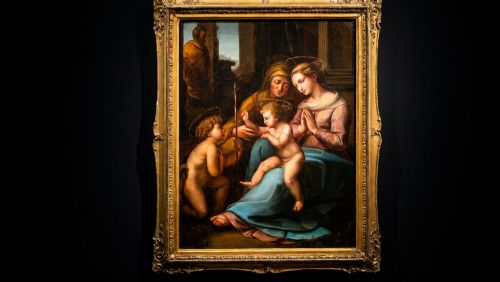


Gilt Framed Biblical Art
Gilt framed biblical art brings centuries of sacred history into a room through oil paintings, woolwork and engravings set in gleaming surrounds.
Gilt Framed Biblical Art
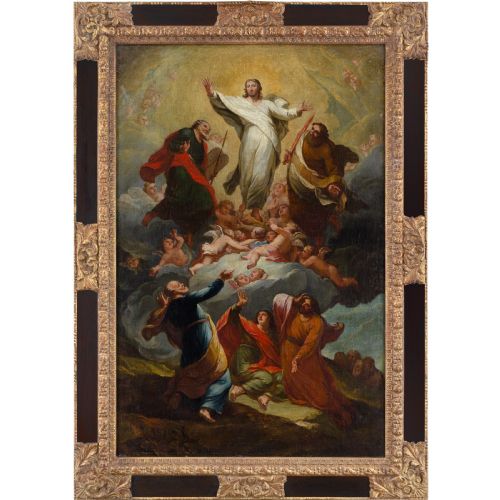
When you search for gilt framed biblical art, you encounter sacred narratives rendered across various centuries and mediums. The selection on this page ranges from 16th-century Italian Renaissance oils to 19th-century Berlin woolwork pictures and engravings.
Religious subjects dominate these pieces, depicting scenes such as Pharaoh's dream, the Adoration of the Magi, and the Holy Family. Wall art and framed prints form the primary objects you are likely to meet here, often preserved in period wood and giltwood frames.
Materials and construction
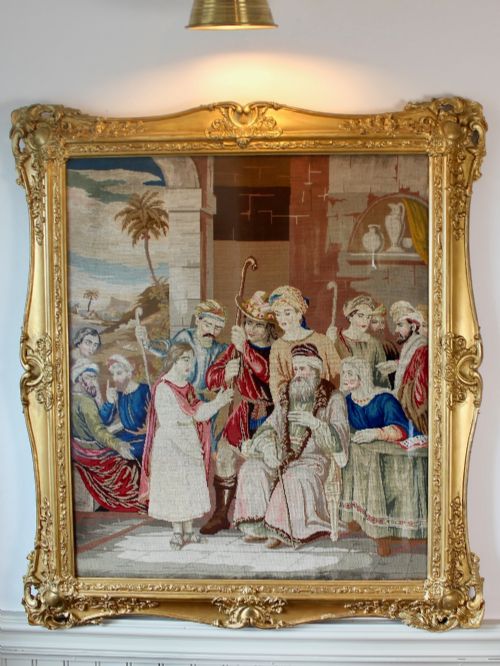
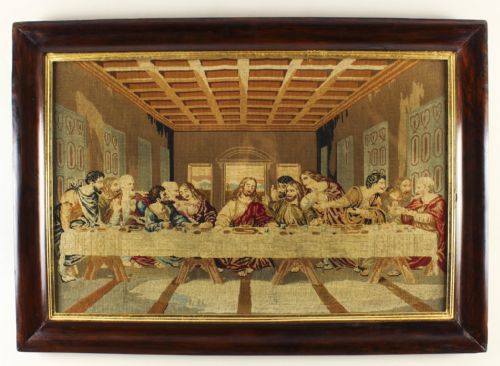
These works rely on traditional supports including canvas, paper, and wool, with oil paintings utilising skilled brushwork to achieve depth. Textile pieces like Berlin woolwork and silk needlework employ careful stitching to construct complex figurative scenes.
Frames are constructed from wood finished with gold leaf or gilt metal, providing a bright border that complements the religious imagery within. Glass frequently protects delicate paper prints and painted fan leaves from environmental wear.
Listings feature works spanning the 16th century to the Victorian era, utilising oil on canvas, wool, silk, and paper.
Distinguishing quality in these works
Quality in these pieces rests upon the execution of the figures and the fidelity of the composition to its historical school. Works associated with specific regional schools or named engravers demonstrate greater artistic ambition.
The integration between the artwork and its frame also matters, as period giltwood and carved wood surrounds enhance the visual impact of the central religious subject.
Gustave Doré·Adolphe Pannemaker·Antonio Tempesta·Pietro D'Asaro·Eugene Hindle
The Gilt Framed Biblical Art Glossary
- Berlin woolwork
- A type of counted-thread embroidery popular in the 19th century, utilising brightly coloured wools on canvas. It often depicts elaborate narrative scenes.
- Giltwood
- Wood that has been coated with a thin layer of gold leaf or gilt powder. This finish provides a durable and reflective metallic surface for picture frames.
- Oil on canvas
- A painting technique where pigments mixed with drying oil are applied to a stretched fabric support. This medium allows for rich colour blending and longevity.
- Engraving
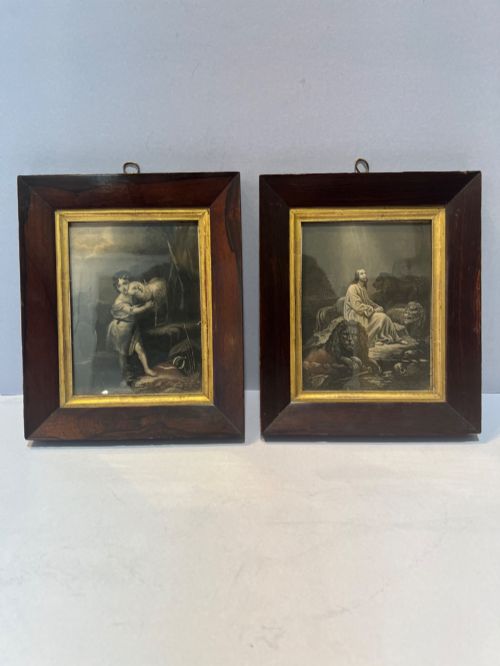
- A printmaking process where an image is incised into a metal plate, which then holds ink for transfer. This technique creates fine, precise lines on paper.
- Renaissance Revival
- A 19th-century stylistic movement that drew inspiration from the art and architecture of the 15th and 16th centuries. Pieces in this style emulate earlier classical harmony.
Gilt Framed Biblical Art: Frequently Asked Questions
What periods do these pieces span?
The works stretch from the 16th century through to the 19th century. You will find examples from the Renaissance, Baroque, and Victorian eras.
Earlier pieces often reflect Italian or Flemish schools, while later examples include British, German, and Scottish works.
How should I hang heavy gilt framed art?
Wall hangings and large oil paintings require secure fixings suited to the weight of the wood and glass. Ensure you anchor directly into wall studs or use appropriate masonry fixings.
Allow adequate clearance from direct heat sources to protect both the canvas and the gilt frame.
Are all the frames original to the art?
Frames vary across the selection, with some retaining period giltwood surrounds appropriate to the creation date of the artwork. Others may be paired or updated framing chosen to protect the piece.
Examining the construction of the frame helps determine its age relative to the painting or textile.
What subjects are most common?
Biblical narratives form the core subject matter, including Old Testament events and New Testament scenes. Common depictions feature the Adoration of the Magi, the Holy Family, and figures like Mary Magdalene.
These subjects reflect the cultural and religious importance placed on sacred art across European history.
How do I care for textile religious art?
Needlework and wool tapestries require protection from direct sunlight to prevent the wool and silk threads from fading. Keep them in stable environments away from excessive moisture.
Displaying them behind glass, where applicable, shields the delicate fibres from dust and physical handling.