


Antique Hallway Coat Rail
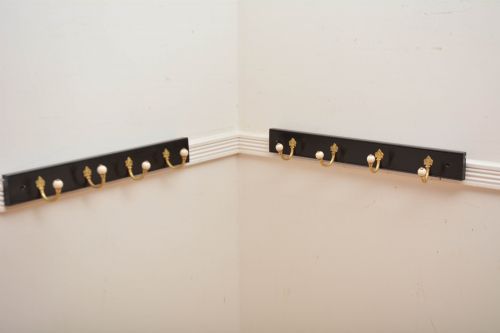
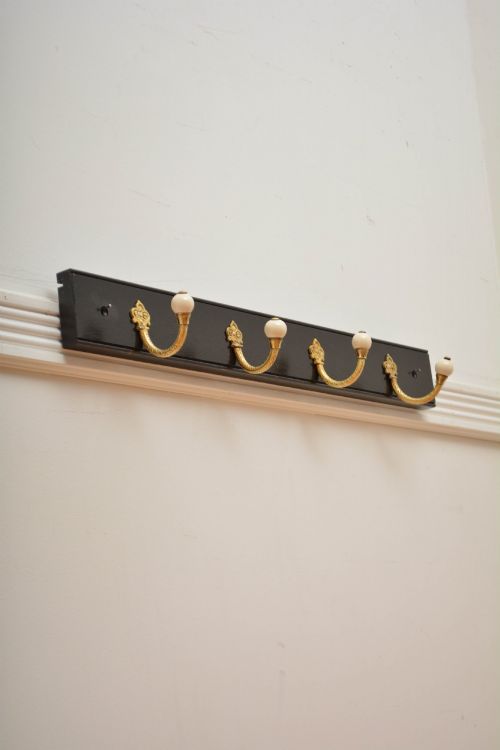
An antique hallway coat rail organises an entrance with mounted hooks on a timber backboard, bringing period character to a practical threshold.
Antique Hallway Coat Rail
An antique hallway coat rail provides mounted hooks for hats and garments, keeping an entrance tidy while displaying period timber and metalwork. These pieces range from simple rows of hooks on a backboard to more substantial hall stands.
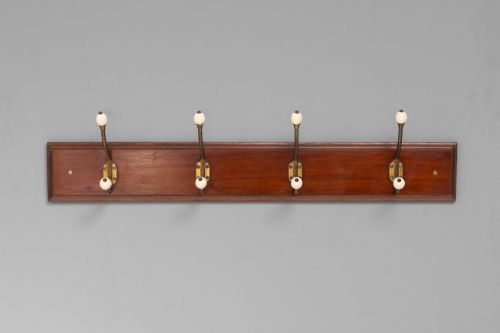
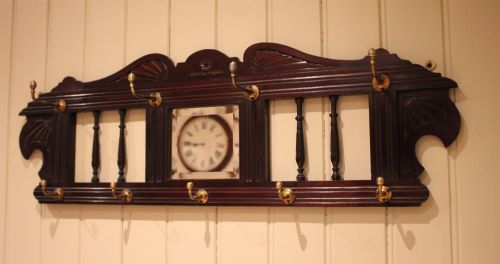
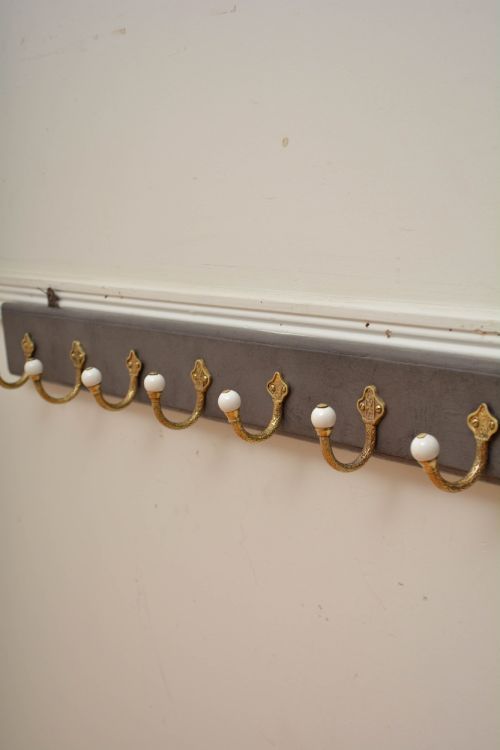
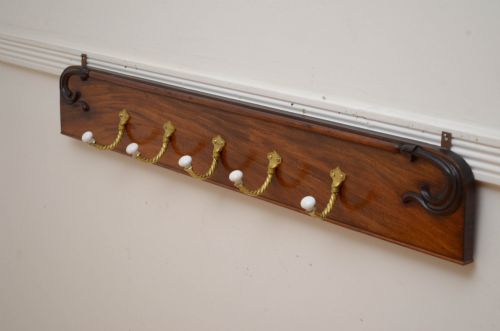
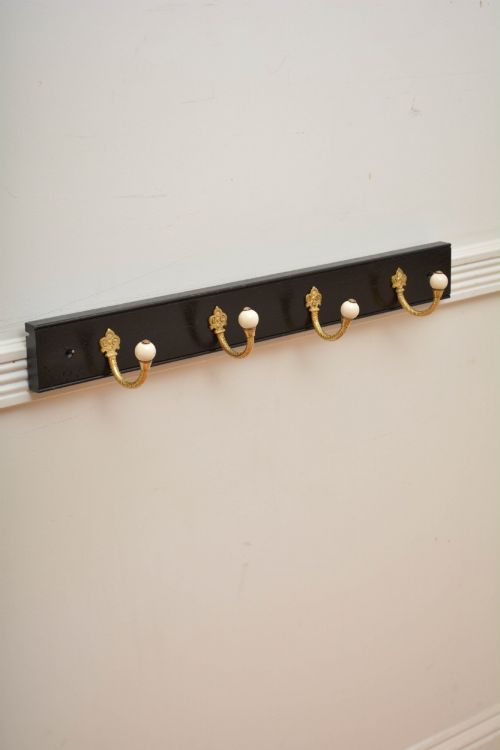
The versions most commonly met on this page date from the Victorian and Edwardian eras, constructed in mahogany, oak, pine, and ebonised wood. They often feature cast brass hooks, sometimes combined with ceramic elements for durability and visual contrast.
Originating in English and French domestic settings, these cloakroom and reception valets served busy hallways and domestic vestibules. Their forms reflect the practical requirements of period households before fitted cloakroom storage became standard.
How they were made
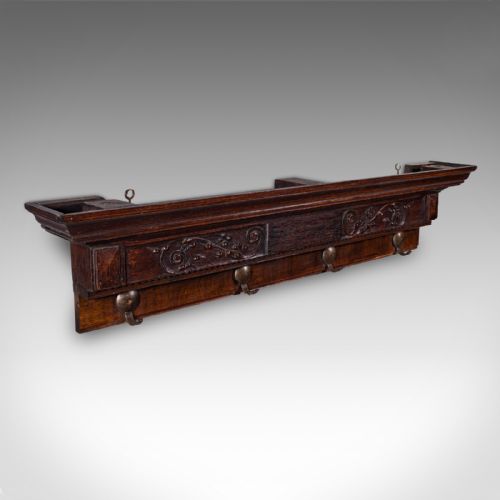
Makers constructed the backboards from durable hardwoods like mahogany and oak, alongside pine and ebonised wood, shaping them to be mounted securely to hallway walls. Twisted rope and carved details occasionally enhanced the timber surrounds.
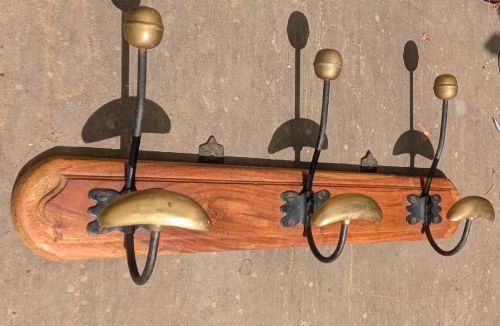
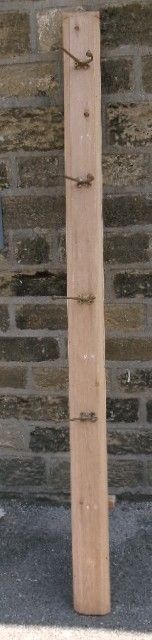
Hooks were cast in brass and iron, frequently paired with ceramic inserts to protect garments and add contrasting texture. These metal elements were screwed or bolted firmly into the timber backboards to support heavy winter wear.
Some Victorian brass hooks sport ceramic centres designed to keep top hats from scuffing.
What varies in quality
Quality rests in the heaviness of the brass casting and the selection of the timber backboard, where figured mahogany or early oak outshines standard pine. Finely detailed mounting plates and intact ceramic inserts elevate the piece.
The integrity of the construction determines longevity, particularly how securely the hooks are anchored into the supporting wood. Pieces that retain their original matched hooks demonstrate higher structural and visual harmony.
The Antique Hallway Coat Rail Glossary
- Backboard
- The horizontal timber panel that supports the mounted hooks and attaches to the wall. It provides structural rigidity and displays the grain of woods like mahogany or oak.
- Cloakroom
- A domestic reception space or hallway designated for outer garments and hats. Antique coat rails were specifically designed for these busy threshold areas.
- Ebonised
- Wood treated with a dark stain or finish to imitate ebony. This technique was popular in the nineteenth century for creating sharp contrast against brass fittings.
- Hall Tree
- A larger hallway furnishing that combines coat hooks with umbrella stands and mirrors. It serves a similar function to a wall-mounted rail but stands independently.
Antique Hallway Coat Rail: Frequently Asked Questions
How are antique coat rails mounted?
These rails attach directly to hallway walls through pre-drilled screw holes or mounting plates integrated into the timber backboard.
Installers should secure the piece into wall studs or use appropriate heavy-duty fixings to support the weight of heavy coats.
What woods were used for coat rails?
Mahogany, oak, and pine appear frequently across these pieces, alongside ebonised wood for a darker aesthetic.
Hardwoods provided the necessary strength to hold multiple heavy garments without warping over decades of daily use.
What is the difference between brass and iron hooks?
Brass hooks offer a warm metallic tone that resists corrosion in busy hallways, often featuring decorative cast plates.
Iron hooks provide robust structural support for heavier cloakroom items but typically display a simpler industrial finish.
Are ceramic inserts original to the hooks?
Ceramic inserts were commonly utilised by makers to prevent snagging on delicate fabrics and to introduce white or patterned contrast.
Original inserts fit flush within the metal casting and show consistent age alongside the surrounding brass.