






Antique Gold Seal
An antique gold seal carries a personal crest or intaglio cut into hardstone, made to stamp hot wax on letters and documents.
Antique Gold Seal
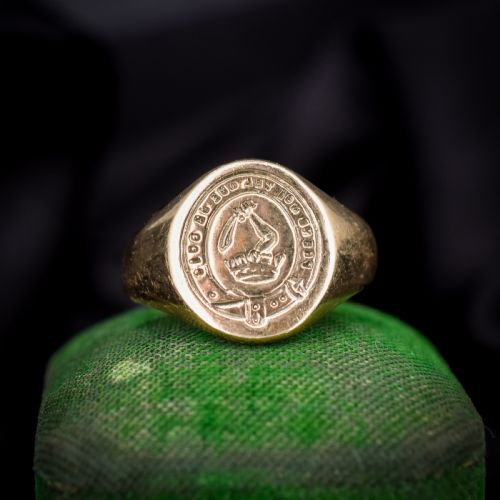
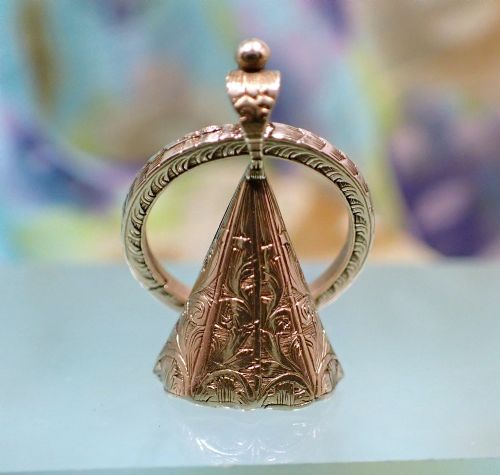
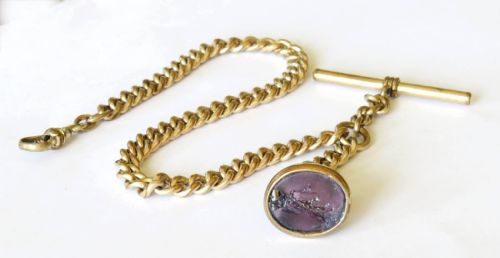
An antique gold seal appears most often as a pendant fob, a signet ring, or a watch key, originating across Georgian, Victorian, and Edwardian periods. These pieces combine a solid precious metal mount with a carved hardstone base intended for daily correspondence and personal marking.
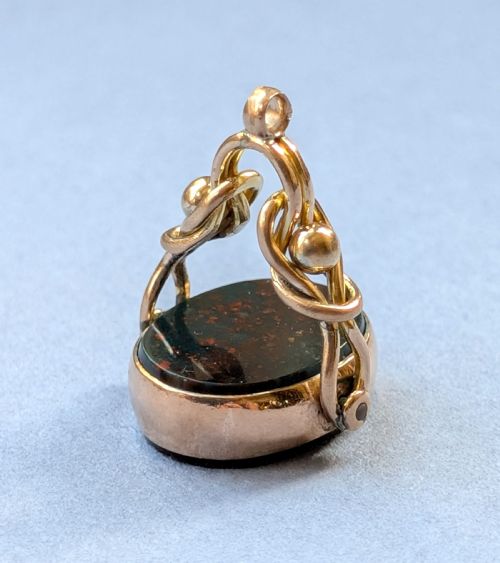
The selection ranges from swivel pendants holding both carnelian and bloodstone to heavy signet rings cast in yellow or rose gold. Makers fashioned these objects to hang from watch chains or to wear directly on the hand.
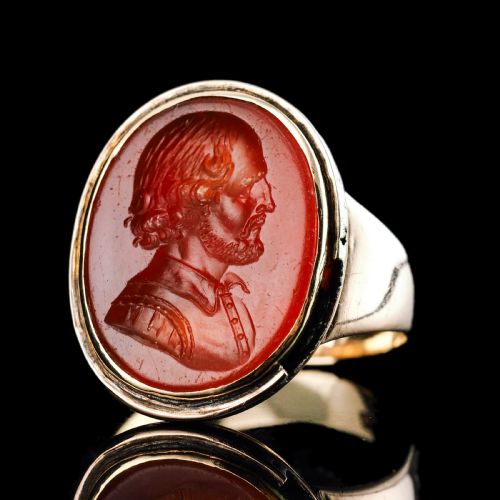
Examples stretch from eighteenth-century intaglios depicting classical figures to mid-century heavy signet rings bearing Scottish thistles. Each piece reflects the shifting tastes of traditional British jewellery design across successive centuries.
Materials and Technique
Goldsmiths constructed these seals using yellow and rose gold alloys spanning nine, fifteen, and eighteen carats, alongside gold-cased and rolled gold alternatives. They set these mounts with natural hardstones including carnelian, bloodstone, agate, sardonyx, and citrine.
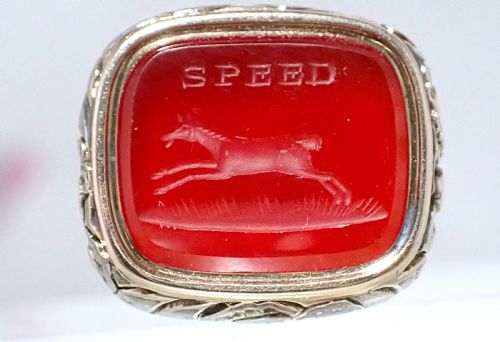
Craftspeople engraved intaglio motifs directly into the face of the stone, cutting heraldic crests, monograms, and classical figures in reverse so the stamped wax read correctly. They balanced cast metal bezels and ornate swivel frames to hold the stones securely.
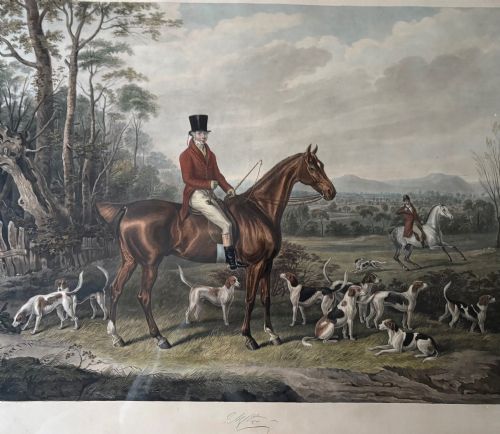
One surviving nineteenth-century piece bears an intaglio of John 'Mad Jack' Mytton alongside two wax seals and a book.
Craft and Definition
Quality rests upon the crispness of the stone engraving and the weight of the gold mount. Deeper, more detailed intaglio carving in harder stones marks out superior examples.
Substantial gold weight and robust swivel mechanisms separate solid pieces from lighter cased or rolled metal alternatives. The clarity of the hardstone and the precision of the bezel work determine the standing of each piece.
The Antique Gold Seal Glossary
- Intaglio
- A design carved into the surface of a hardstone so that the impression rises in relief when pressed into sealing wax. This technique requires steady skill to achieve clear detail at a small scale.
- Fob seal
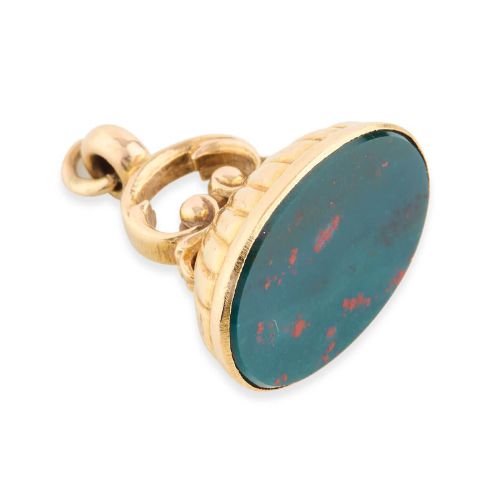
- A small pendant designed to hang from a pocket watch chain or ribbon, featuring a carved stone base for stamping wax. These items were widely carried during the Georgian and Victorian eras.
- Carnelian
- A reddish-orange variety of chalcedony quartz frequently used for intaglio seals and signet rings. Its uniform colour made it a favoured choice for clear wax impressions.
- Bloodstone
- A dark green chalcedony flecked with red jasper spots, commonly set into Victorian and Edwardian gold fobs. It provided a robust and distinctive surface for heraldic engraving.
- Swivel pendant
- A mounting style that allows the central seal or stone to rotate on an axis within its frame. This allowed owners to display two different faces or hardstones.
Antique Gold Seal: Frequently Asked Questions
What is a gold fob seal?
A gold fob seal is a small hanging ornament featuring a carved hardstone base used to press intaglio designs into hot wax. People carried them attached to pocket watch chains.
They served both as practical tools for sealing correspondence and as decorative accessories reflecting personal identity.
How do I date an antique seal?
Dating relies on the gold hallmark stamps, the prevailing jewellery style, and the specific hardstone materials used in the mount. Georgian pieces often feature heavier yellow gold frames, while Edwardian examples show lighter proportions.
Assay marks and recorded dates on specific rings provide precise chronological markers for many surviving examples.
What stones are used in seals?
Common hardstones include carnelian, bloodstone, agate, sardonyx, and citrine, chosen for their durability and fine grain. Artisans preferred these materials because they resisted cracking under pressure and took a sharp engraved edge.
Coloured pastes and glass also appear in place of natural stones in certain cased items.
Can I still use these to seal letters?
These seals function properly with modern sealing wax provided the stone surface remains intact and clean. Pressing the engraved intaglio into warmed wax leaves a clear raised impression.
Careful handling protects the antique stone and the gold setting from unnecessary wear.