
Antique Gold Pocket Chain
An antique gold pocket chain is a tailored link designed to secure a timepiece to a waistcoat.
Antique Gold Pocket Chain
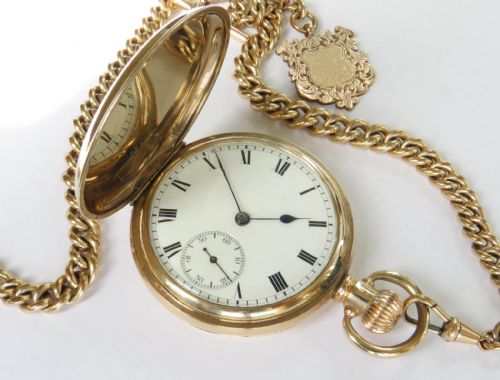
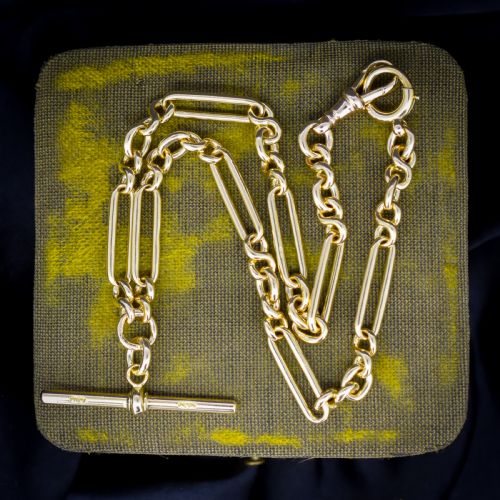
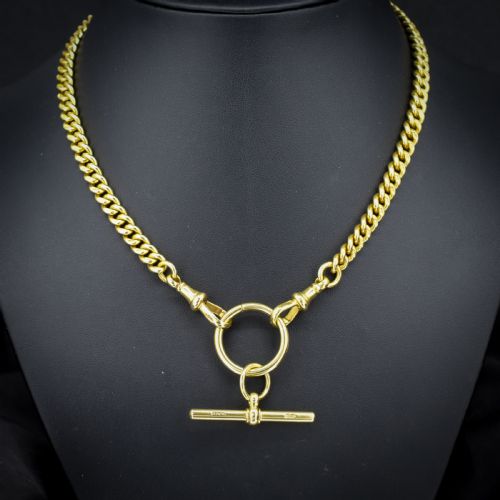
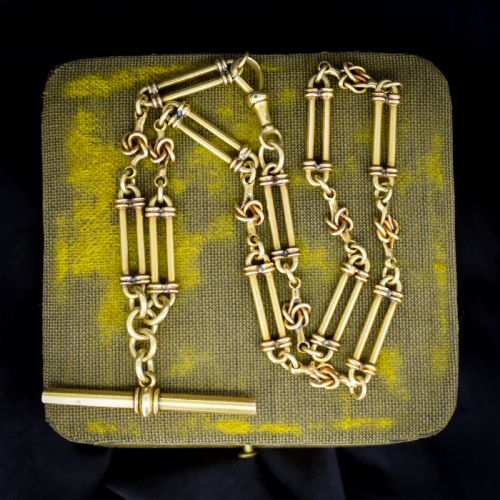
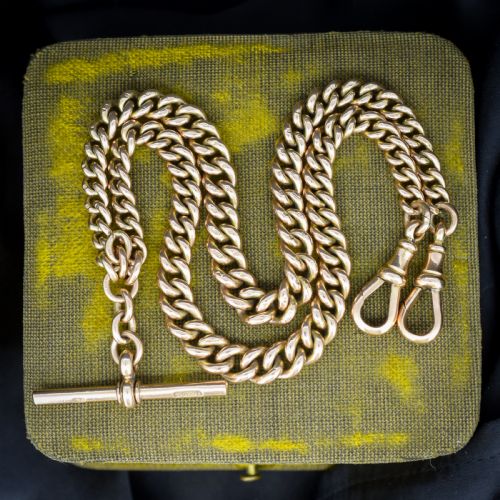
An antique gold pocket chain serves as a traditional fastener connecting a pocket watch to a garment. These pieces range from substantial Victorian curb links to delicate Edwardian albertinas and 1920s trombone link necklaces.
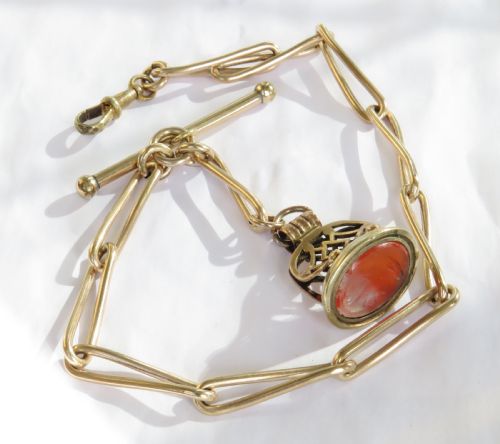
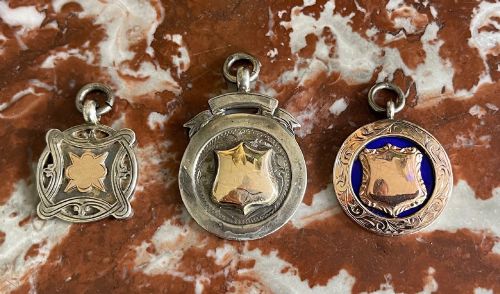
The objects seen here encompass solid 9ct, 15ct and 18ct yellow and rose gold, alongside rolled gold and gold-filled alternatives. Many examples retain original dog clips, swivel fobs, and T-bars designed for buttonhole attachment.
How they were made
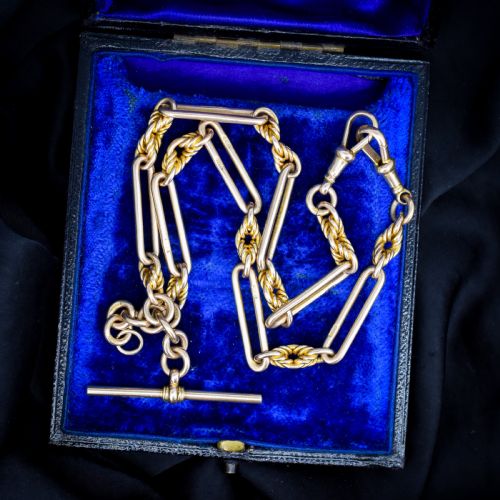
Goldsmiths constructed these chains using hollow or solid links shaped into curb, trombone, paper, and love knot patterns, often soldered by hand. Rolled gold and gold plate techniques applied a thin layer of gold over a base metal core to provide durability at a lower cost.
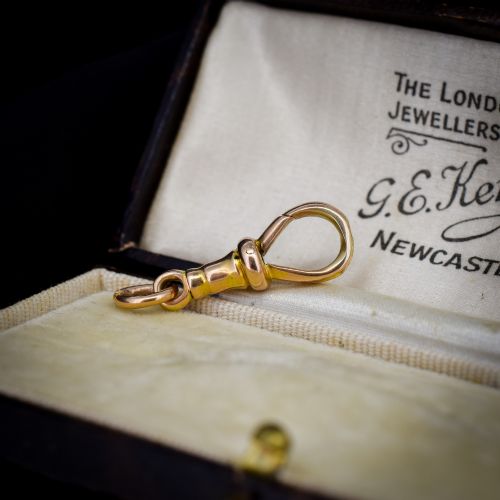
Functional hardware such as dog clips, bolt rings, and T-bars were mechanically stamped or cast, then integrated into the chain assembly to secure timepieces and decorative fobs.
Materials range from solid 9ct, 15ct, and 18ct yellow and rose gold to rolled gold, enamel, niello silver, and platinum.
What varies in quality
The grade of gold establishes the baseline quality, with solid 18ct and 15ct pieces sitting above 9ct gold and rolled gold variants. Weight and gauge dictate durability, as heavier links resist the wear of daily pocket use.
Craftsmanship shows in the uniformity of the links, the crispness of any hallmark stamps, and the secure snap action of the dog clips and swivel mechanisms.
Hopwood
The Antique Gold Pocket Chain Glossary
- Dog clip
- A spring-loaded snap hook used to attach a pocket watch securely to the chain. This mechanism allows the timepiece to be detached easily.
- T-bar
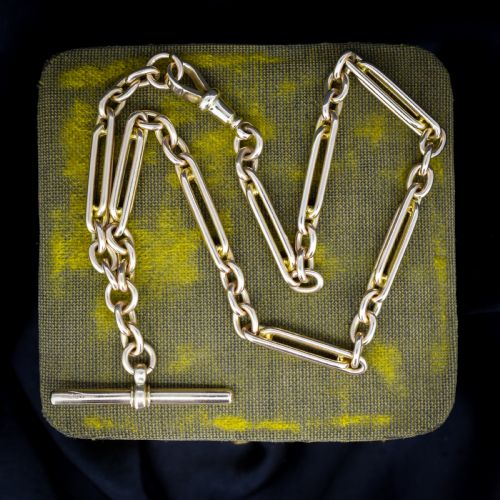
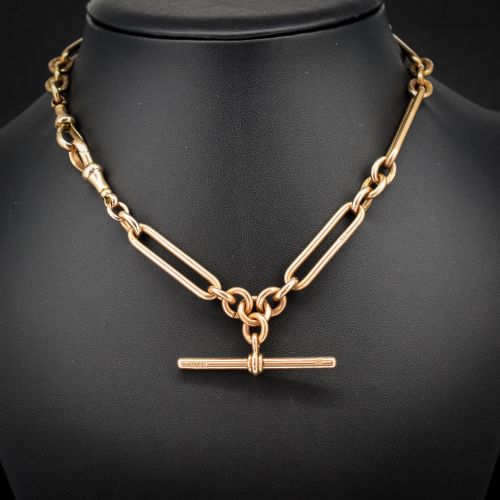
- A short transverse bar attached to the middle of an albert chain, slipped through a waistcoat buttonhole to anchor the entire assembly.
- Trombone link
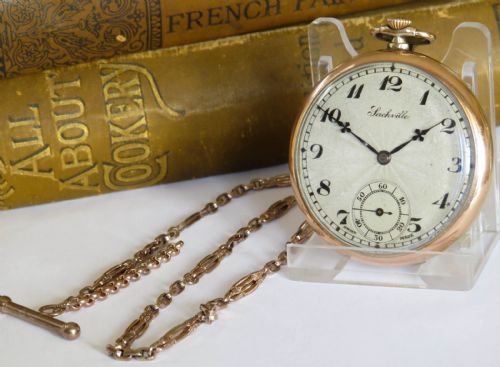
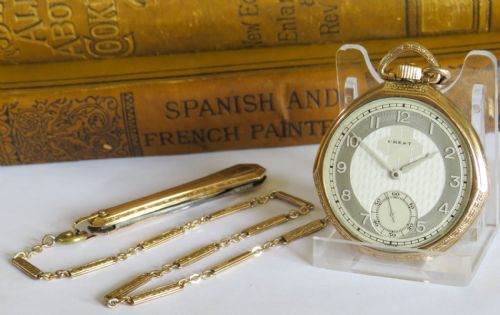
- A specific link style alternating long rectangular bars with smaller circular or oval connectors. It is frequently seen in Edwardian and 1920s watch chains.
- Longuard
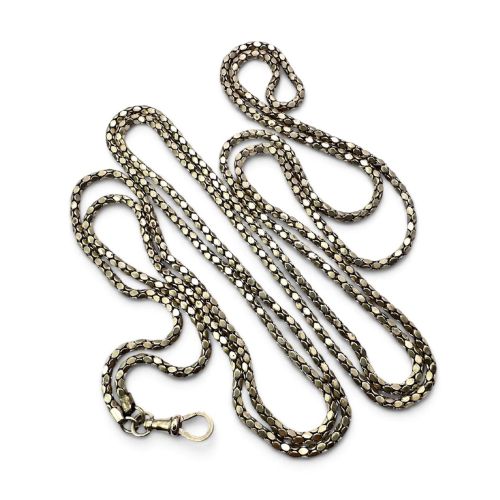
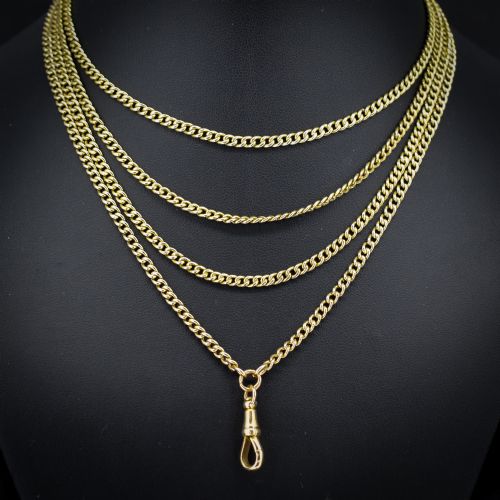
- An extra-long chain designed to be worn doubled around the neck, often fitted with a dog clip. These pieces frequently date from the Victorian period.
Antique Gold Pocket Chain: Frequently Asked Questions
What is an antique gold pocket chain?
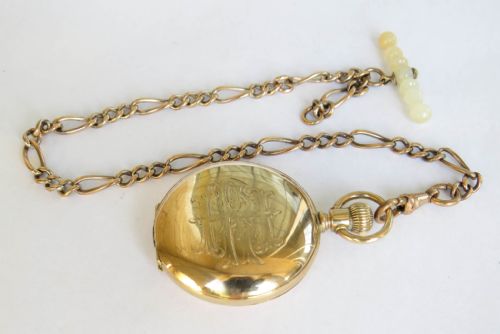
An antique gold pocket chain is a functional piece of jewellery originally created to secure a pocket watch to a gentleman's waistcoat. These items connect the timepiece via a dog clip to a T-bar anchored in the buttonhole.
Today, many of these chains are worn as necklaces or bracelets due to their intricate link designs, such as curb, trombone, and paper patterns.
How do you wear a pocket chain today?
These chains adapt readily to modern wear by being fastened around the neck as a necklace or wrapped around the wrist as a multi-strand bracelet. The original dog clips and bolt rings make adding charms or pendants straightforward.
When worn with a waistcoat, the traditional method involves placing the T-bar through the buttonhole and letting the links drape across the front.
What is the difference between solid gold and rolled gold?
Solid gold chains are composed of precious metal throughout, typically marked at 9ct, 15ct, or 18ct purity, offering lasting intrinsic value. Rolled gold and gold-filled pieces feature a mechanical layer of gold bonded to a base metal core.
Rolled gold items provided a heavier, more affordable alternative to solid gold during the Victorian and Edwardian eras while maintaining the external appearance of solid metal.
How do you date an antique watch chain?
Dating relies heavily on hallmarks stamped onto the links, T-bars, or dog clips, which indicate assay offices such as Birmingham and specific operational years. Stylistic clues like the geometric patterns of the 1920s or the heavy floral fobs of the Victorian period also narrow down the era.
Associated components like original pocket watches, if present, help confirm the manufacturing timeframe of the entire set.