
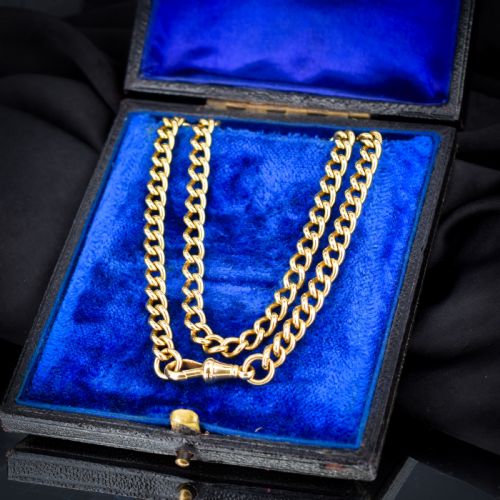


Solid Gold Curb Necklace
A solid gold curb necklace brings together interlocking links and substantial weight, offering a traditional piece of jewellery built to last.
Solid Gold Curb Necklace
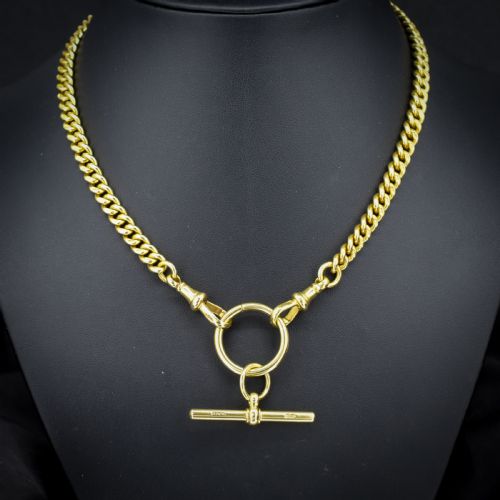
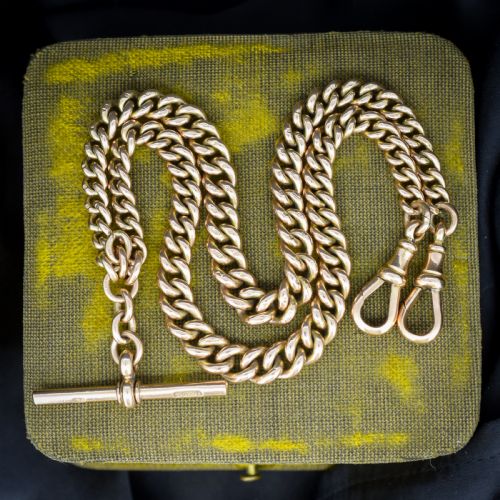
A solid gold curb necklace typically originates from the nineteenth and early twentieth centuries, spanning the Victorian and Edwardian periods up to the nineteen-twenties. These pieces frequently manifest as converted pocket watch chains and guard chains, often featuring dog clips and T-bars.
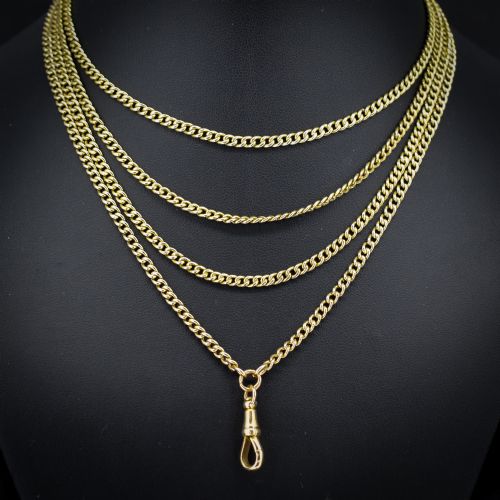
Buyers encounter various lengths on this page, ranging from shorter sixteen-inch collars to exceptionally long guard chains reaching fifty-eight inches. The form relies on uniform or graduated interlocking links that sit flat against the skin.
Originating predominantly from British workshops, these necklaces utilise gold standards marked with traditional assay office details. The inventory reflects historical watch chains adapted into modern wearable necklaces.
How they were made
Maker utilisation relies heavily on nine-carat and eighteen-carat gold, appearing in yellow, rose, and white variations alongside two-tone combinations. Goldsmiths formed each individual link from solid metal, bending and soldering them into closed curb patterns.
Many examples display hallmarks stamped on every single link, demonstrating rigorous standards of British goldsmithing. Components such as swivel dog clips and T-bars were cast and hand-finished to secure pocket watches safely.
Graduation involved meticulous grading of link sizes from the centre point down to the clasp, requiring skilled hand-assembly to maintain balance and drape.
Listings span the nineteenth century, Victorian, Edwardian, and nineteen-twenties periods, utilising yellow, rose, white, and two-tone gold.
What varies in quality
The degree of graduation in the links creates a distinct visual rhythm, where finely balanced proportions separate ordinary chains from exceptional examples. Uniformity of wear across every individual link indicates how carefully the piece was maintained over generations.
The presence of complete hallmarks on every link elevates a piece, showing accountability from historical assay offices. Original fittings such as matching dog clips and secure clasps preserve the integrity of the design.
Substantial gram weight relative to length dictates the physical presence of the necklace, distinguishing hollow or light links from deeply substantial gold work.
The Solid Gold Curb Necklace Glossary
- Curb link
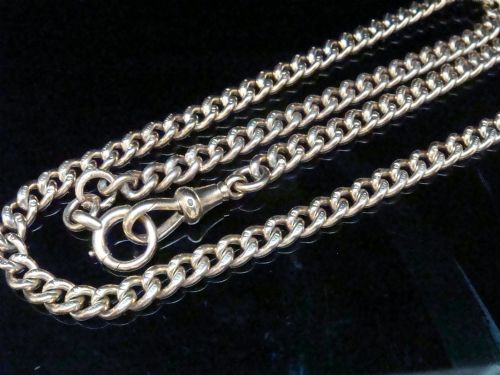
- A type of jewellery chain formed of flat, interlocking links that twist to lie flat against the skin. This design provides exceptional strength and fluidity.
- Albert chain
- A traditional pocket watch chain designed to attach to a waistcoat, frequently converted into a necklace today. These often retain dog clips and T-bars.
- Dog clip
- A spring-loaded swivel clasp used on watch chains to secure a pocket watch or pendant. They provide a functional and decorative termination point.
- Hallmark
- An official stamp applied by an assay office indicating the purity of the metal and the origin. British marks often include town marks and date letters.
- T-bar
- A transverse bar attached to a watch chain, originally used to secure the chain through a buttonhole. On converted necklaces, it remains as a decorative toggle feature.
Solid Gold Curb Necklace: Frequently Asked Questions
Are these original antique watch chains?
Many listings feature historic pocket watch chains and guard chains that have been adapted for modern wear as necklaces.
These pieces retain their original dog clips, T-bars, and historical hallmarks dating back to the Victorian and Edwardian eras.
How do I identify the gold purity?
British pieces typically display hallmarks indicating nine-carat or eighteen-carat gold standards stamped directly onto the metal.
Assay office marks and numerical stamps such as three hundred seventy-five confirm the precise gold content.
Can I attach pendants to these chains?
Most of these necklaces include original swivel dog clips that easily accommodate charms, lockets, or pocket watches.
The secure spring mechanisms allow for versatile styling options while maintaining period authenticity.