
Victorian Curb Link Chain
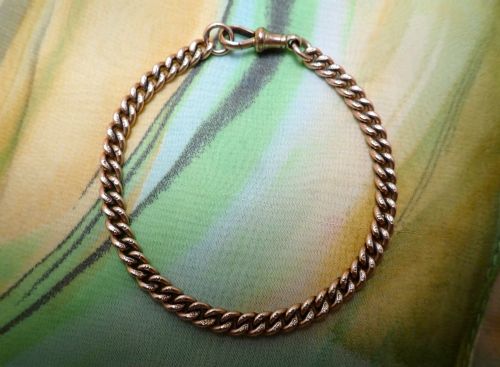
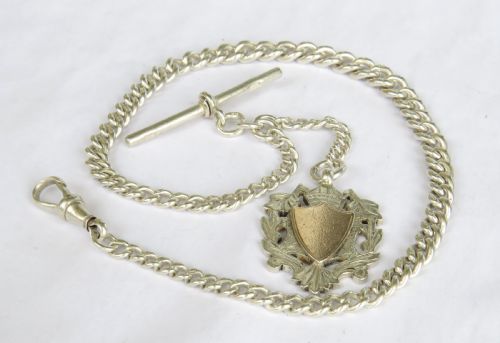
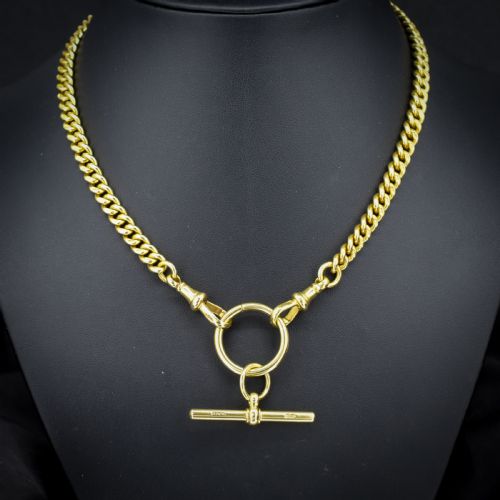
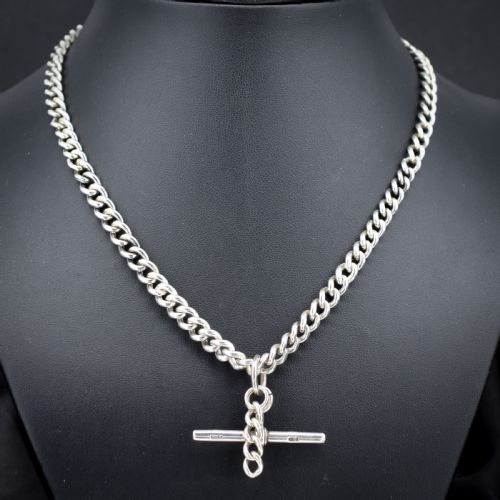
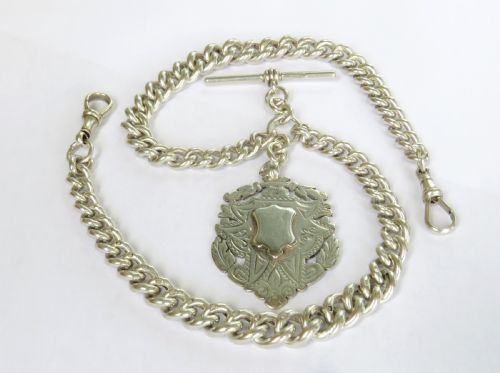
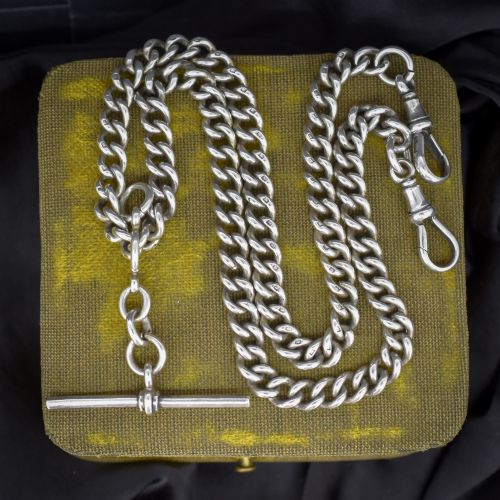
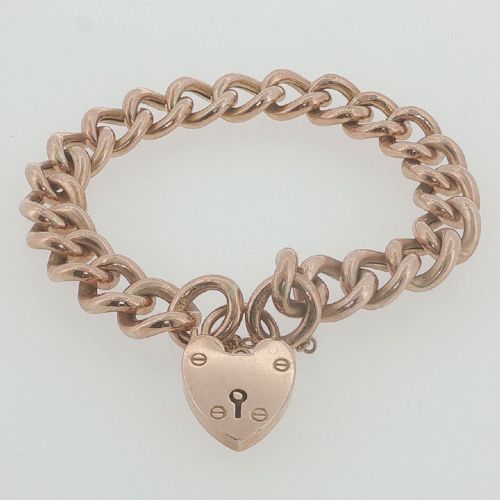
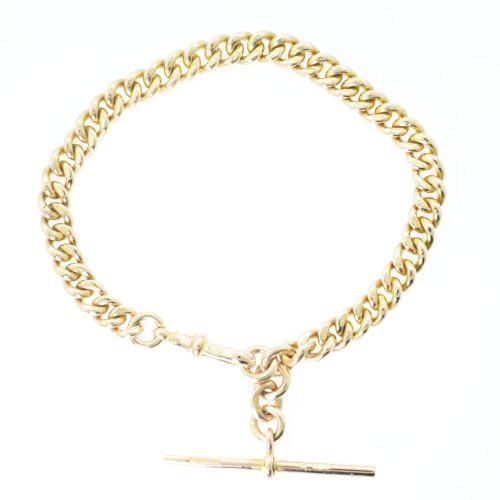
A victorian curb link chain offers satisfying weight and interlocking symmetry, whether worn as a bracelet or draped as a pocket watch albert.
Victorian Curb Link Chain
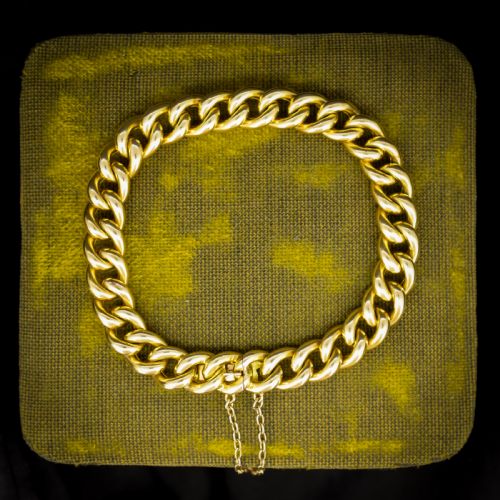
A victorian curb link chain consists of uniform or graduated interlocking links designed for practical utility as well as ornamentation. Buyers encounter these pieces primarily configured as bracelets, pocket watch chains, and necklaces.
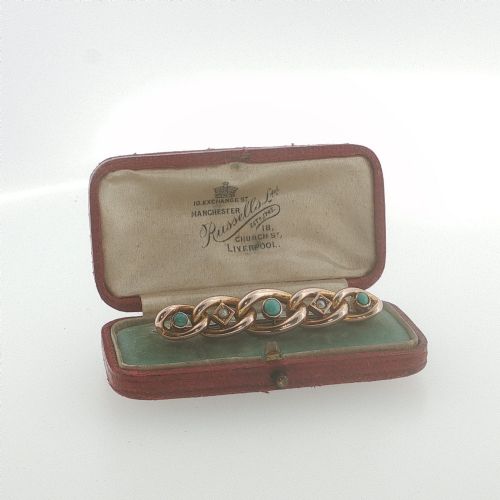
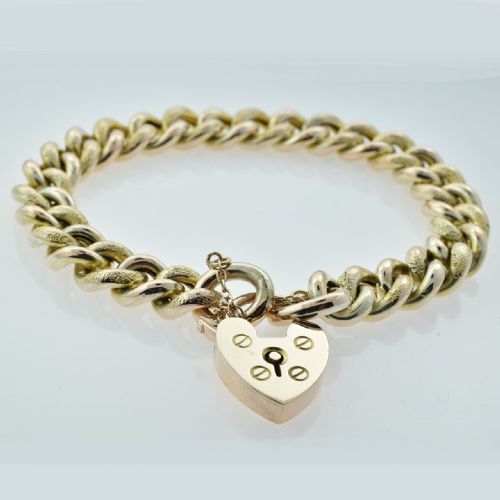
Originating predominantly from the late nineteenth and early twentieth centuries, these items frequently incorporate functional hardware such as dog clips, T-bars, and heart padlocks. The surviving examples span solid gold tiers and sterling silver, reflecting the diverse accessorising habits of the period.
How they were made
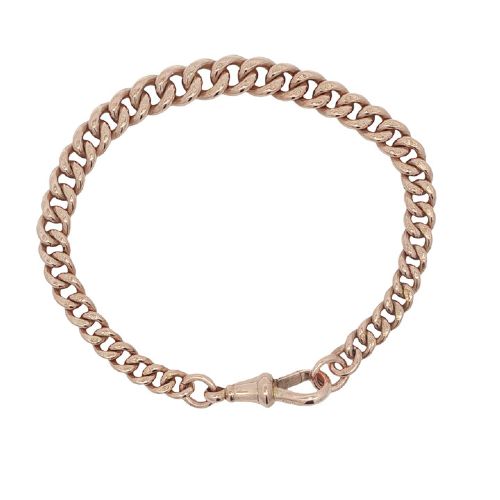
Goldsmiths and silversmiths constructed these chains using precious metals including 9ct rose gold, 18ct yellow gold, and sterling silver, alongside rolled gold alternatives. Individual links were formed, joined, and soldered by hand to create flexible strands capable of enduring daily wear.
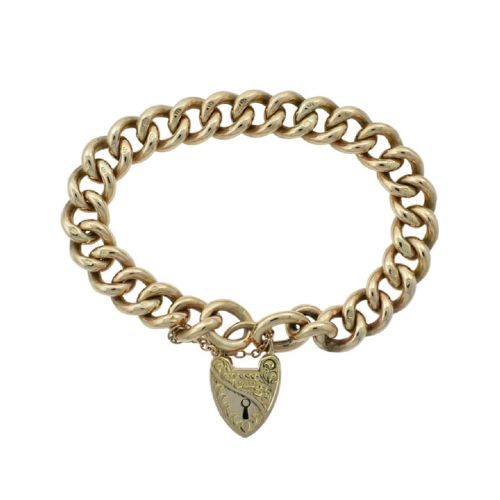
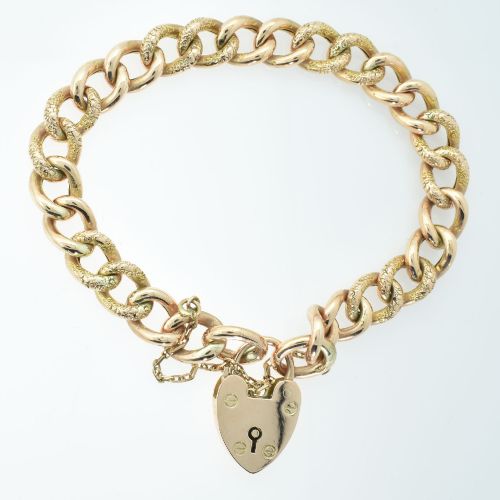
Surface ornamentation involved hand-engraving geometric or foliate patterns onto specific links, particularly on bracelet variants. Hardware components like dog clips and swivel fobs were engineered with internal spring mechanisms to secure pocket watches and pendants.
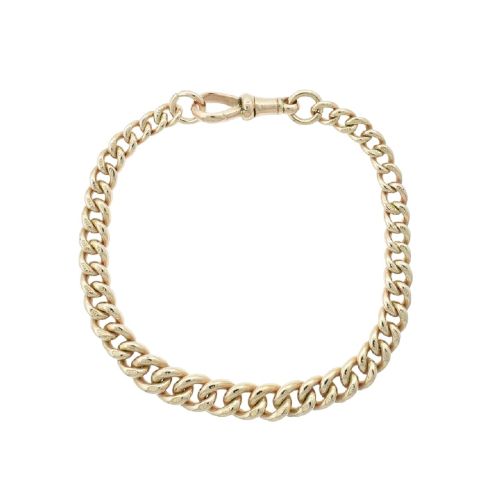
The listings demonstrate materials ranging from sterling silver and rolled gold to 9ct rose gold and 18ct yellow gold.
What varies in quality
The distinction between tiers rests upon metal purity, substantial gram weight, and the crispness of hand-engraved detailing. Heavier examples display minimal link wear at the pivot points, indicating careful historical use.
Original matching components, such as fully marked T-bars, dog clips, and dedicated fobs, elevate an assembly's integrity. The precision of the link closure and the uniformity of graduation also separate standard production from superior workshop output.
The Victorian Curb Link Chain Glossary
- Curb link
- A type of jewellery chain formed of interlocking, slightly flattened links that lie flat against the skin. This construction provides exceptional flexibility and structural strength.
- Albert chain
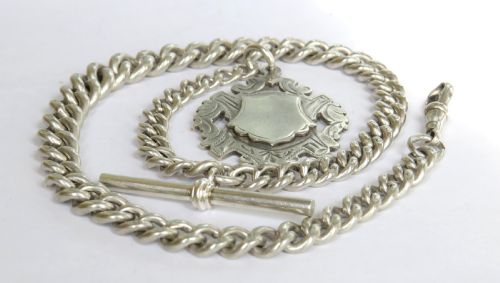
- A pocket watch chain named after Prince Albert, designed to secure a timepiece in a waistcoat pocket while attaching to a buttonhole via a T-bar.
- Dog clip
- A spring-loaded swivel fastening used to secure watch chains and charms. It allows the attached item to rotate freely without twisting the metal links.
- T-bar
- A transverse metal bar attached to the end of a watch chain. It slips through a waistcoat buttonhole to anchor the chain securely.
- Graduated
- A design where the links increase in size progressively from the clasp toward the centre. This provides balanced visual weight and sits comfortably when worn.
Victorian Curb Link Chain: Frequently Asked Questions
How do I wear a pocket watch chain as a necklace?
Many long albert chains adapt readily to neckwear by clasping the dog clip directly to a jump ring or opposite end. The integrated T-bar and swivel fobs hang naturally as decorative pendants.
Shorter variants wrap around the wrist as multi-strand bracelets depending on the overall length and link scale.
What is rolled gold?
Rolled gold involves fusing a sheet of solid gold to a base metal core under heat and pressure. This technique produced durable, affordable items with a genuine gold exterior.
It differs from gold plating through its significantly thicker layer of precious metal.
How do I tell if a chain is solid gold or silver?
Makers and assay offices stamped precious metal items with specific hallmarks indicating purity and origin. Look for stamped numbers such as 375 for 9ct gold, 750 for 18ct gold, or lion passant marks for sterling silver.
Unmarked examples rely on metal testing and weight assessment to determine composition.
What is a padlock clasp used for?
Padlock clasps on bracelets functioned both as secure fastenings and decorative centerpieces. Owners frequently decorated them with engravings or gemstones such as pearls and turquoise.
They attach to a dedicated ring on the bracelet to keep the piece firmly secured on the wrist.