
Antique Gold Candlesticks
Antique gold candlesticks bring warm metallic lustre to a room, ranging from simple brass stems to elaborate gilt bronze forms.

Antique Gold Candlesticks
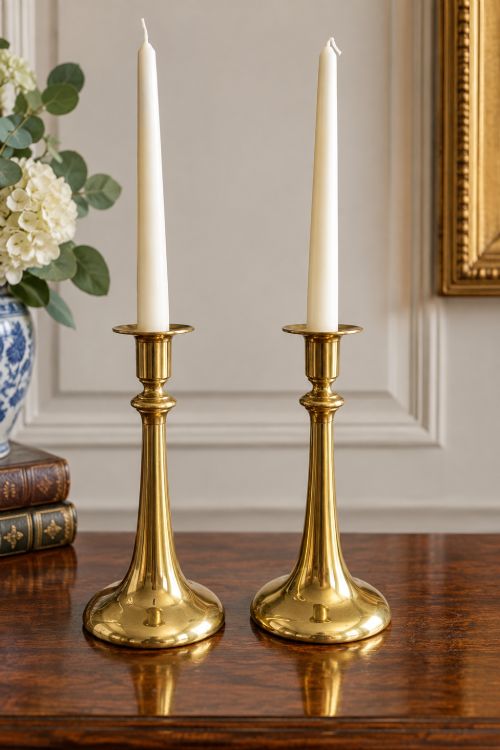
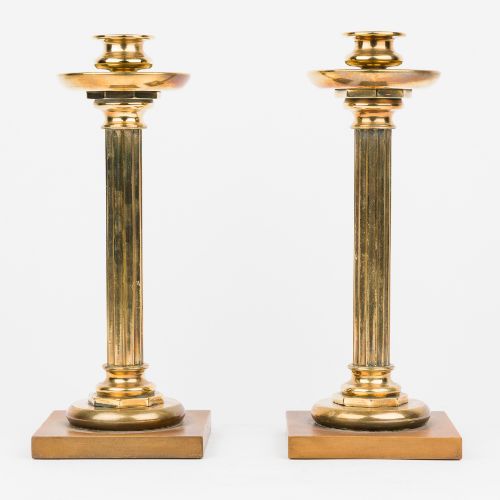
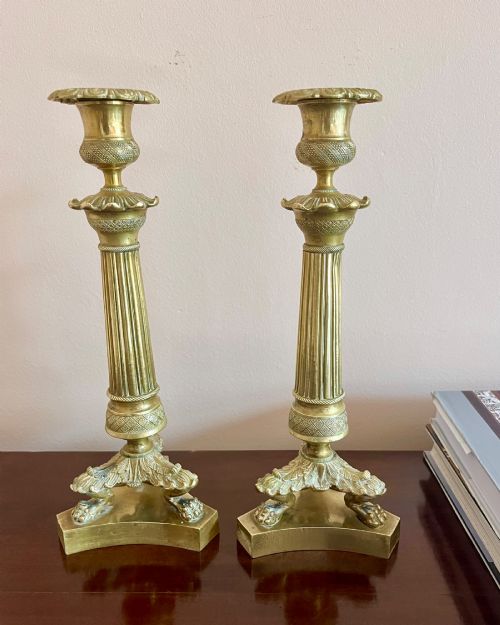
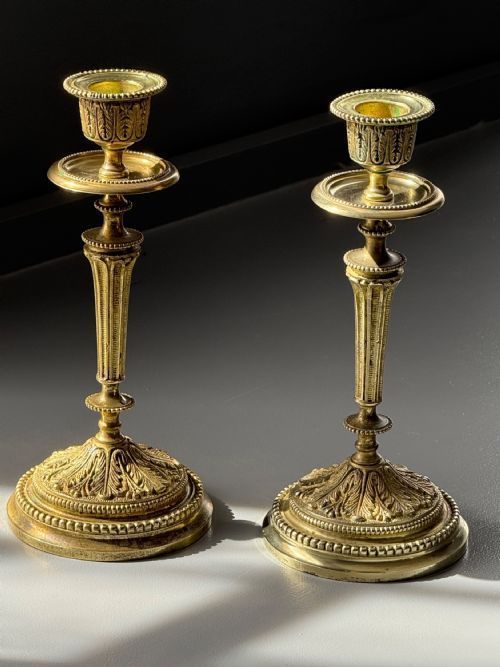
When searching for antique gold candlesticks, buyers encounter pieces that span centuries, styles, and functions, from utilitarian lighting to decorative mantel ornaments. The pieces on this page include solid brass examples, gilt bronze, and ormolu designs reflecting periods such as the Georgian, Victorian, and Louis XVI eras.
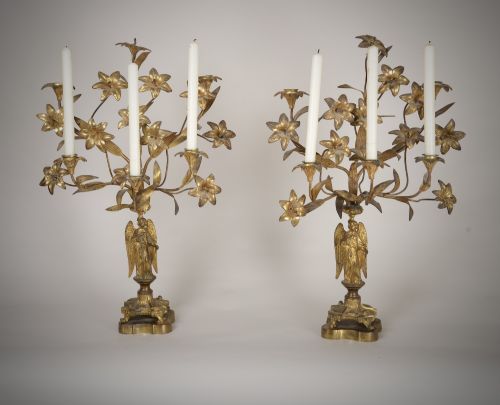
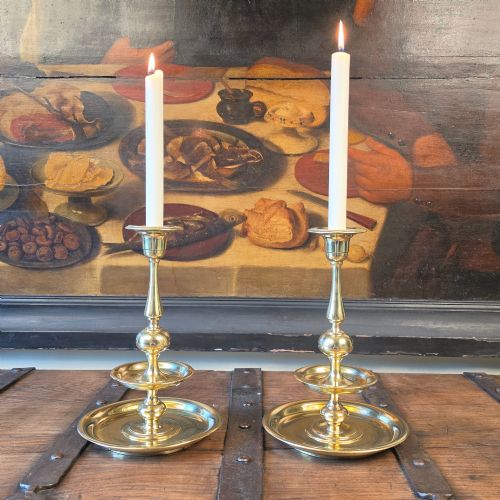
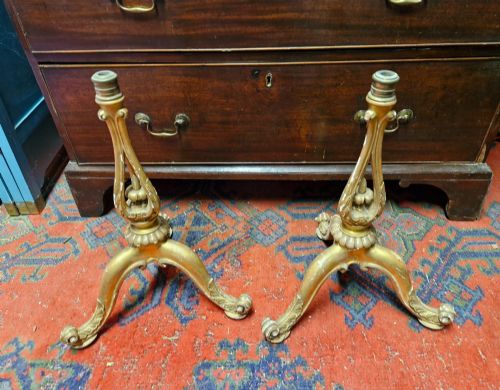
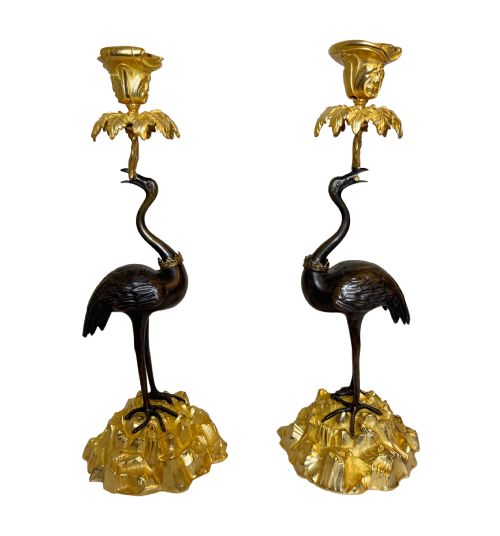
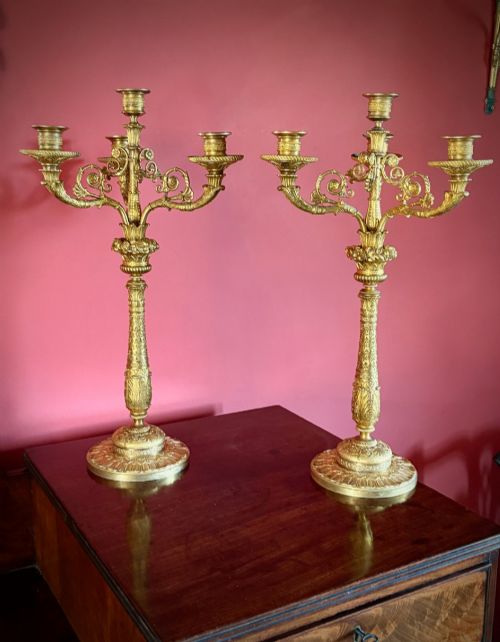
The selection ranges from simple domestic brass candlesticks with petal bases and side ejectors to sculptural Regency tree forms, ecclesiastical pieces, and elaborate French rococo revival candelabra. Many of these items survive as pairs, offering symmetrical display potential for dining tables, sideboards, and mantelpieces.
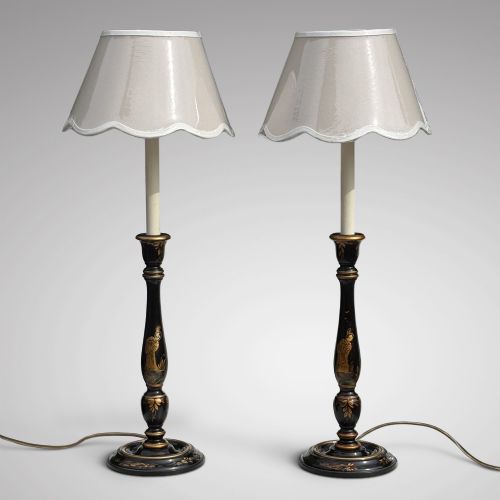
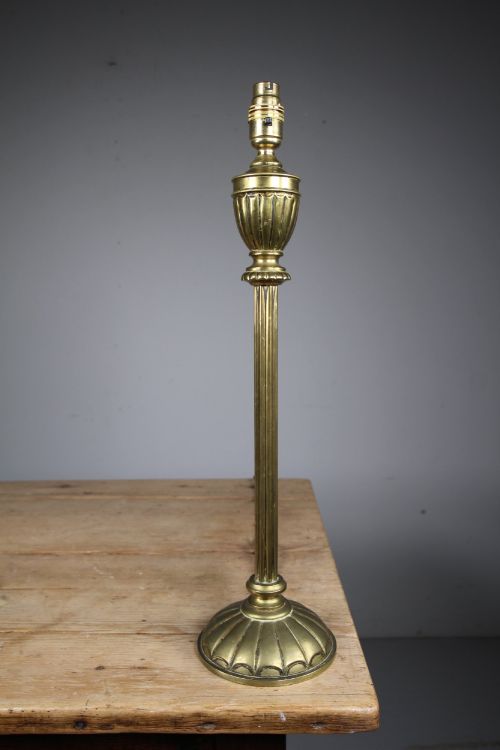
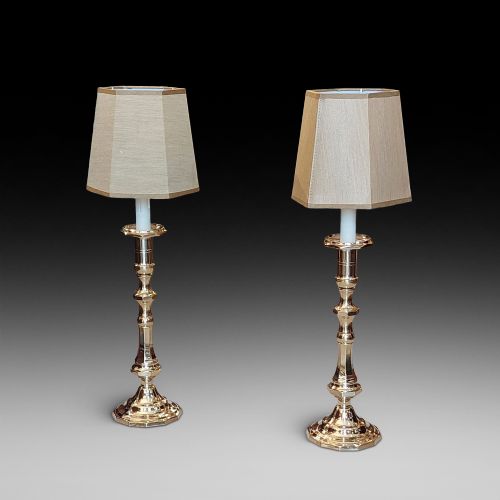
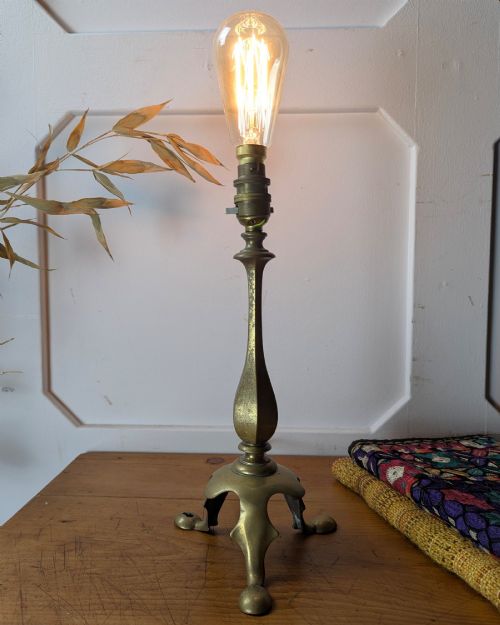
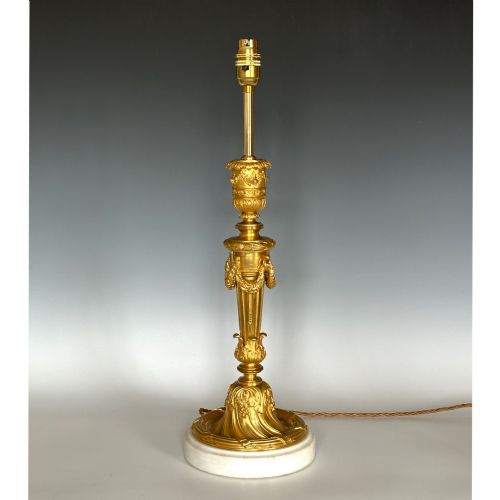
Beyond standard candlesticks, the evidence shows related forms converted to table lamps, alongside candelabra and desk accessories. These objects utilise materials that capture candlelight effectively, providing both practical illumination and decorative presence in period and contemporary interiors.
Materials and construction methods
The construction of these pieces relies heavily on brass and bronze as primary structural metals, often finished with gilding, ormolu, or patination. Brass examples are frequently cast in sections and joined, whilst gilt bronze and ormolu items involve precise metalworking and mercury or fire gilding techniques to achieve a bright, durable golden surface.
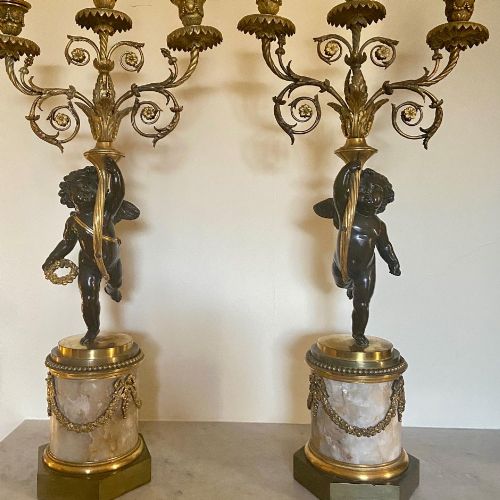
Decoration is achieved through casting, chasing, and sculptural modeling, yielding details such as rams' heads, putti, foliate motifs, and figural elements. Supplementary materials like marble, cut glass, porcelain, and fluorspar appear in specific designs, adding texture and colour contrast to the metallic bases and sconces.
The inventory records diverse stylistic influences, including Louis XVI, Gothic revival, Regency, and French rococo aesthetics.
Distinctions in execution and design
The quality of these items is determined by the crispness of the casting and the depth of the subsequent hand-chasing on the metal surface. Finer examples display sharply defined ornament, smooth joints, and well-balanced proportions that demonstrate the maker's mastery over the material.
Material composition also dictates standard, with high-grade ormolu retaining a rich, warm tone and heavy physical weight compared to thinner or later brass alloys. The complexity of the design - such as multi-branch candelabra with figural supports - separates standard production items from exceptional workshop creations.
Francois Redmond·Ridgway·Barr Flight And Barr·J T And Co
The Antique Gold Candlesticks Glossary
- Ormolu
- A method of applying finely ground gold-mercury amalgam to a bronze object, producing a durable golden finish common in French decorative arts. This technique was widely utilised during the eighteenth and nineteenth centuries.
- Campana
- A vase-shaped candle sconce resembling an inverted bell, frequently found on classical and neoclassical candlesticks. It supports the candle securely within the nozzle.
- Pricket
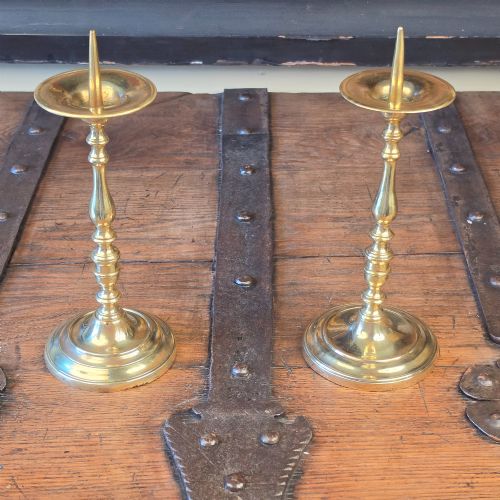
- A sharp metal spike set in the centre of a drip pan to secure a candle, typically seen on ecclesiastical or altar candlesticks. This form predates socket-type candle holders.
- Caryatid
- A sculpted female figure serving as an architectural support or candlestick stem, often derived from classical antiquity. These figures add sculptural weight to the design.
- Ejector
- A mechanical feature inside a candlestick shaft that pushes out the remaining candle stump using a small side lever. It is a practical addition found on domestic brass examples from the Georgian and Victorian periods.
Antique Gold Candlesticks: Frequently Asked Questions
How do I clean antique brass candlesticks?
Maintenance requires gentle dusting with a soft cloth to preserve the natural oxidation and patina accumulated over decades. Aggressive polishes strip the surface layer and diminish the historical character of the metal.
For pieces with gilt bronze or ormolu finishes, moisture and chemical cleaners must be avoided entirely. Professional conservation advice is recommended if deeper cleaning becomes necessary.
Were these candlesticks originally wired for electricity?
Electric conversion is a later adaptation for modern living, as these objects were originally designed exclusively for wax candles or oil. Many surviving examples have been adapted into table lamps while retaining their historic bases and stems.
Buyers should inspect the wiring and consult a qualified electrician to ensure safety compliance. Reversible conversions preserve the original structure without permanent alteration.
How can I tell Georgian candlesticks from Victorian ones?
Georgian pieces often exhibit restrained neoclassical or restrained rococo lines, with heavy cast brass construction and petal bases. Their weight and simple utilitarian elegance distinguish them from later manufacturing.
Victorian items tend to feature heavier ornamentation, more elaborate figural work, and a wider variety of revival styles. The casting techniques also became more mechanised towards the late nineteenth century.