


Antique Glazed Wall Tile
These antique glazed wall tile pieces range from seventeenth-century Dutch Delft to Arts and Crafts plaques, bringing rich colour and historic ceramic artistry into your interior scheme.
Antique Glazed Wall Tile
An antique glazed wall tile is a ceramic object designed for interior display, taking the form of individual squares, framed architectural panels, or larger pictorial wall plaques. When you search for an antique glazed wall tile, you encounter pieces spanning from the seventeenth century through to the Edwardian period.
Many items arrive mounted as framed wall art or decorative plaques, shifting their original architectural function into standalone decorative pieces. The forms range from simple square earthenware tiles to large polychrome Chinoiserie and figurative compositions.
Materials and construction
Makers shaped these pieces primarily from earthenware and ceramic bodies, applying tin glaze, cobalt pigment, and various coloured glazes to the surface before firing. The resulting vitreous coating provided both a glossy decorative finish and a durable barrier.
Techniques varied from hand-painted cobalt and polychrome brushwork on Delft examples to deep moulded relief work seen in Arts and Crafts and Victorian architectural pottery. Artisans utilised specialised pigments to achieve deep blues, turquoise tones, and rich manganese hues across the centuries.
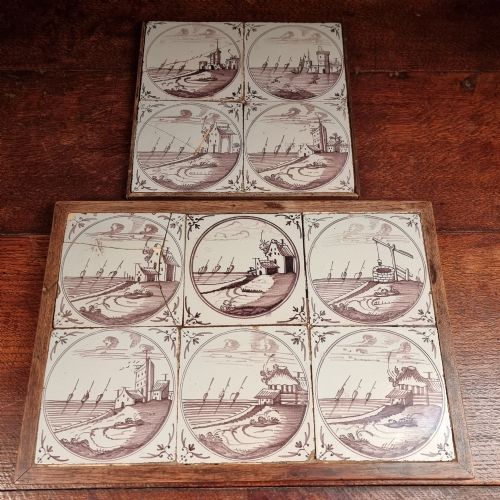
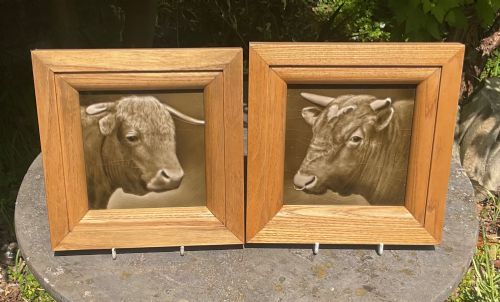
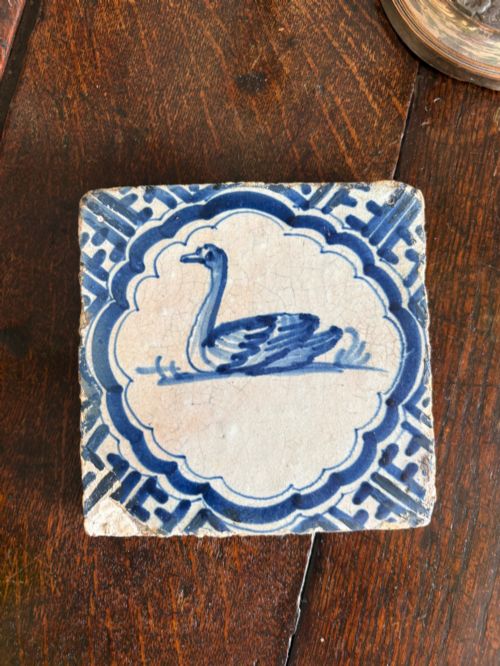
A cow and a bull share wall space with seventeenth-century swans and eighteenth-century scenes of the Last Supper.
Assessing quality
Quality in these ceramics rests upon the crispness of the hand-painted detail or the depth of the moulded relief work. Superior pieces display confident brushwork, controlled glaze application, and well-preserved pictorial detail without heavy surface degradation.
The sophistication of the design and the renown of the workshop elevate the standing of a piece, distinguishing standard utilitarian wall pieces from master-painted plaques and framed works of art.
Sherwin & Cotton·Architectural Pottery Co·Longwy
The Antique Glazed Wall Tile Glossary
- Tin glaze
- An opaque white ceramic glaze made by adding tin oxide to a lead glaze, providing a smooth white background for hand-painted decoration.
- Manganese
- A dark purple-brown metallic pigment frequently utilised in early ceramic decoration, particularly on seventeenth and eighteenth-century Delft pieces.
- Polychrome
- Decoration employing multiple distinct colours on a single ceramic surface, as opposed to monochromatic blue and white schemes.
- Faience
- European tin-glazed earthenware, historically associated with fine painted Italian and French ceramic production.
- Relief plaque
- A decorative panel where the sculpted design projects markedly from the flat background plane rather than existing as a purely flat painted surface.
Antique Glazed Wall Tile: Frequently Asked Questions
How were antique tiles used originally?
These pieces served multiple architectural and decorative functions, frequently set directly into interior walls, fireplaces, and kitchen surrounds to protect masonry and provide colourful adornment.
Over time, many fine examples were mounted into wooden frames to be displayed as standalone artwork rather than remaining fixed elements of a building.
How do I clean an antique tile?
Maintenance requires only gentle dusting with a dry, soft cloth to prevent the accumulation of dirt on the glazed surface.
Avoid liquid cleaners, chemical sprays, or abrasive cloths, as historic glazes and painted pigments can be delicate and vulnerable to modern solvents.
Can these tiles be hung on walls safely?
Many pieces on this page are already securely set within custom frames or mounted as wall plaques specifically designed for hanging.
For loose tiles, consult a professional framer or conservator to install appropriate support brackets that bear the weight safely without damaging the ceramic body.
How do I identify a Delft tile?
Delft pieces typically feature tin-glazed earthenware bodies decorated in cobalt blue or manganese pigment, often depicting biblical scenes, animals, or maritime motifs.
Examining the unglazed edges and the rear of the tile usually reveals characteristic pinkish or buff earthenware fabrics typical of historic European production.