
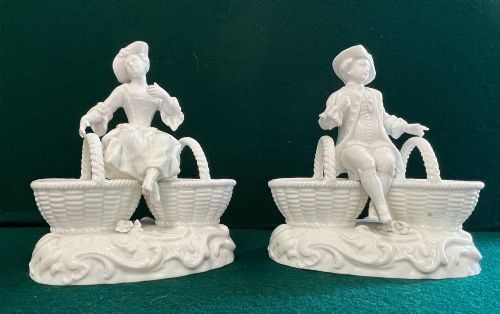
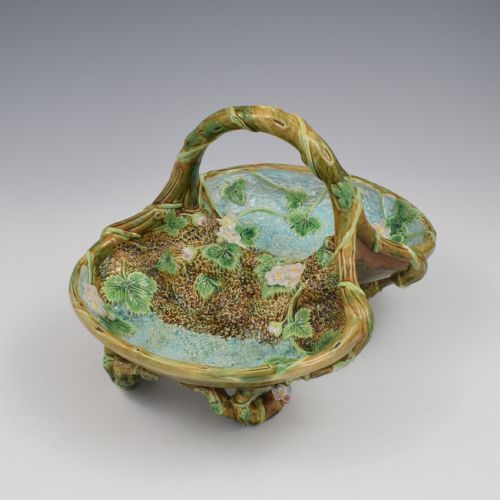
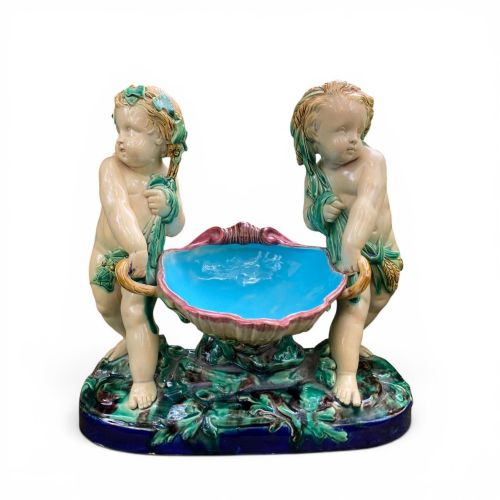


Antique Glazed Ceramic Baskets
Antique glazed ceramic baskets bring sculptural charm and rich coloured lead glazes into domestic spaces.
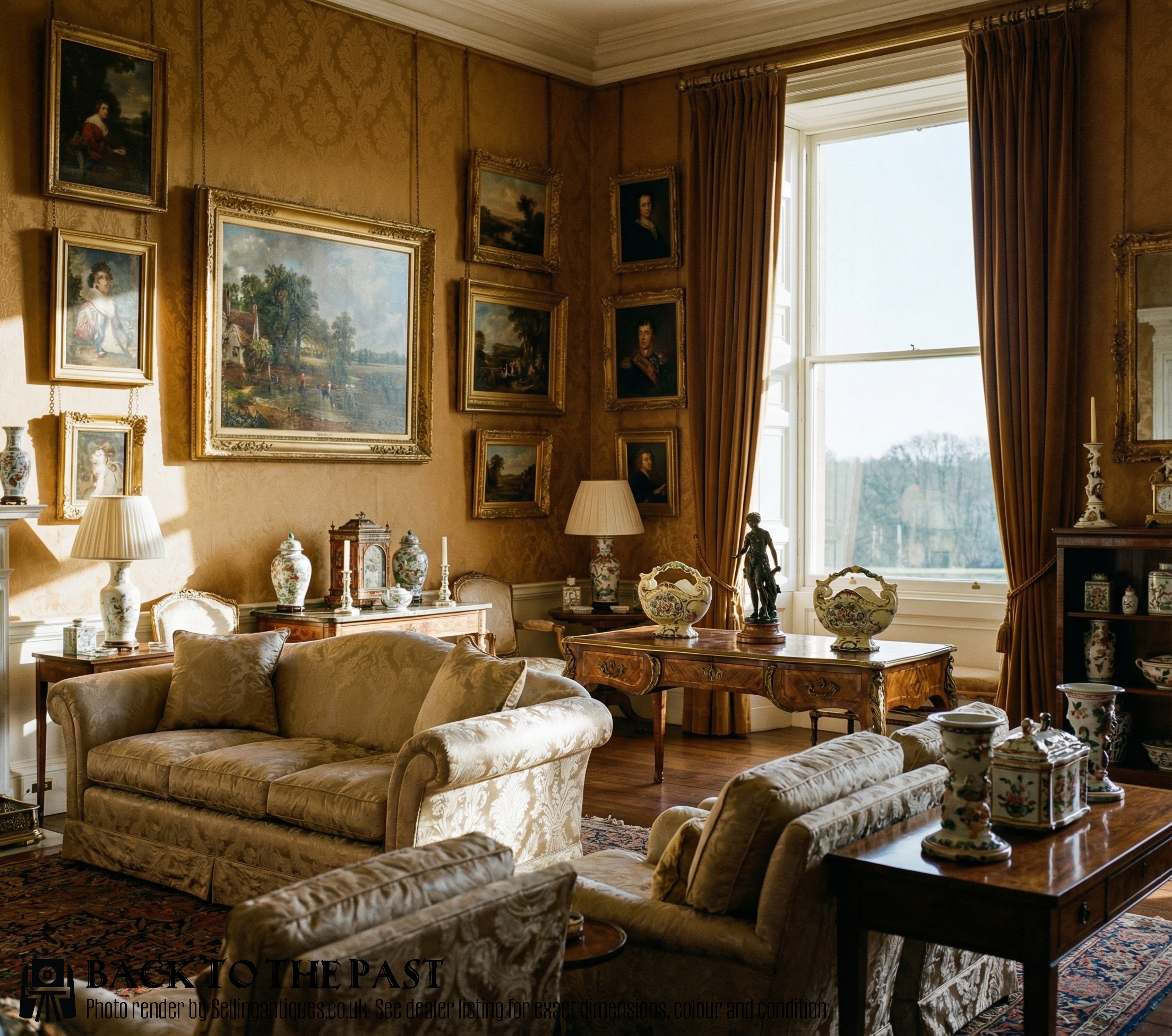
Antique Glazed Ceramic Baskets
Antique glazed ceramic baskets combine decorative utility and sculptural form, often taking the shape of woven vessels held by figures or animals. These pieces emerge from nineteenth-century production centres across England and continental Europe, spanning styles from Victorian naturalism to Rococo revivalism. They serve as centrepieces, dessert services, or decorative containers within period interiors.
The versions most commonly met on this page include majolica fruit and strawberry baskets alongside porcelain floral arrangements and Staffordshire pottery animal tureens. Makers such as Meissen, Minton, and George Jones produced these works using earthenware and porcelain bodies finished with heavy lead glazes. Buyers encounter items ranging from intimate cabinet pieces to large German porcelain centrepieces.
How they were made
Potters shaped these vessels using earthenware, terracotta, creamware, and porcelain, frequently combining moulded basketry with hand-modelled figural elements. Artisans applied coloured metal-oxide glazes over white tin or lead grounds, firing the pieces to achieve glossy, vibrant surfaces. Some works incorporate additional hand-painted enamel decoration or pierced openwork lattice patterns.
Moulds provided the structural base for intricate wicker textures and figures, while skilled hands refined details such as cherubs, children, and animals. Majolica pieces relied on opaque coloured glazes that pooled in the recesses of moulded leaves and woven strands, creating depth. Creamware and porcelain examples employed subtler underglaze painting and clear gloss finishes.
Listings feature pieces spanning the nineteenth century, utilising earthenware, porcelain, terracotta, and creamware bodies.
What varies in quality
The presence of factory marks, date ciphers, and named makers elevates the standing of a piece within the field. Elaborate multi-figure compositions, such as those featuring cherubs or children supporting the vessel, require greater technical skill in firing and construction. Successful integration of realistic textures with bright, stable glazes marks the higher tier of production.
Meissen·George Jones·Minton·Vion and Baury·Royal Worcester
The Antique Glazed Ceramic Baskets Glossary
- Majolica
- A type of earthenware glazed with opaque coloured lead glazes that created vibrant, glossy finishes. It became immensely popular during the Victorian period for botanical and figural subjects.
- Creamware
- A refined light-coloured earthenware developed in eighteenth-century England, noted for its warm pale yellow tone and clear lead glaze. It formed the body for functional dessert services and baskets.
- Jardiniere
- A large ornamental pot or receptacle designed to hold growing plants or flowers. In ceramic form, it often shares decorative motifs with table baskets.
- Egg Tureen
- A specialised covered vessel shaped like an animal or bird, used for serving eggs at the dining table. Staffordshire potteries frequently produced these in the form of hens upon nests.
- Centrepiece
- A large decorative object placed in the middle of a dining table or sideboard. These often take elaborate figural or architectural forms.
Antique Glazed Ceramic Baskets: Frequently Asked Questions
What were antique ceramic baskets used for?
These pieces functioned as decorative centrepieces, fruit holders, dessert service vessels, and floral containers on formal dining tables. Wealthy households utilised them to display fresh strawberries, sweetmeats, or cut flowers during gatherings.
Over time, many transitioned into pure display objects within parlours and drawing rooms, valued for their sculptural presence and bright coloured glazes.
How do I care for glazed ceramic baskets?
Dust these items gently with a soft dry brush and avoid submerging them in water, particularly if they possess delicate painted enamels or historic repairs. Display them away from direct sunlight and sources of extreme heat to protect the glaze and body.
When moving a piece, support it securely from the base rather than lifting solely by delicate handles or attached figural elements.
Are all ceramic baskets marked by the maker?
Many nineteenth-century ceramic baskets and figures carry impressed factory ciphers, painted monograms, or diamond-shaped British registry marks on the base. However, numerous smaller workshops and continental potteries produced unmarked wares of high artistic quality.
The absence of a mark does not diminish the quality of the modelling or the richness of the glaze.